Where This Job Goes Sideways
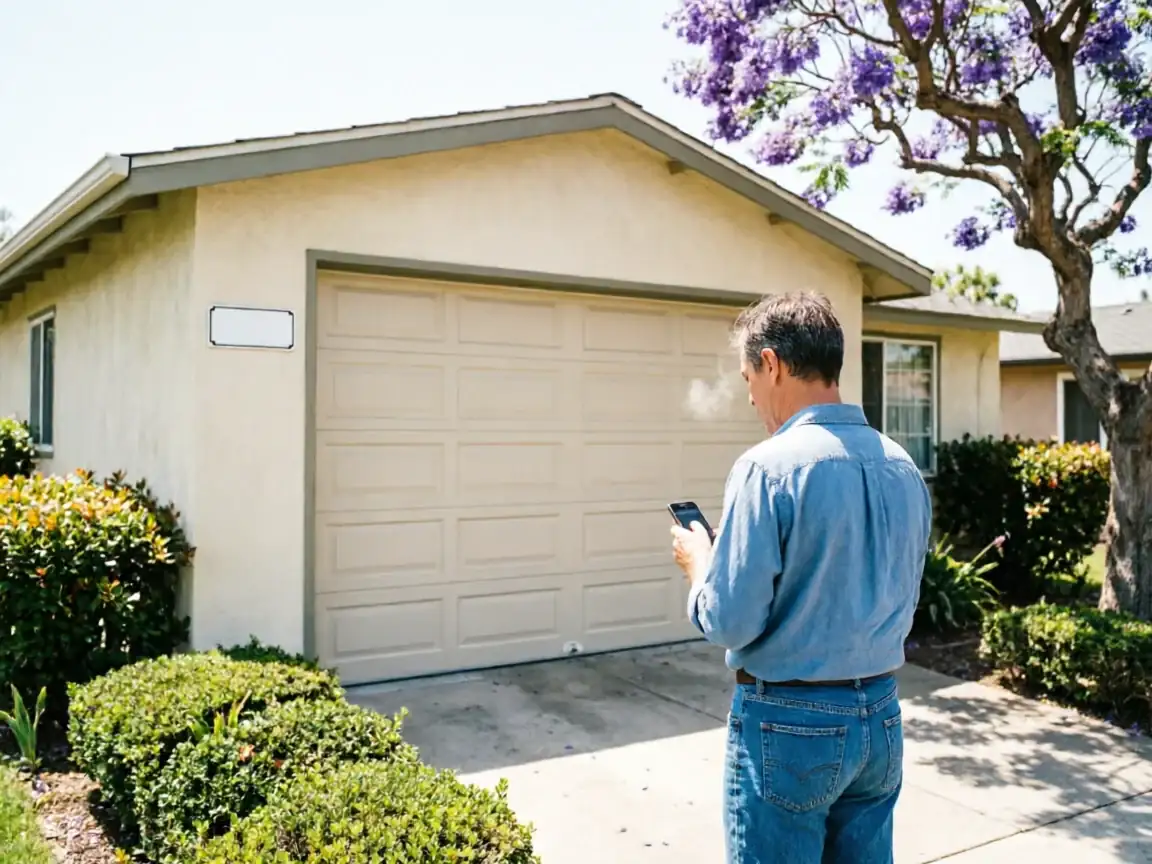
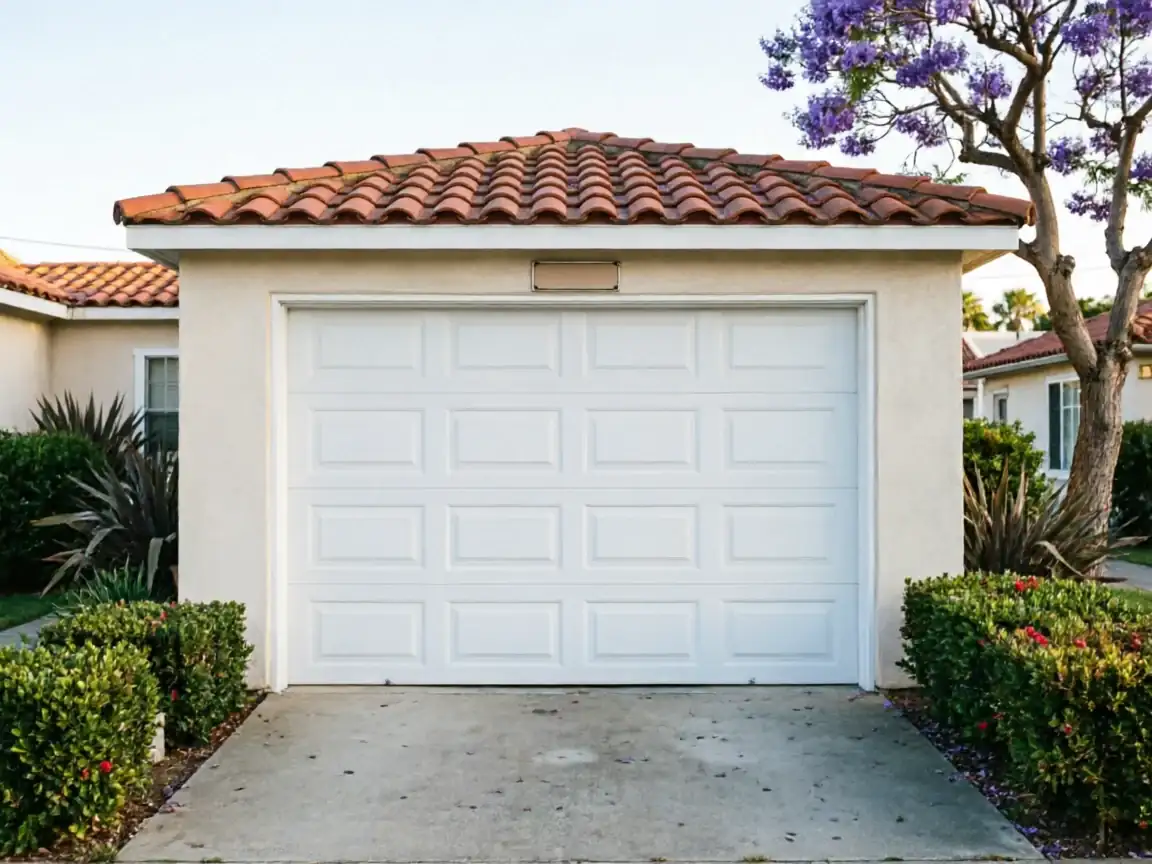
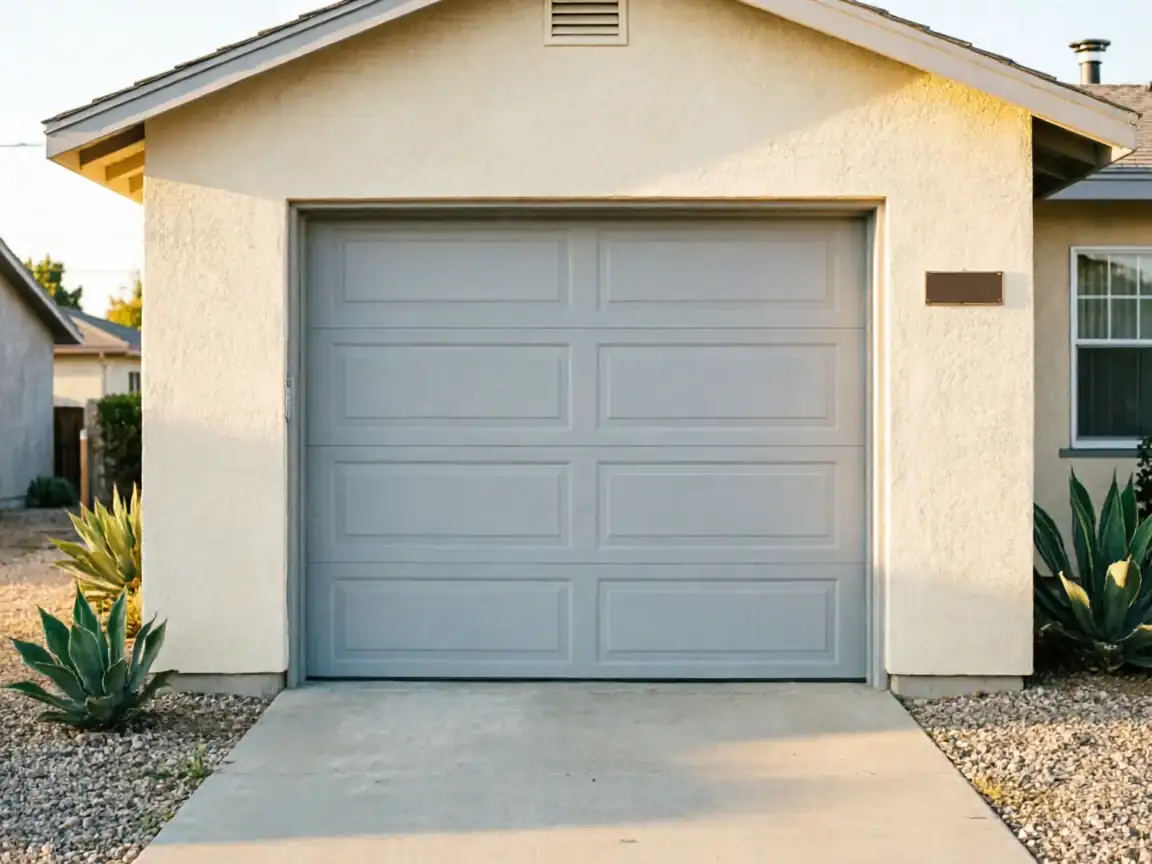
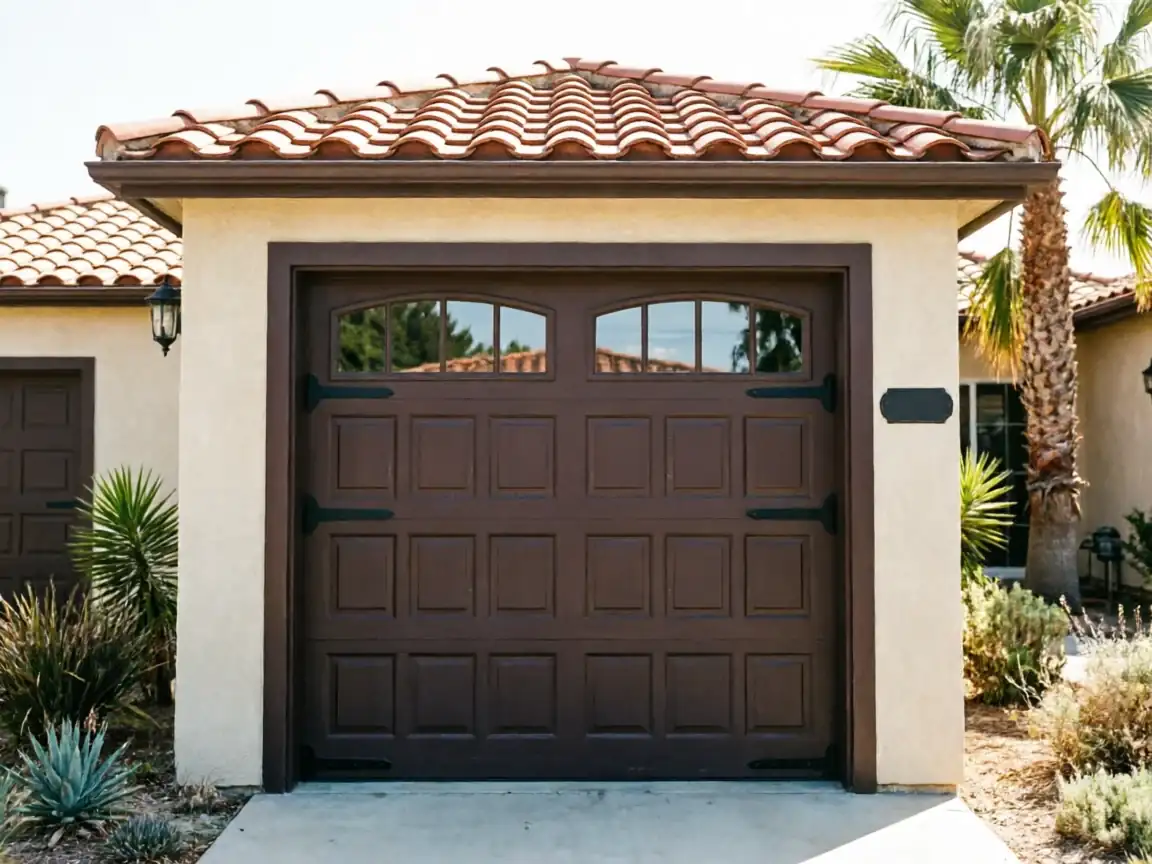
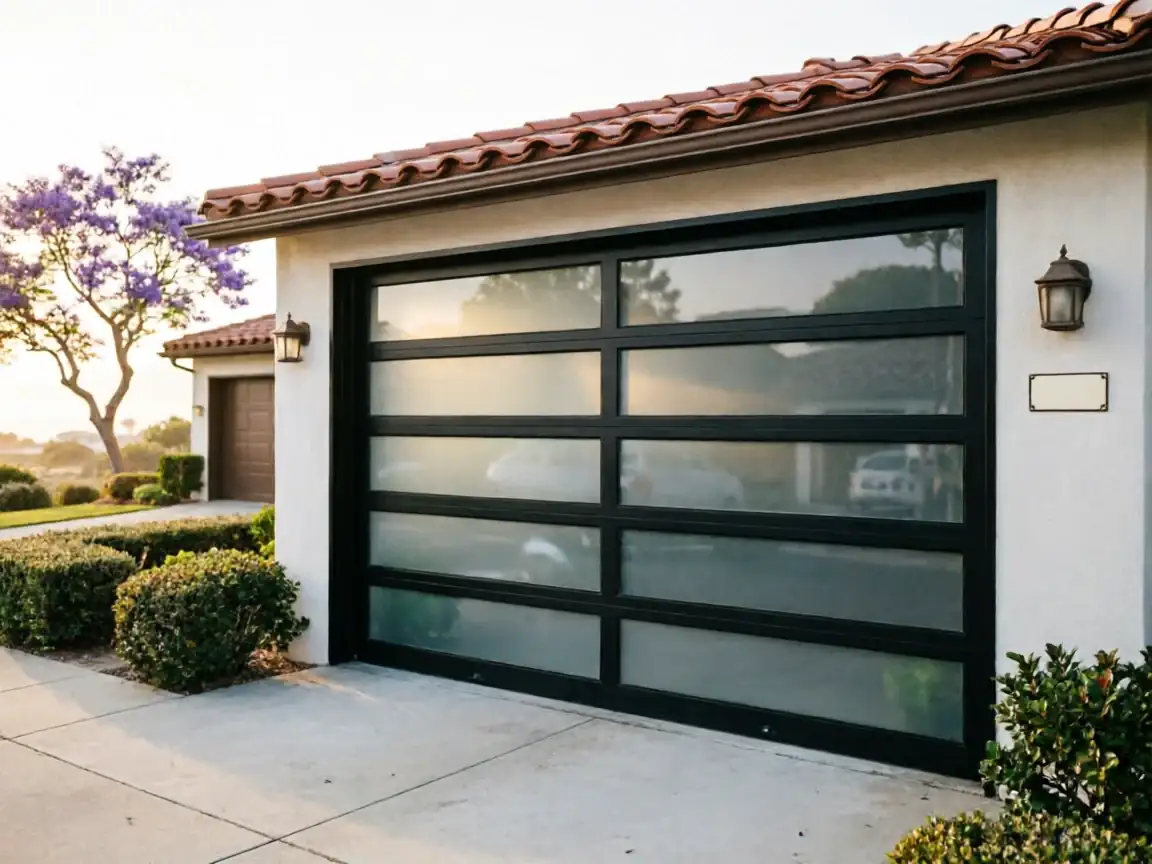
Most houses in Garden Acres went up around 1958. That's close to two decades ahead of the 1977 median build year for the wider service area, and it matters because a lot of what's on those garages has never been swapped out. The torsion spring, the end bearing plates, sometimes the whole track - original, sized for a door that's heavier or lighter than what's sold today depending on the panel material someone bolted on later.
Garden Acres sits about 4 miles WSW of Stockton, inside the same moderate-heat climate band that covers the rest of the service area. That heat doesn't crack springs on its own, but it dries out the lubrication faster than owners expect, and on hardware that's sixty-plus years old, a dry spring under tension is the kind of thing that lets go without warning.
The failure pattern here skews toward fatigue, not damage. Cables fraying at the drum, a torsion spring that's lost coil tension gradually rather than snapping outright, rollers worn to an oval instead of a circle. None of that looks dramatic until the door won't move.
What It Costs
We don't quote a number without seeing the door
And on a street of mostly original 1958-era hardware that matters more than usual - a torsion spring sized for an old single-layer wood door isn't the same part as what's on the shelf for a modern insulated steel one, and matching it right is most of getting the price right.
Garden Acres' median household income sits at $62,895
Well under the $93,993 median across the broader Stockton service area. We don't price by zip code, but we do keep that gap in mind when we talk through repair-versus-replace. On a door this old, sometimes the honest answer is that patching one more original part isn't worth it next to putting in a full new system that won't need touching again for years.
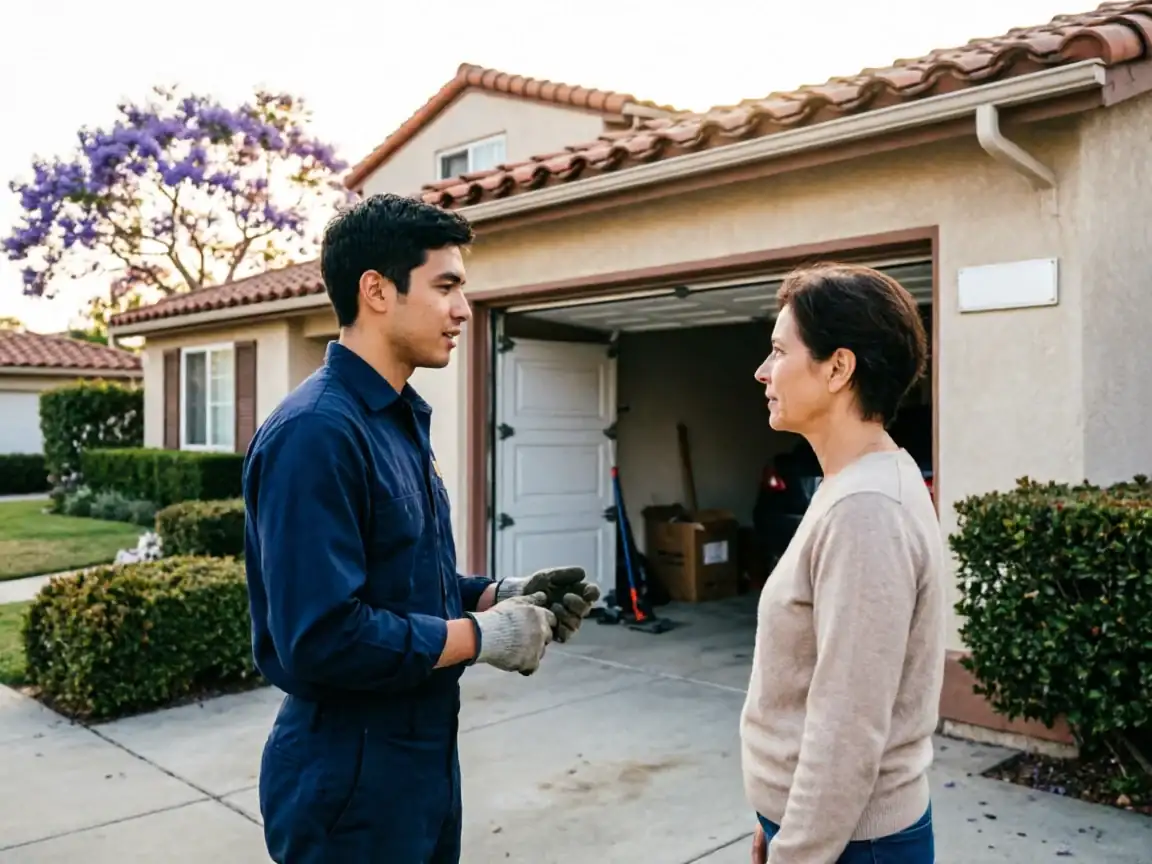
The one thing we won't do is give a phone estimate on hardware this age sight unseen
Too much of what's original here is worn in ways you can't describe over the phone - a bearing plate that's seized, a track bent just enough to bind. We'd rather look at it than guess.
Can You Do This Yourself
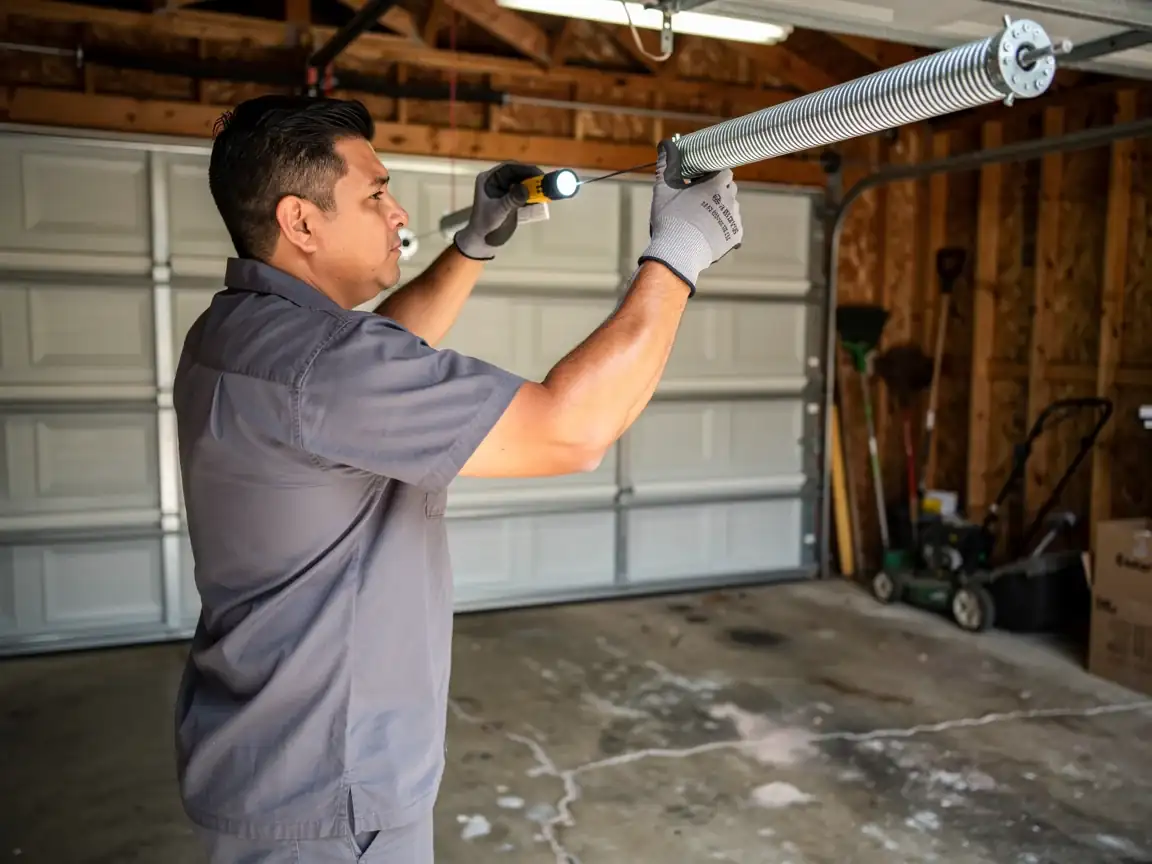
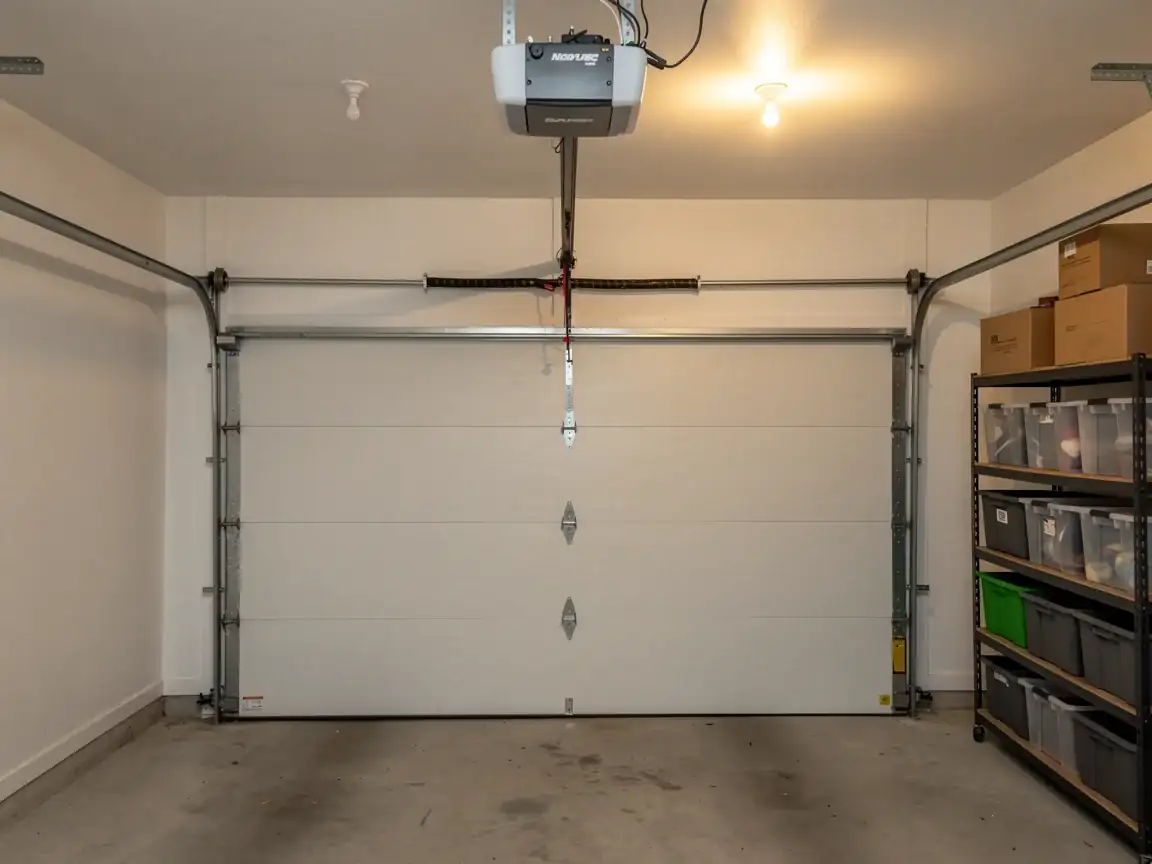
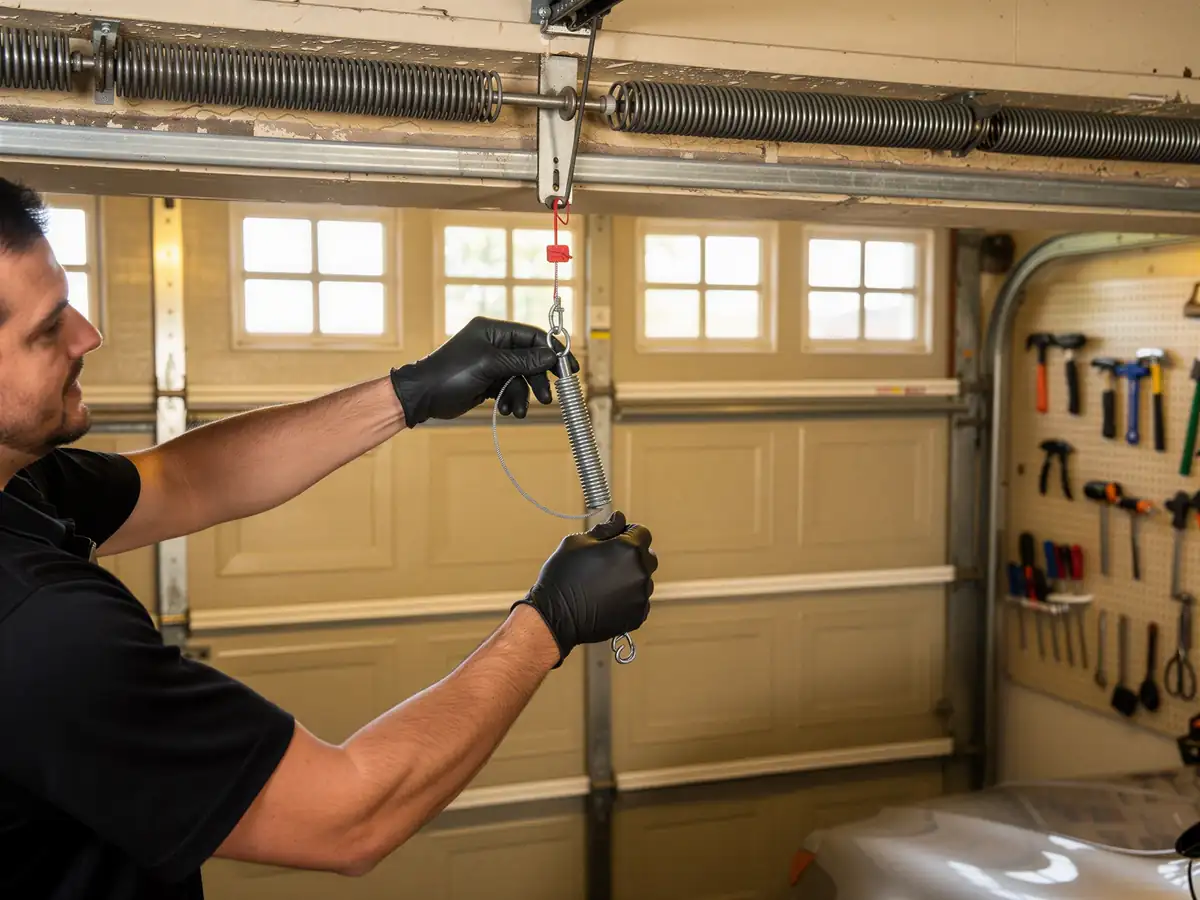
A torsion spring under tension is not a weekend project, full stop, and that's doubly true when the spring in question is original to a 1958 build and nobody's touched it since. Age changes how metal under tension fails - it doesn't always snap clean, it can let go unevenly, and that's worse for whoever's standing near it with a wrench.
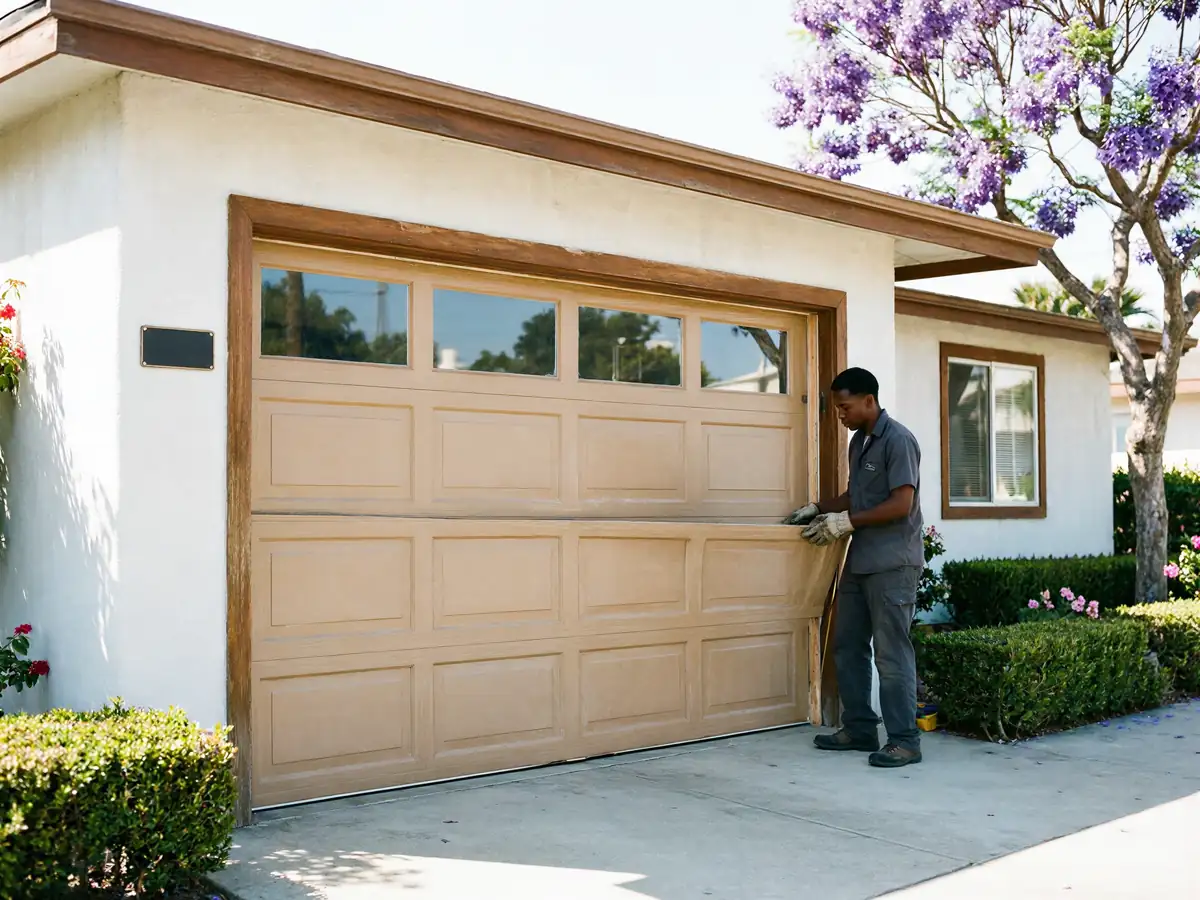
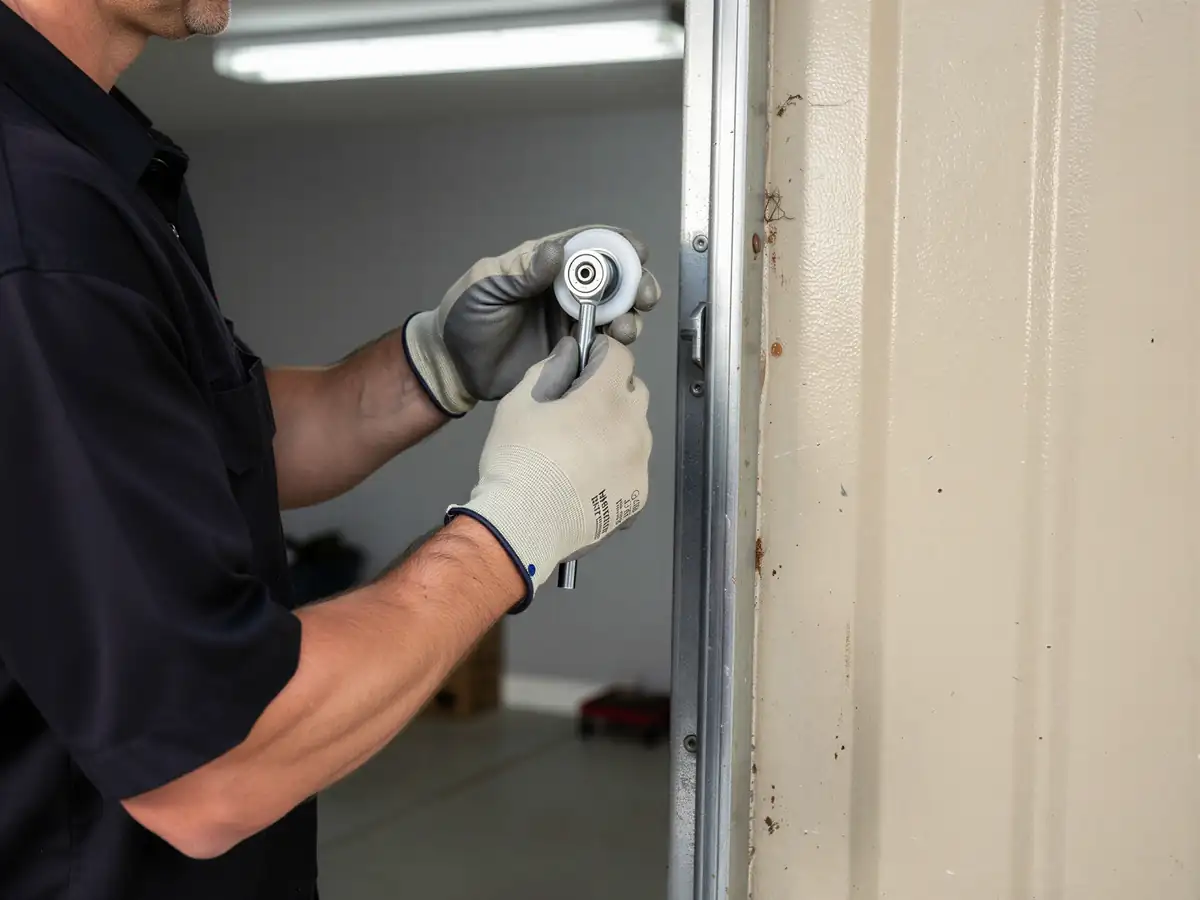
Cables, rollers, and weatherstripping are a different story. If a roller's worn through and the door's binding on the track, that's a part swap most owners with basic tools can manage safely, especially on a door that's otherwise sound.
Where we draw the line is anything that touches the spring system, the opener's internal gearing, or the track alignment on a door frame this old - the tolerances on original hardware are tighter than people assume, and a bent track on a house like this often isn't a straight-off-the-shelf fix. If you're not sure which side of that line you're on, that uncertainty itself is the answer: call it in.
Time on the Job
We travel the 4 miles out from Stockton for every call here, so there's no separate branch or faster window for Garden Acres - the job takes what the job takes once we're on site. A straightforward roller or cable swap is quick. A full torsion spring replacement on original hardware takes longer, because matching a spring to a sixty-year-old door sometimes means measuring the wire gauge and coil count on-site rather than pulling a part off a truck shelf that fits every door the same way.
Parts availability is the honest limitation here. Hardware made for houses built around 1958 isn't always something a supplier stocks locally, and if the original bracket or end bearing is a non-standard size, we may need a day or two to source the right replacement rather than force a part that's close but not right. We'd rather wait a day than install something that strips out in six months.
We don't promise a same-day window on every call - some jobs on older hardware just take the time they take to do once, correctly.
How It Shows Up
In Garden Acres, the moderate heat band that covers the service area tends to show up first in plastic and rubber
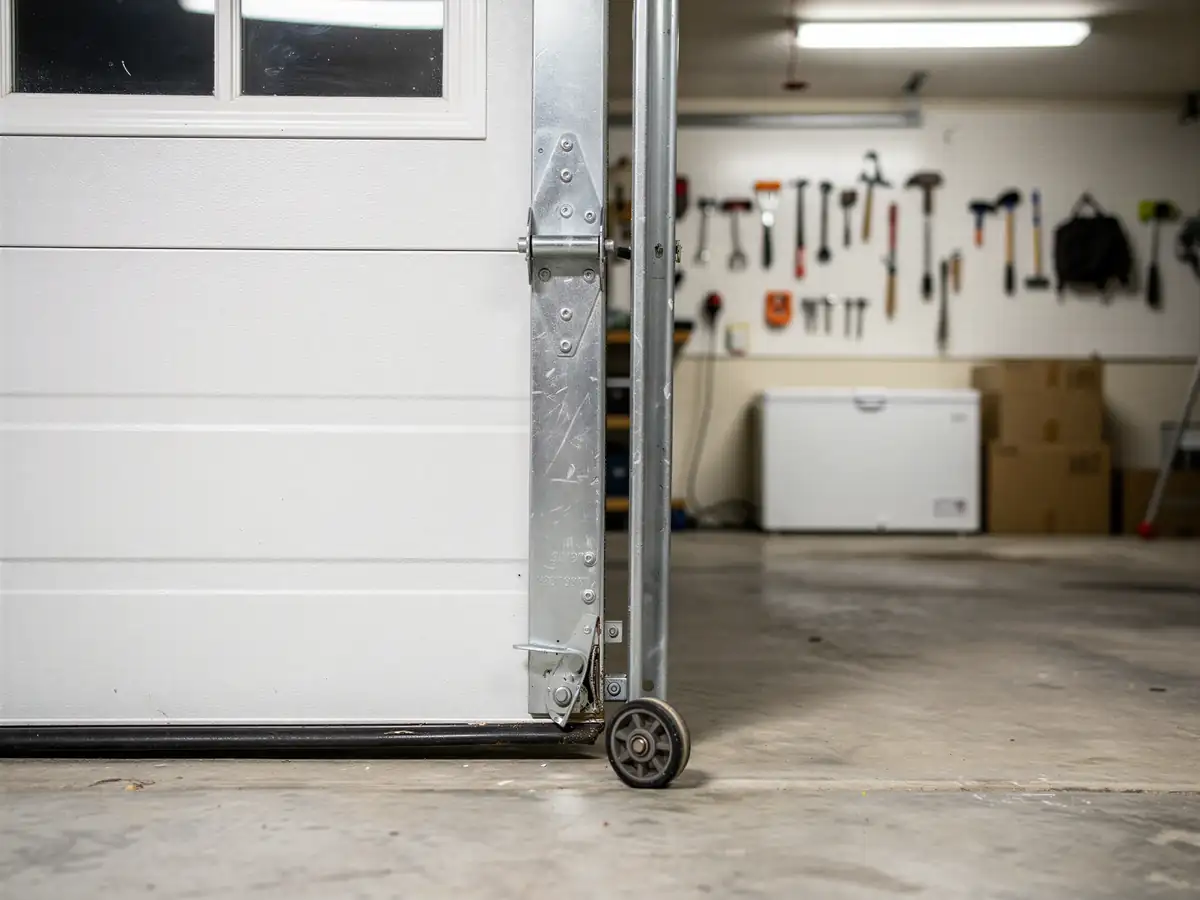
Not metal. Bottom seals go brittle and crack at the corners. Nylon rollers on original hardware - the kind installed before sealed-bearing steel rollers were standard - wear to an oval shape and start thumping on the way up and down.
On the 1958-era torsion systems still common here
The tell is usually a door that's noticeably harder to lift by hand than it used to be, which means the spring has lost tension gradually rather than snapped. That's different from a sudden bang and a door that won't budge at all, which is a spring that's actually broken.
Openers read the strain too
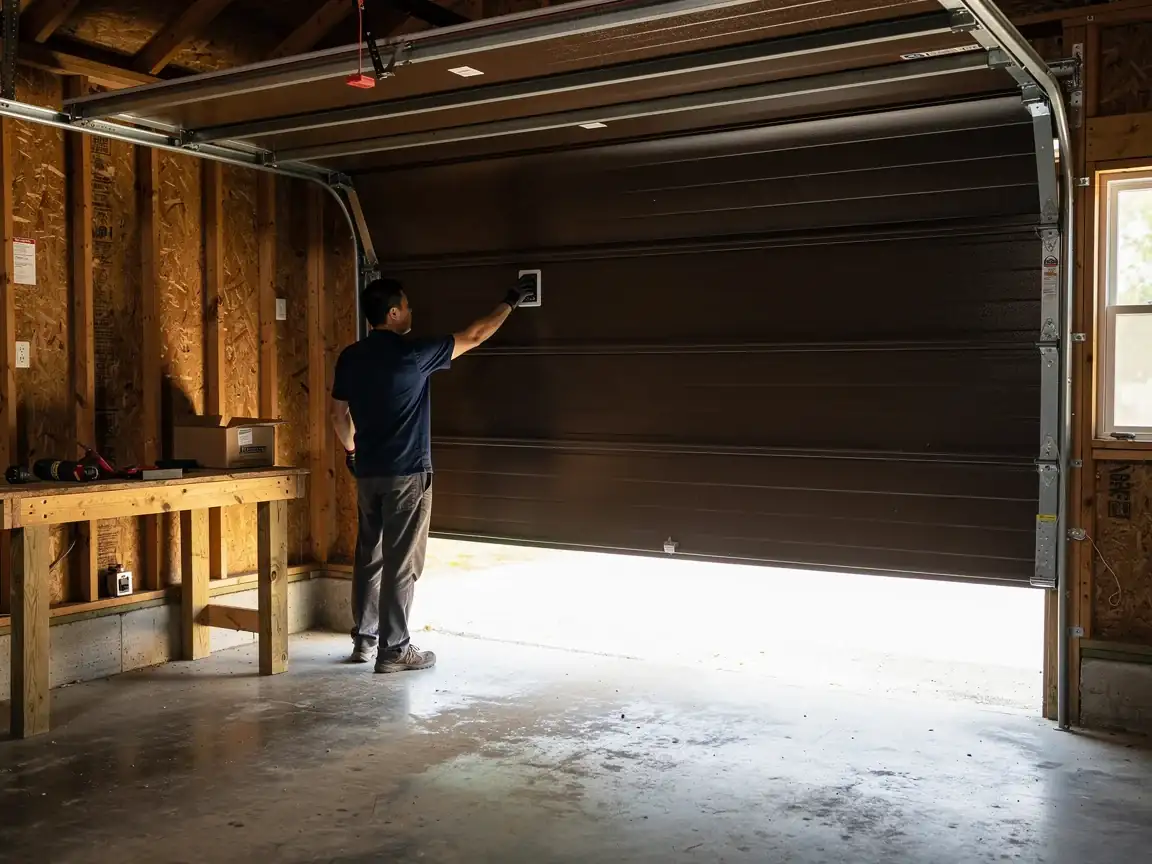
An opener straining against a spring that's lost tension will often reverse partway up, or grind longer than it should before the door clears the floor. On hardware this old, that grinding sound is worth calling in before the opener itself burns out trying to compensate for a spring that isn't doing its share of the work anymore.