Serving Stockton, CA & nearby
(209) 435-1820
Stockton, CA

The Garage Door Sounds Worth Paying Attention To

In Stockton homes built mostly in the 1960s and 70s, certain garage door sounds point to specific wear. Here's what to listen for before it fails.

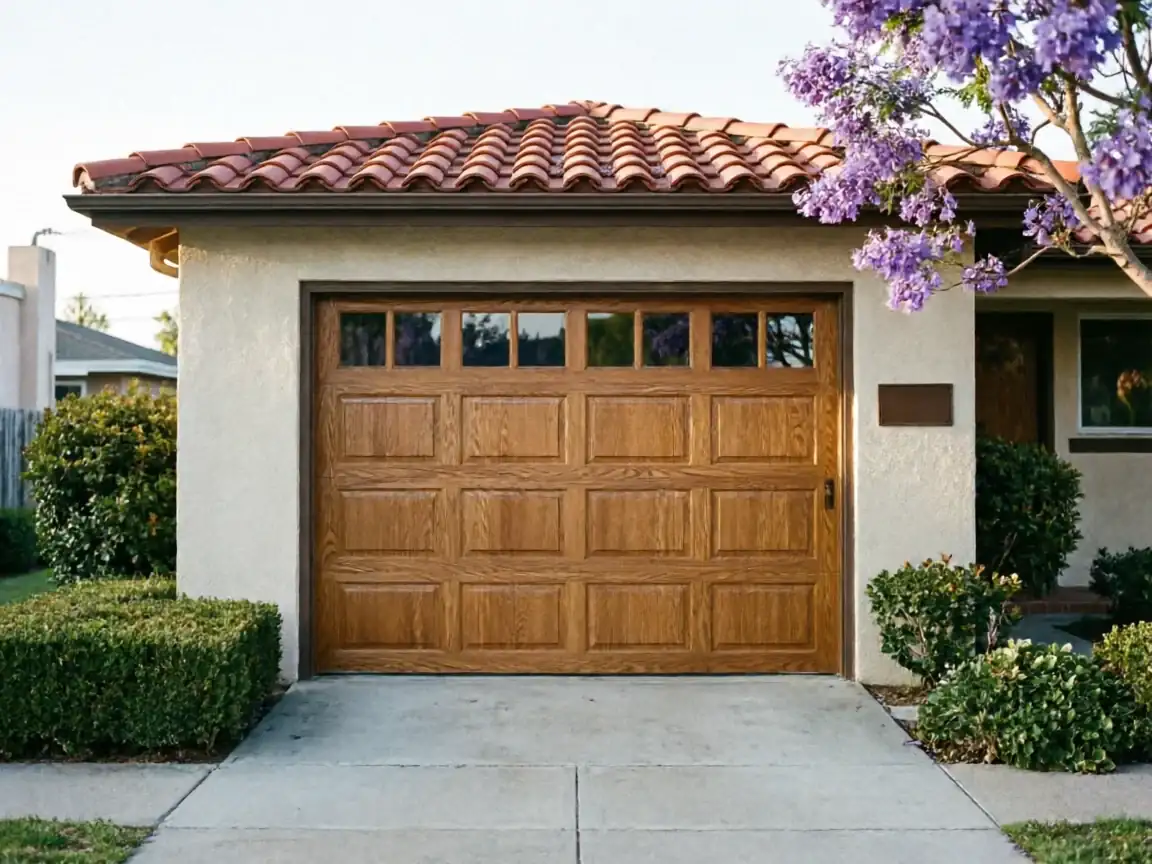
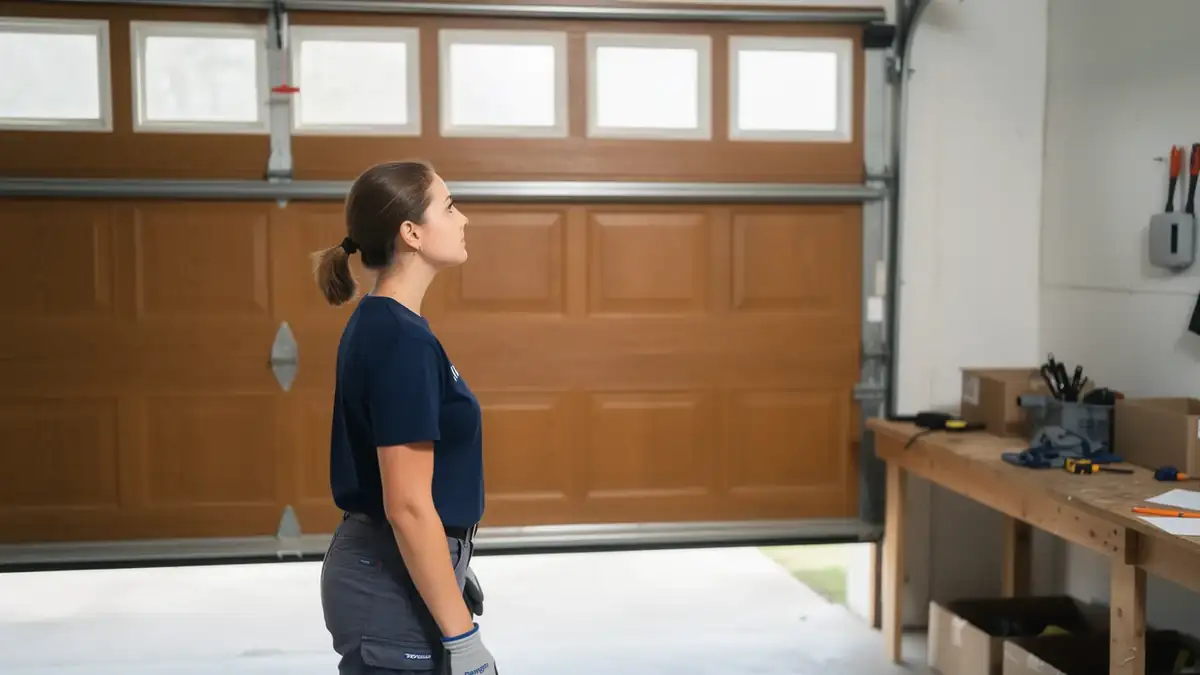
A technician in a blue shirt looks up at a closed brown garage door.

The Situation

Most of the calls we get start the same way: "it's been making a noise for a while, and now it won't open." Across the Stockton service area, housing stock runs from 1938 up through 2010, but the median build year sits at 1977, and neighborhoods like August, Garden Acres, and Kennedy are thick with homes from that same 1960s-70s run. That matters because doors and openers installed or replaced during that era are now old enough that original hardware is wearing out at roughly the same time across whole blocks. A grinding sound from a torsion spring in a 1968 Garden Acres house and the same sound two streets over are not a coincidence - they're the same part reaching the same age. The noise is rarely random. It's usually the house telling you something that's true of a lot of houses built the same year.

We're not going to tell you every squeak means disaster. Some noises are cosmetic and some are the early stage of a part that still has months left. The goal here is telling the two apart before one of them strands your car behind a dead door.

What Local Conditions Do

Stockton sits in a moderate heat band, not an extreme one, so you're not dealing with the kind of daily swing that cracks nylon rollers in a single season. But moderate heat still means repeated expansion and contraction on steel track and spring coils, year over year, and on a door installed in the 1970s that's forty-plus years of cycling on hardware that was never built to last that long. A rattling track on a house from that original 1960s-70s wave is often the track itself having worked slightly loose from that long, slow thermal flex rather than from one bad week of weather. Newer builds elsewhere in the service area - the stretch running out past Mountain House and Lathrop, for instance - don't show the same pattern yet simply because the hardware hasn't had the decades to get there. The noise profile you hear is really a readout of how many heat cycles a given door has survived, which is a different number in a 1975 house than in a 2008 one.

What Most People Get Wrong

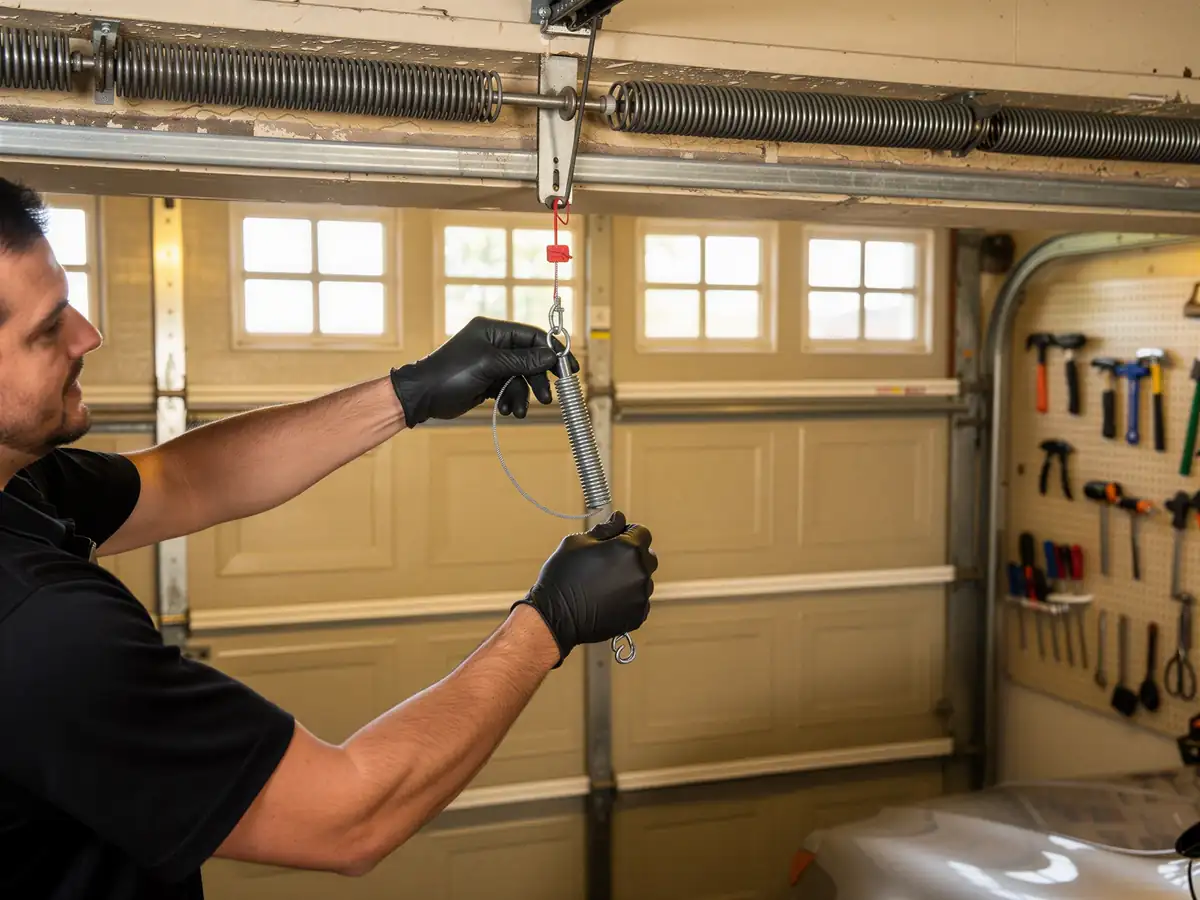
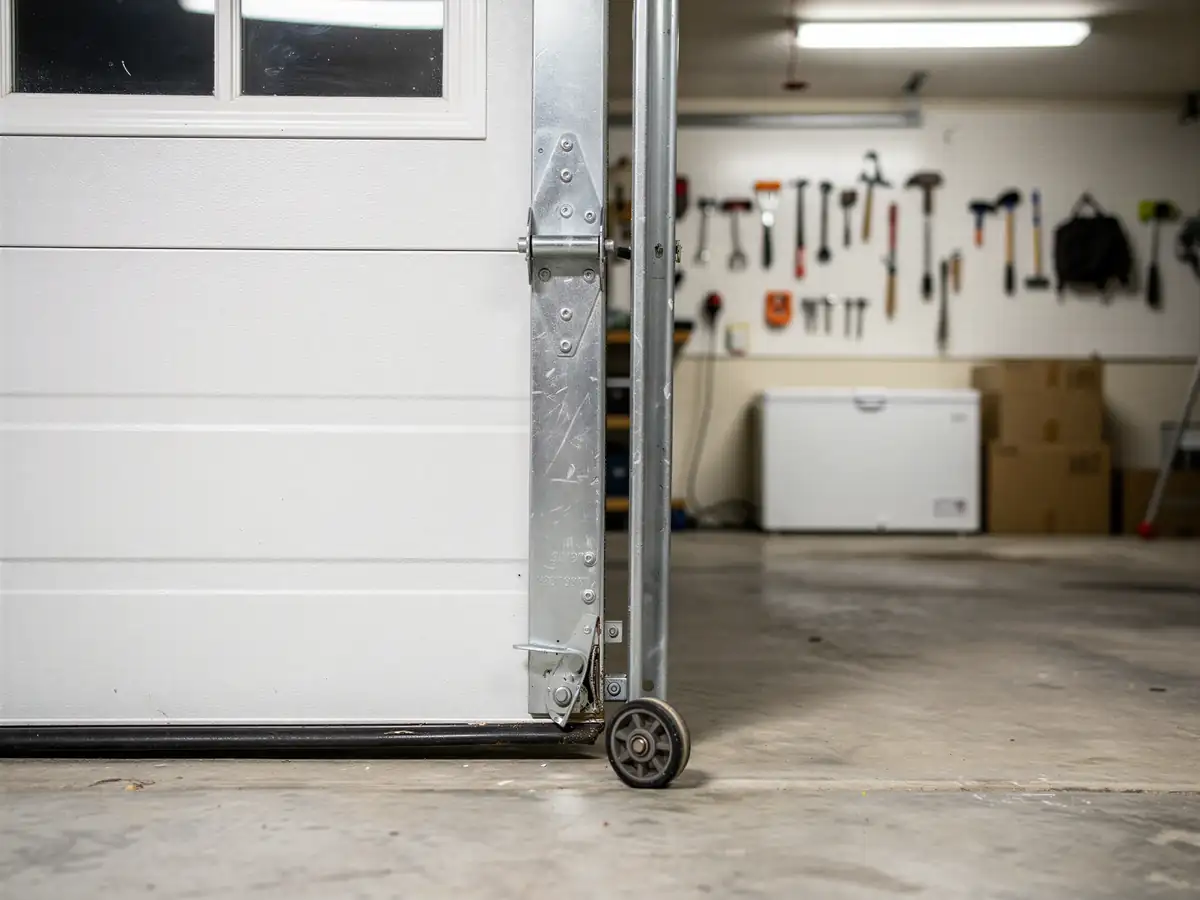
The most common mistake is spraying oil on a noisy spring and calling it fixed. On the older stock common through August, and Garden Acres, a squealing torsion spring usually means the coils are nearing the end of their cycle count, and lubricant just buys a few quieter weeks before it lets go - often while the door is open. The second mistake is assuming a noisy opener motor and a noisy door are the same repair; with median household income in the service area at $93,993, a lot of owners we talk to are ready to just replace the opener outright rather than diagnose it, when the actual noise is coming from a roller three feet away. We'll say plainly: we don't recommend replacing a whole door system because of a noise alone. Across 31,360 owner-occupied houses in this area, most noise complaints turn into a single-part repair, not a full swap, and we'd rather tell you that up front than sell you more than the sound actually calls for.
How it works

From “it’s stuck” to “it’s fixed”

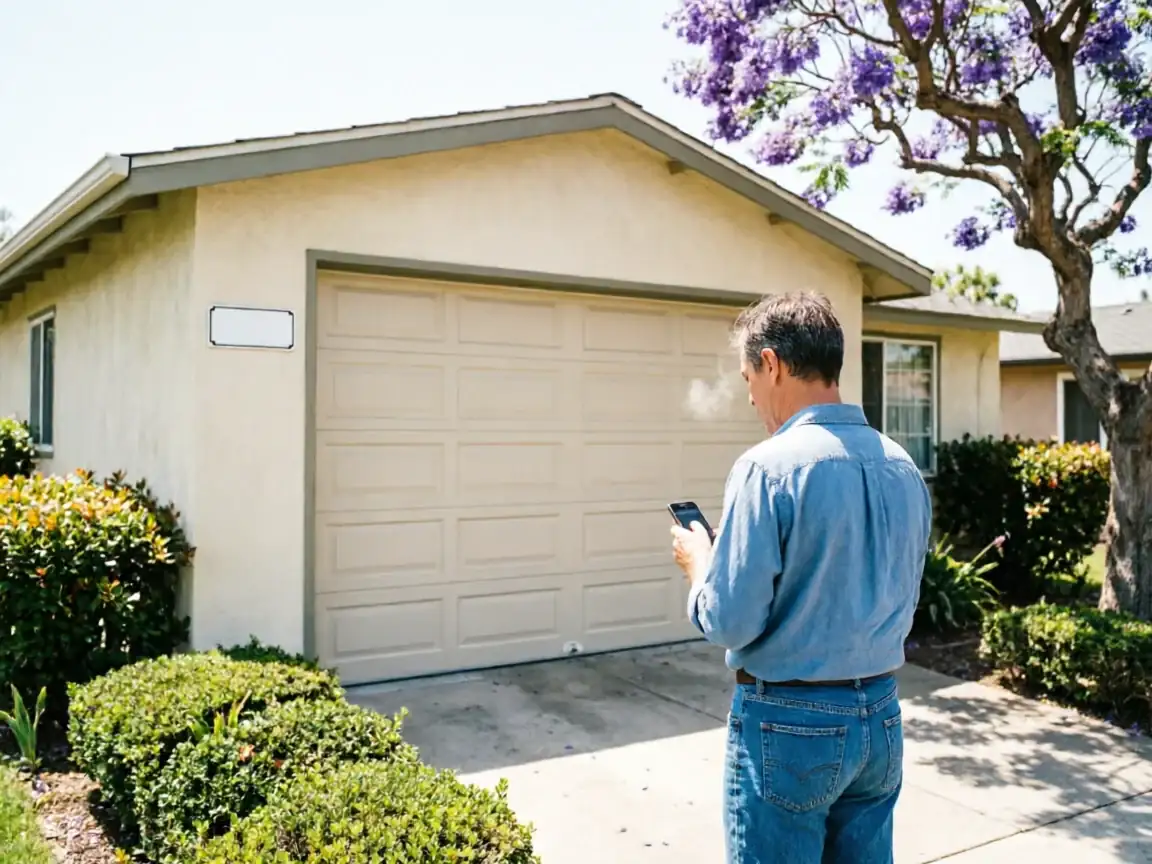
A man stands in a driveway, looking at his phone in front of a closed garage door.

Tell us what’s wrong

Describe the symptom - won’t open, loud bang, opener runs but the door won’t move.

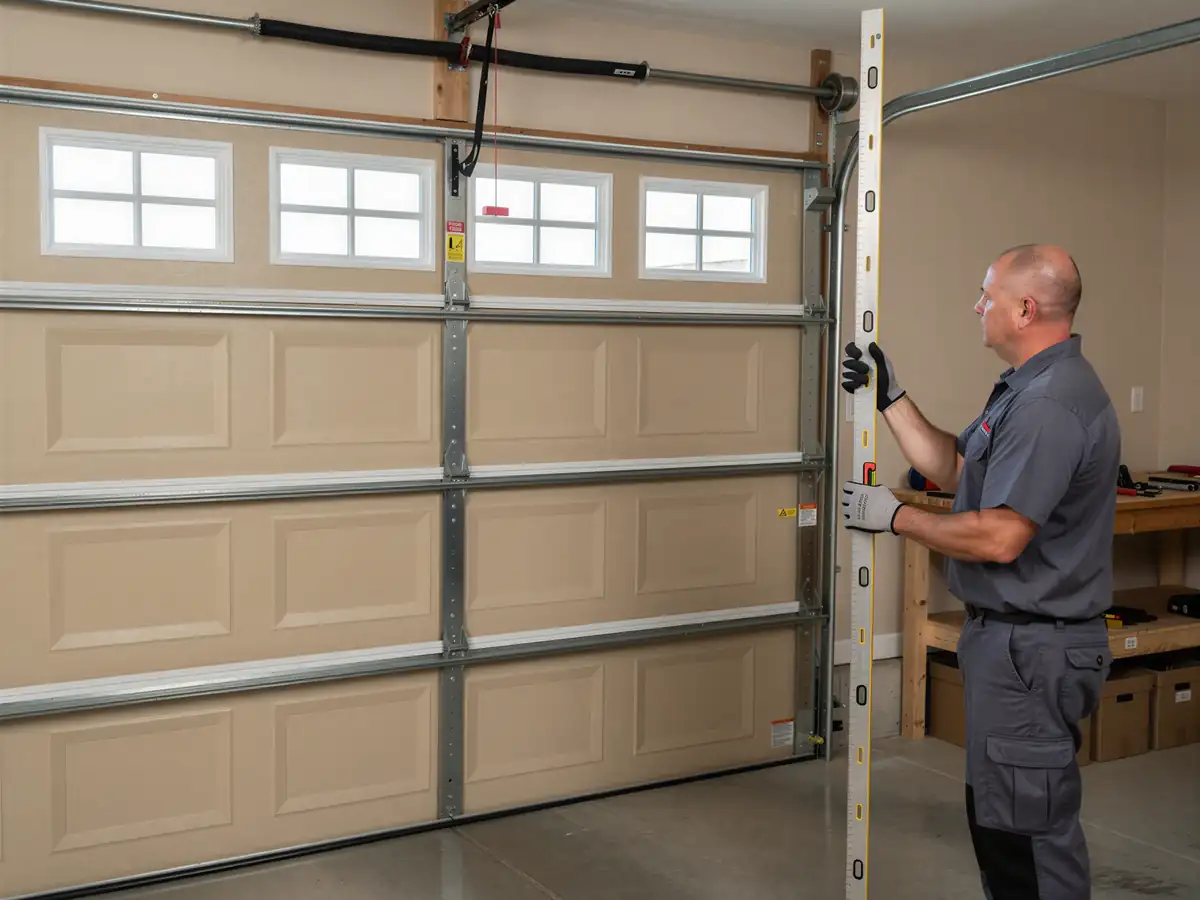
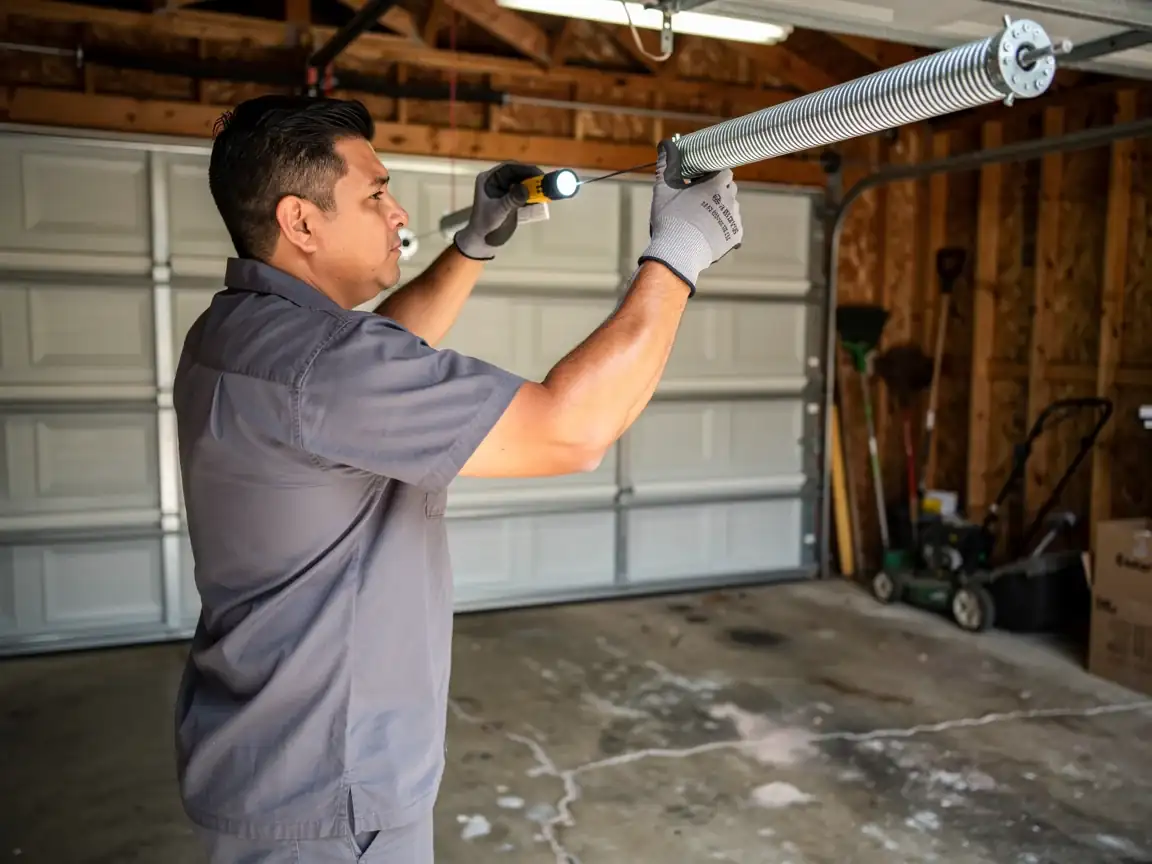
A technician in a gray uniform inspecting a garage door torsion spring with a flashlight.

On-site diagnosis

A technician tests the door under power and by hand and finds what actually failed.

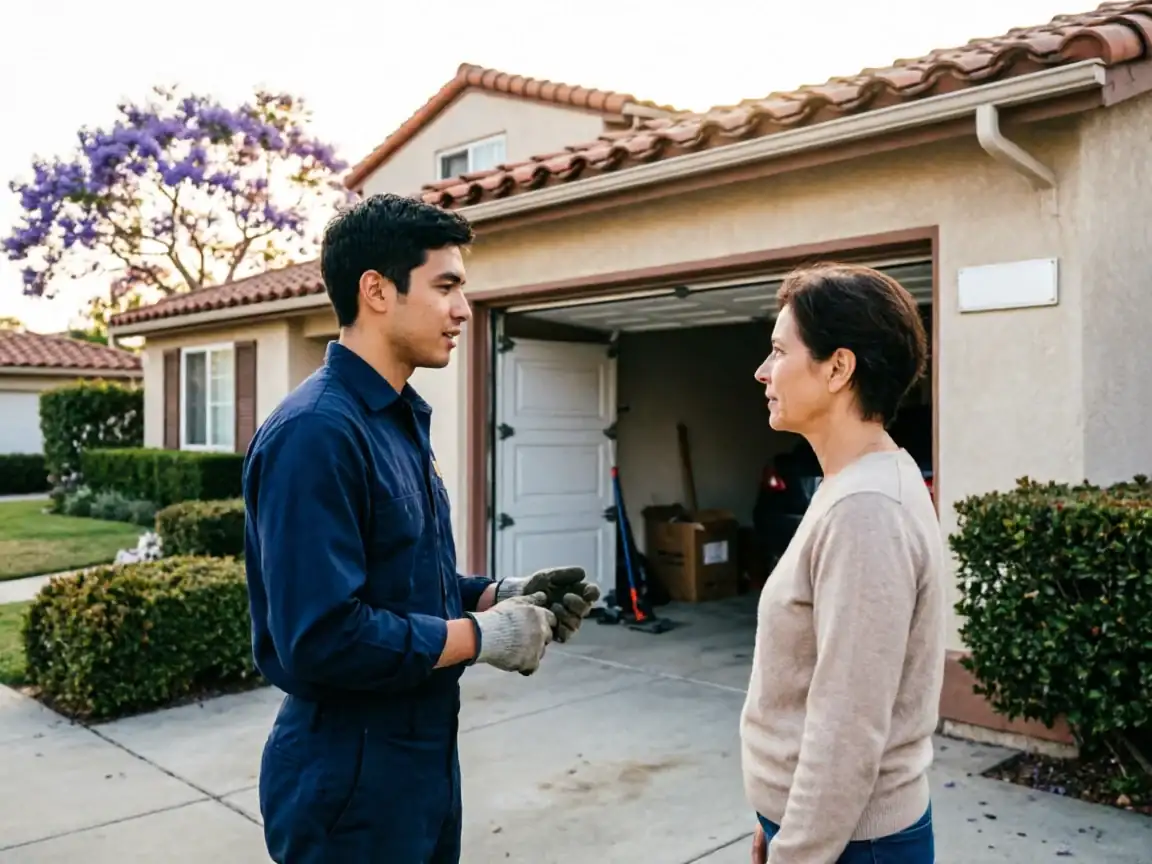
A technician in a blue uniform talks to a woman in front of a house.

Clear, up-front plan

You get the fix that’s needed and what drives the cost - before any work starts.

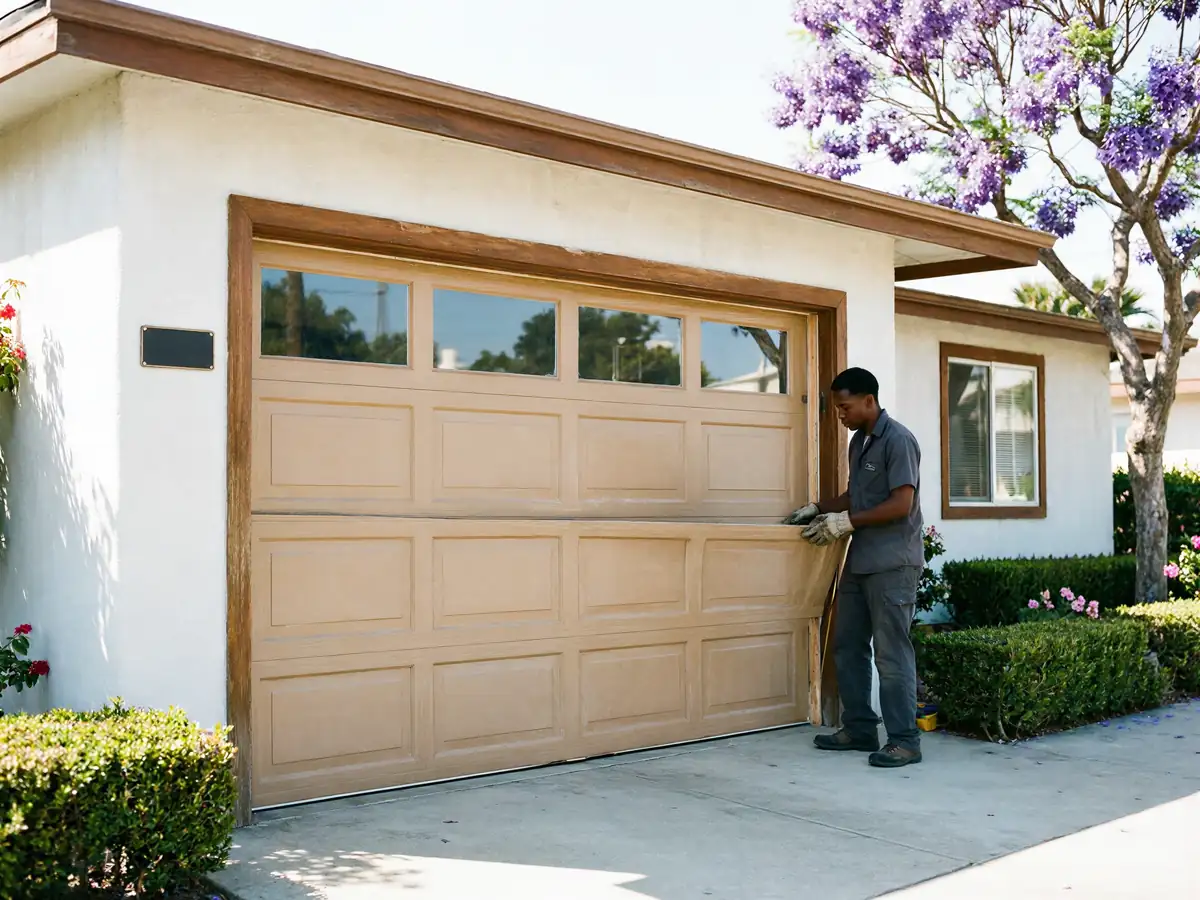
A technician in a blue shirt is adjusting a brown garage door.

Repaired & tested

The repair is done, the door is set true and tested, and the work area left clean.

Not sure which repair your door needs in Stockton, CA? Describe what it’s doing - every job starts with a diagnosis.

How we work

What to expect

Diagnosis firstEvery visit starts by finding what actually failed - not a pre-written parts list.
The right part for the doorSprings and openers matched to the door’s weight and age, so the fix holds up.
Straight answersWhen a repair makes more sense than a replacement - or the reverse - you hear it plainly.
Clean, careful workTension released safely, hardware set true, the door tested under power before we leave.
What we do

Garage Door Services

Repair and installation work for Stockton homes and businesses.

Questions

Frequently asked

Straight answers about garage door repair in Stockton. Still unsure? Ask us directly.

My garage door makes a loud bang when it closes. Is that normal?

Not in the sense of harmless. On a house from the common 1960s-70s stock in this area, a bang on closing is usually a cable or a worn roller letting the door drop the last few inches instead of settling. It's worth a look before the cable fully lets go.

Why does my door only squeak in certain weather?

Stockton's heat band is moderate, so you won't get the dramatic swings some regions see, but steady warm-to-cool cycling over decades still dries out lubricant and lets metal parts flex slightly. A squeak that comes and goes with temperature is usually a roller or hinge, not the spring.

Should I just replace the opener if it's grinding?

Not necessarily. We'd rather check the gear and sprocket assembly first - on houses with originals from the 1970s build wave, that's the part that usually grinds, and it's a smaller repair than a full opener swap.

Ready to get your garage door sorted?

Tell us what it’s doing and where you are in Stockton - we’ll take it from there.

Request a QuoteCall