The Situation
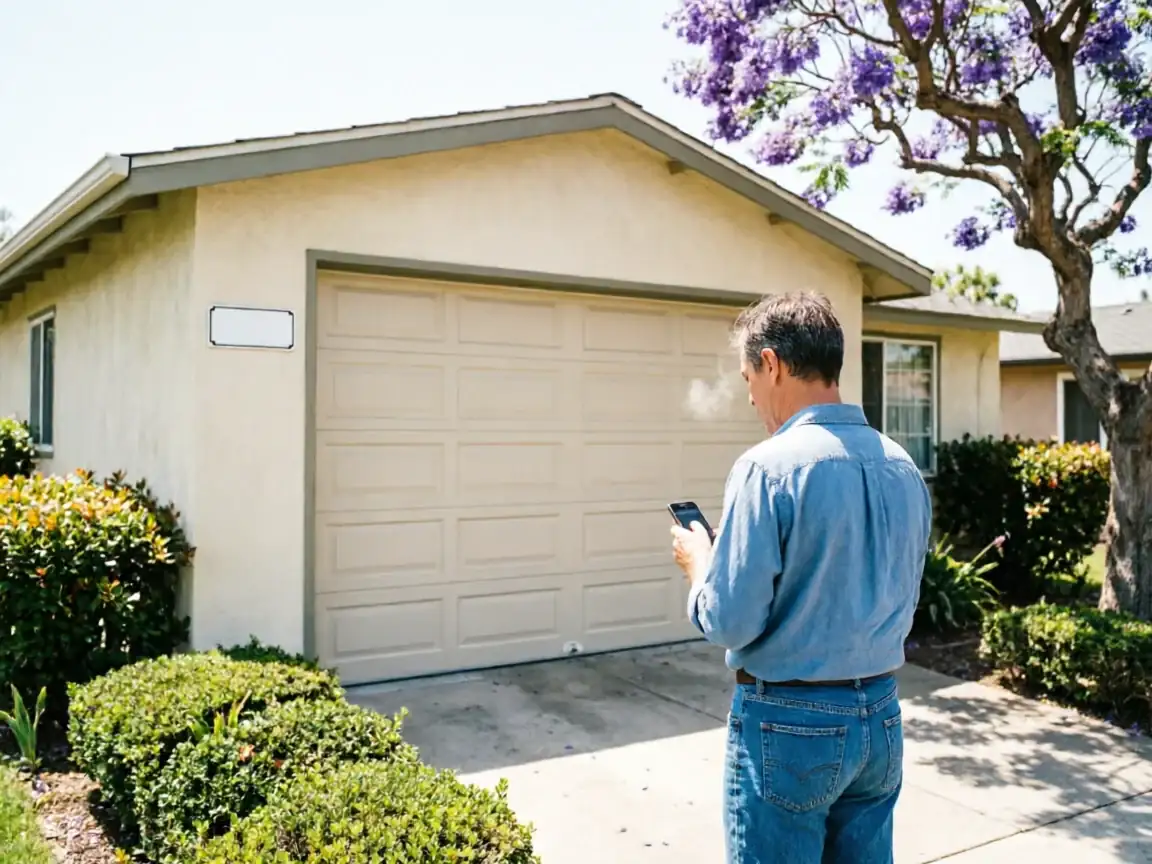
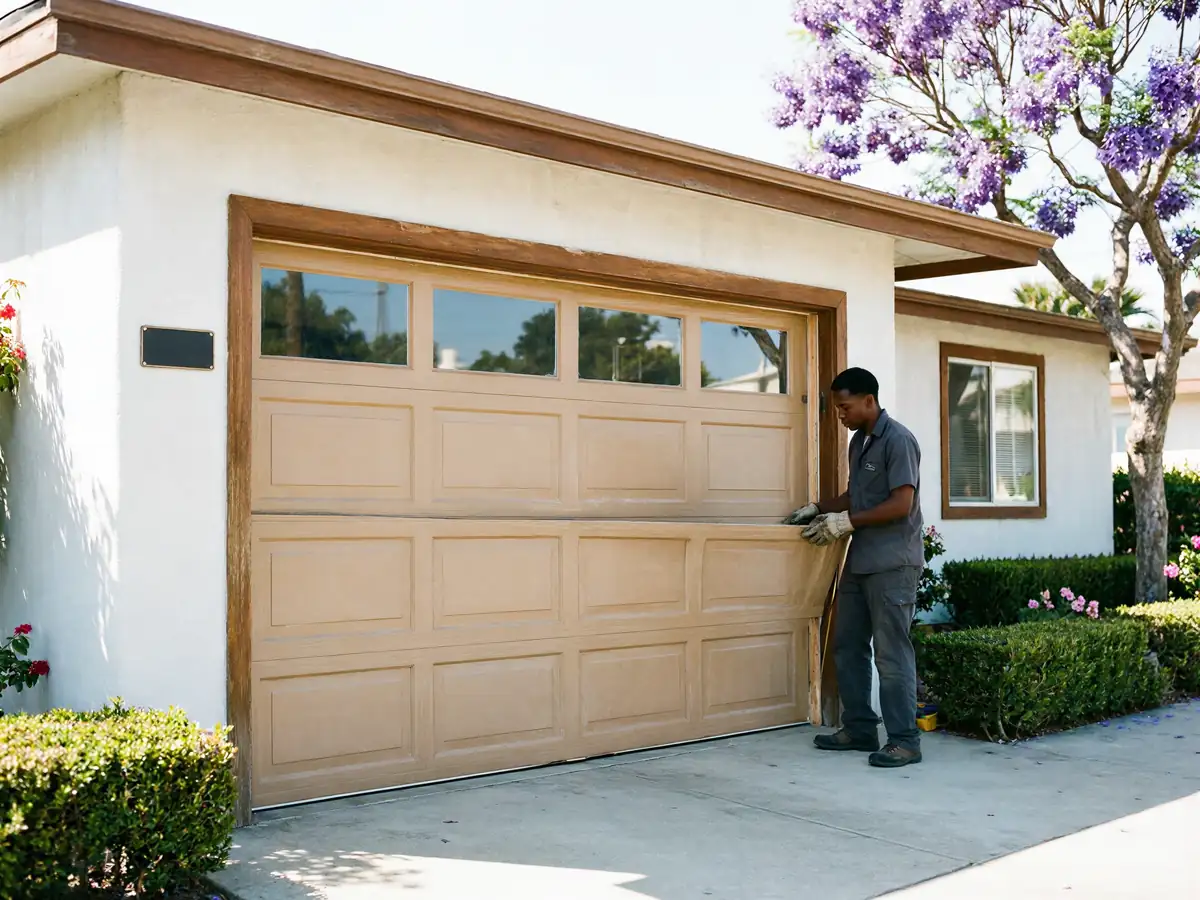
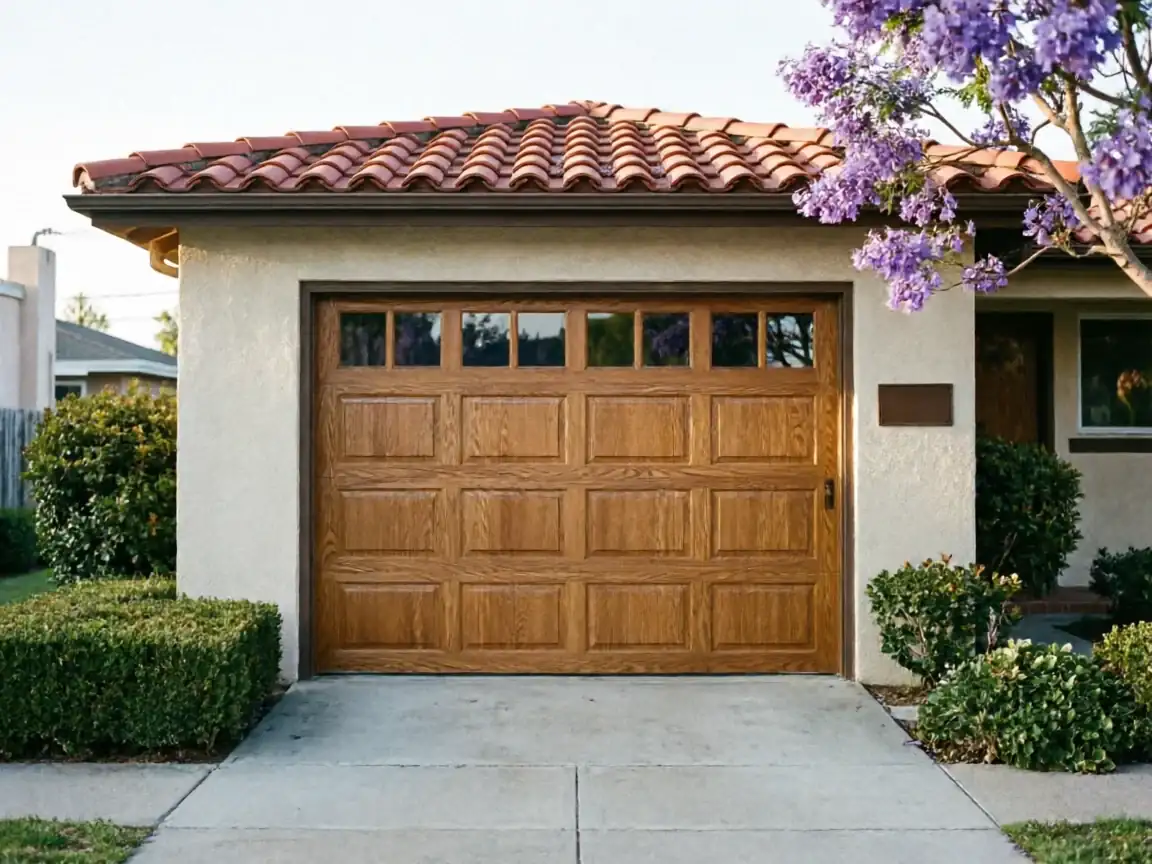
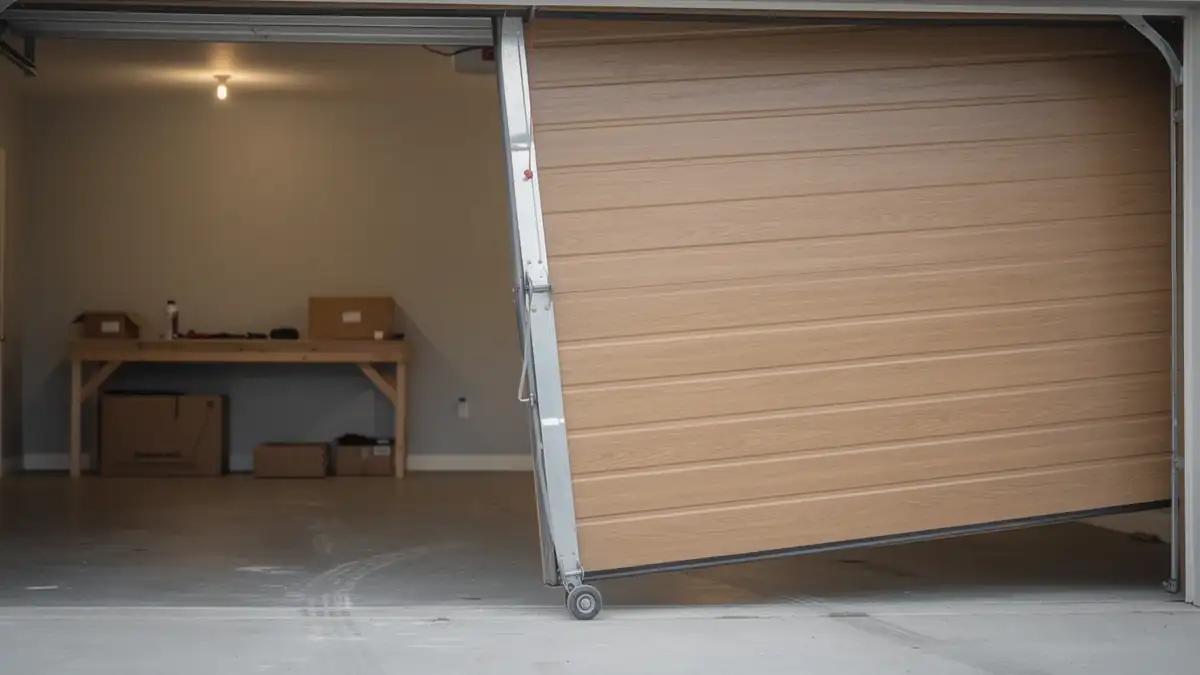
A door that's jumped its track usually doesn't happen in one dramatic moment. It happens over months, sometimes years, and the house just showed you the result. In Stockton, a lot of what we see traces back to the housing stock itself - homes here were built between 1938 and 2010, with the median landing around 1977, and most of the neighborhoods we work in still have their original 1960s and 70s-era hardware. That means steel tracks that have flexed through forty-plus summers, brackets with slotted holes worn oval from decades of small movements, and rollers nobody's replaced since the door was installed. None of that shows up as an emergency until the day the door binds, jumps the roller guide, and leans in the opening. The fix is rarely mysterious once you know what you're looking at, but it's almost never a one-bolt tightening job either. The track didn't fail on its own - something pushed on it first, and that something is usually still there when we show up.
What to Look At First
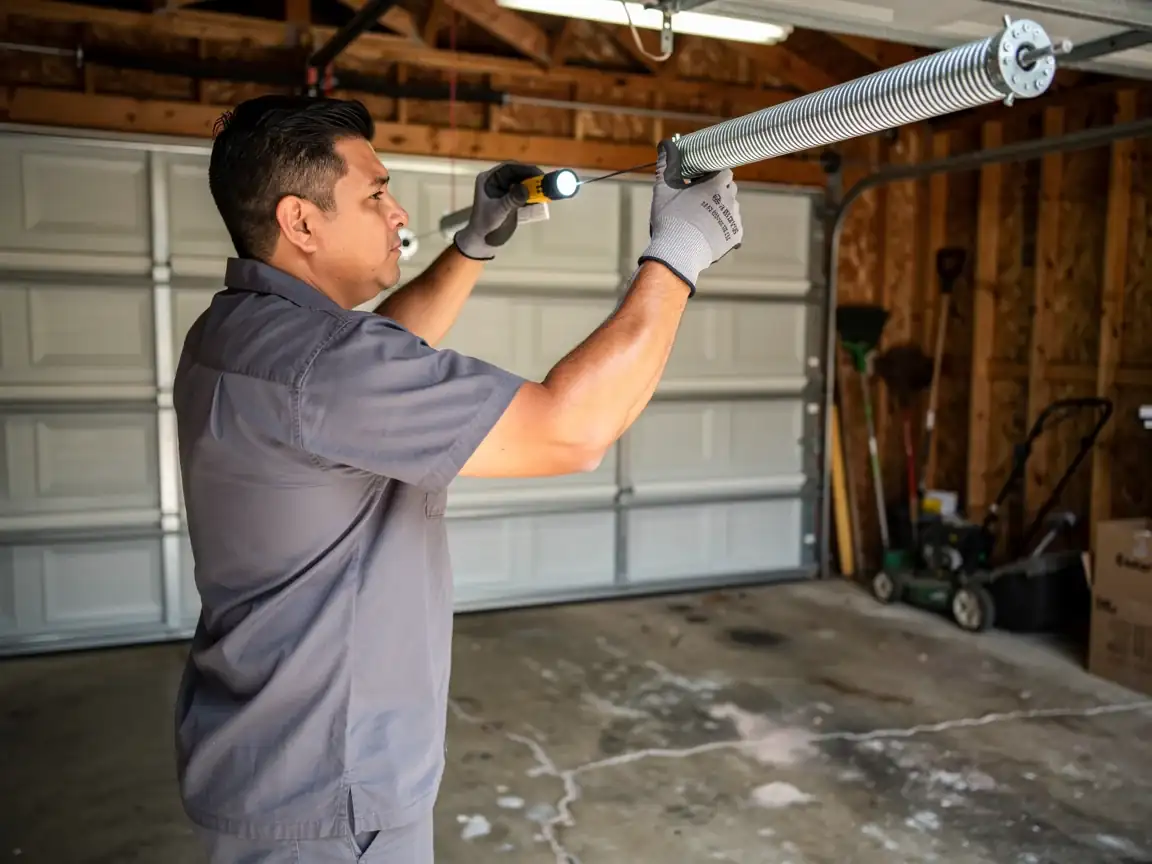
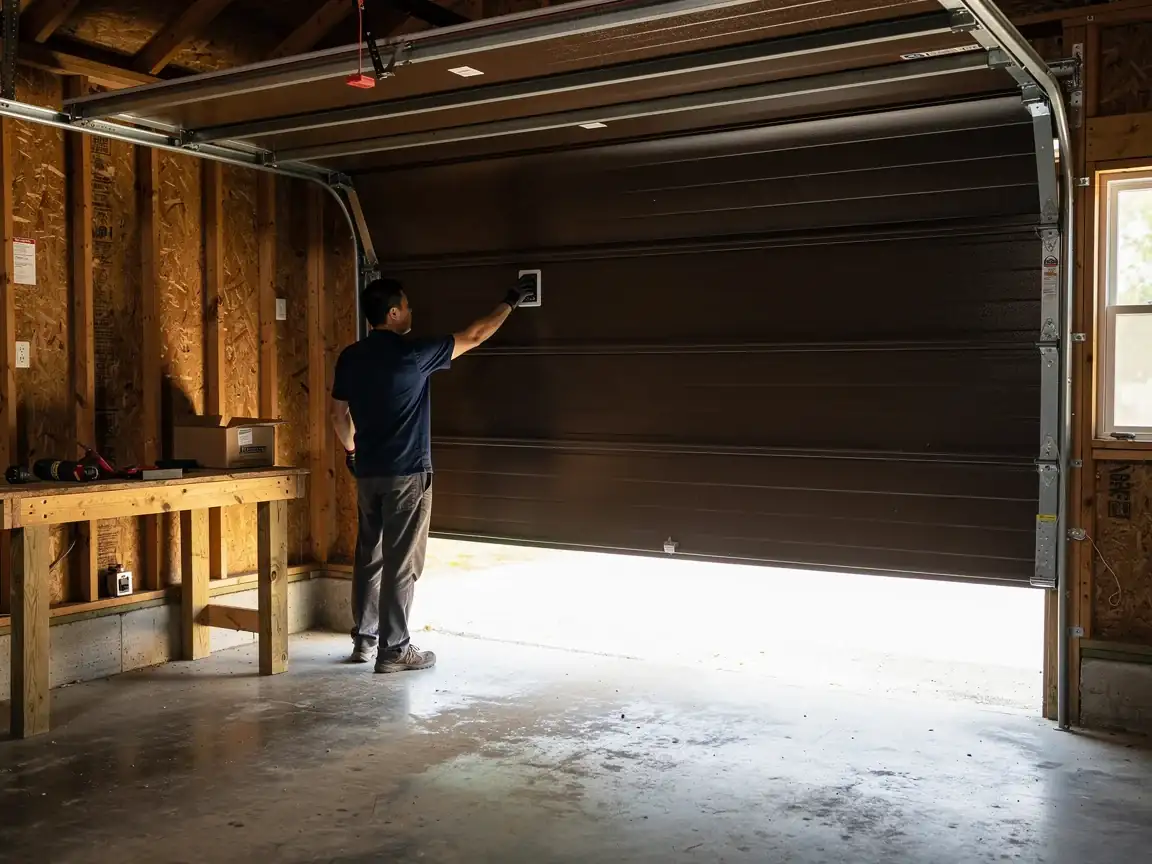
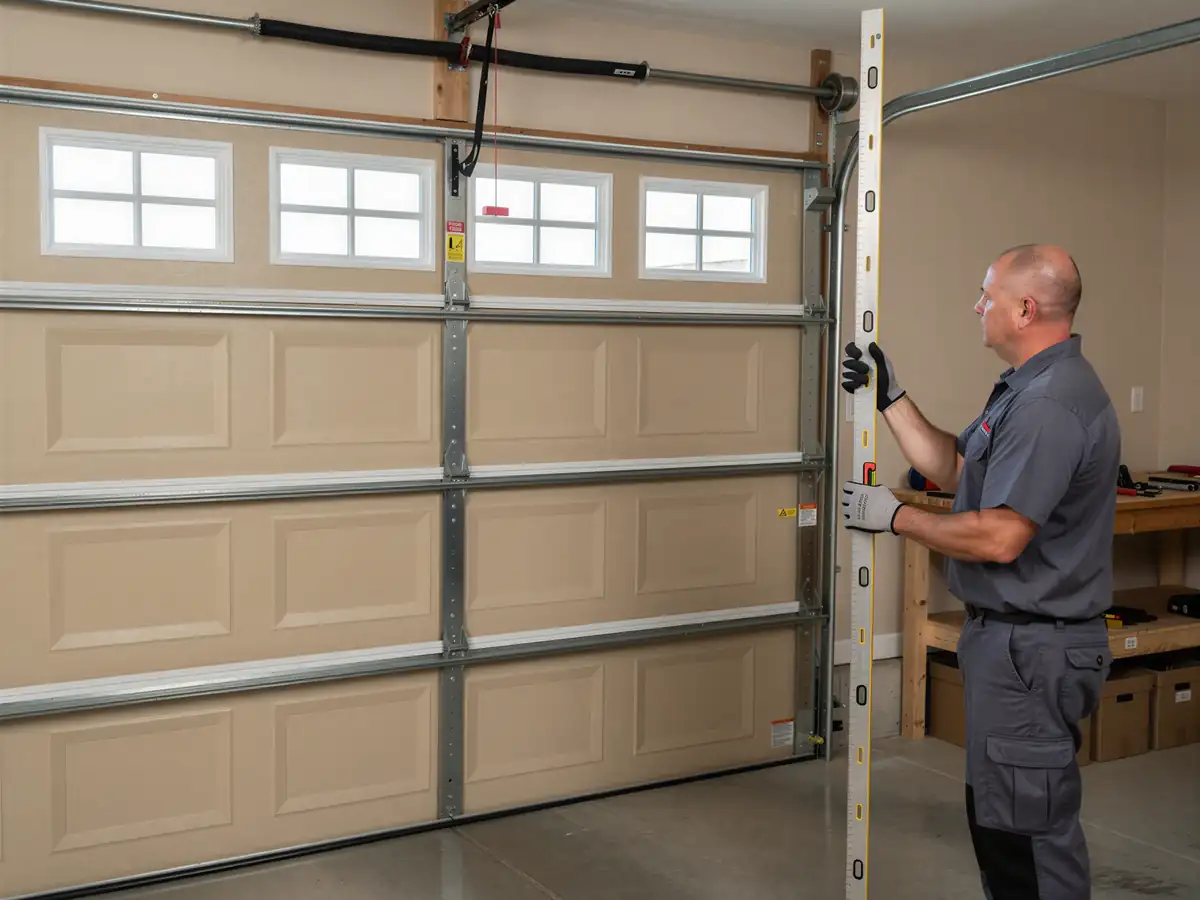
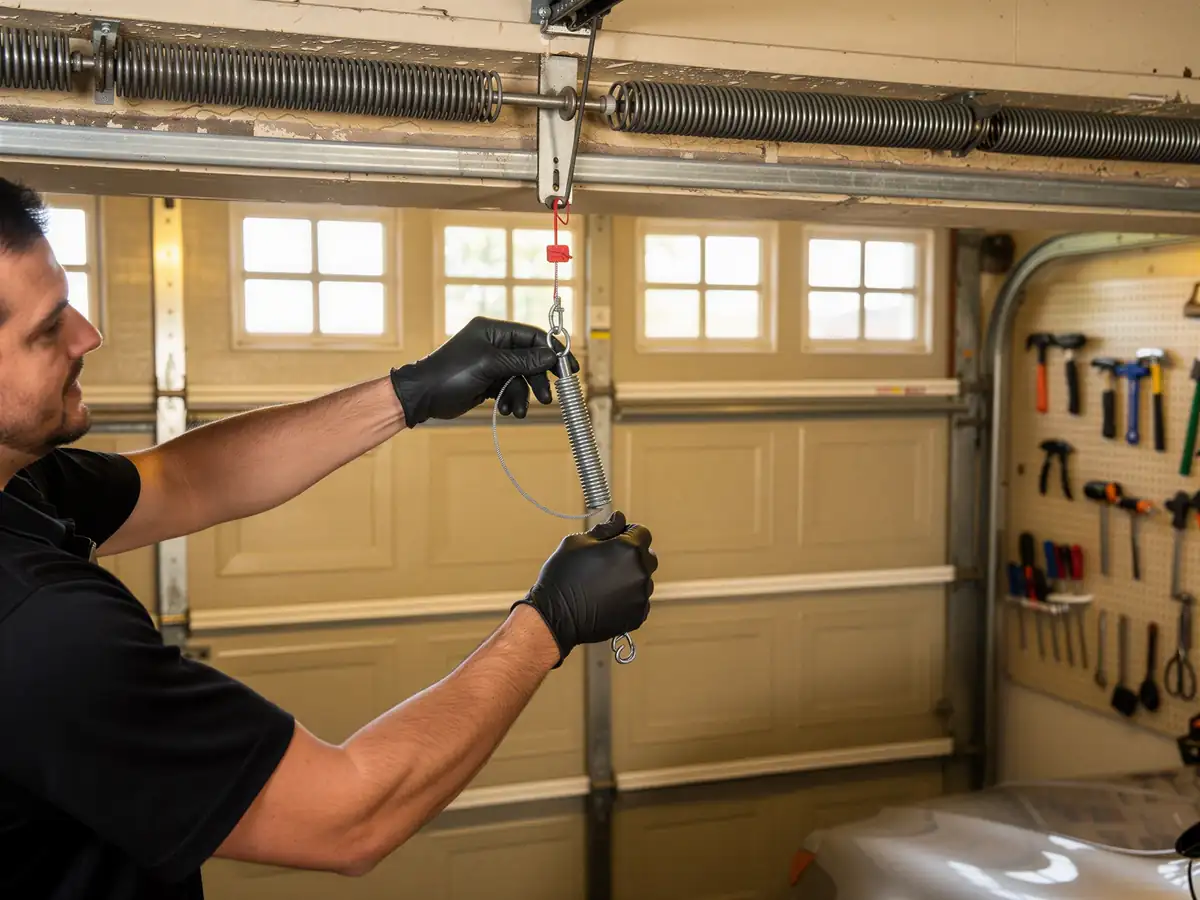
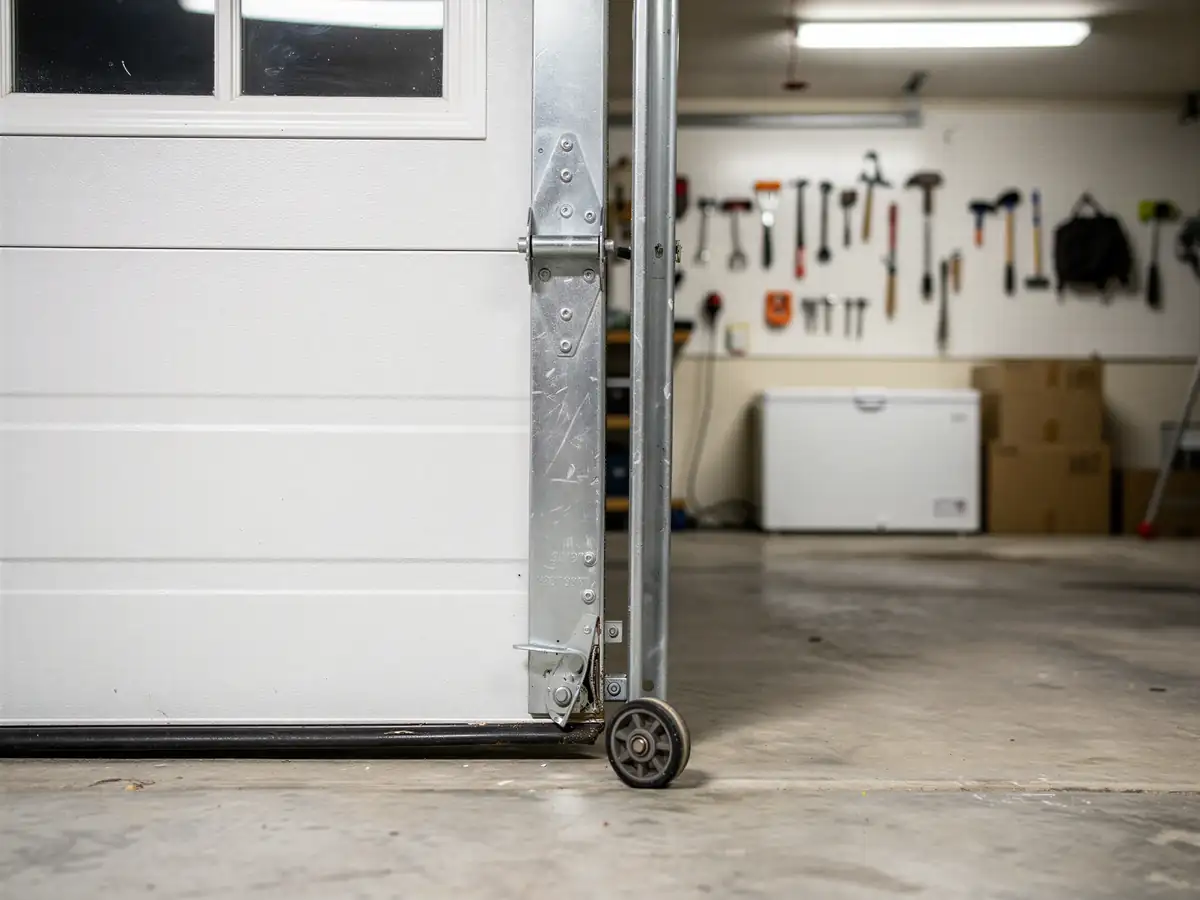
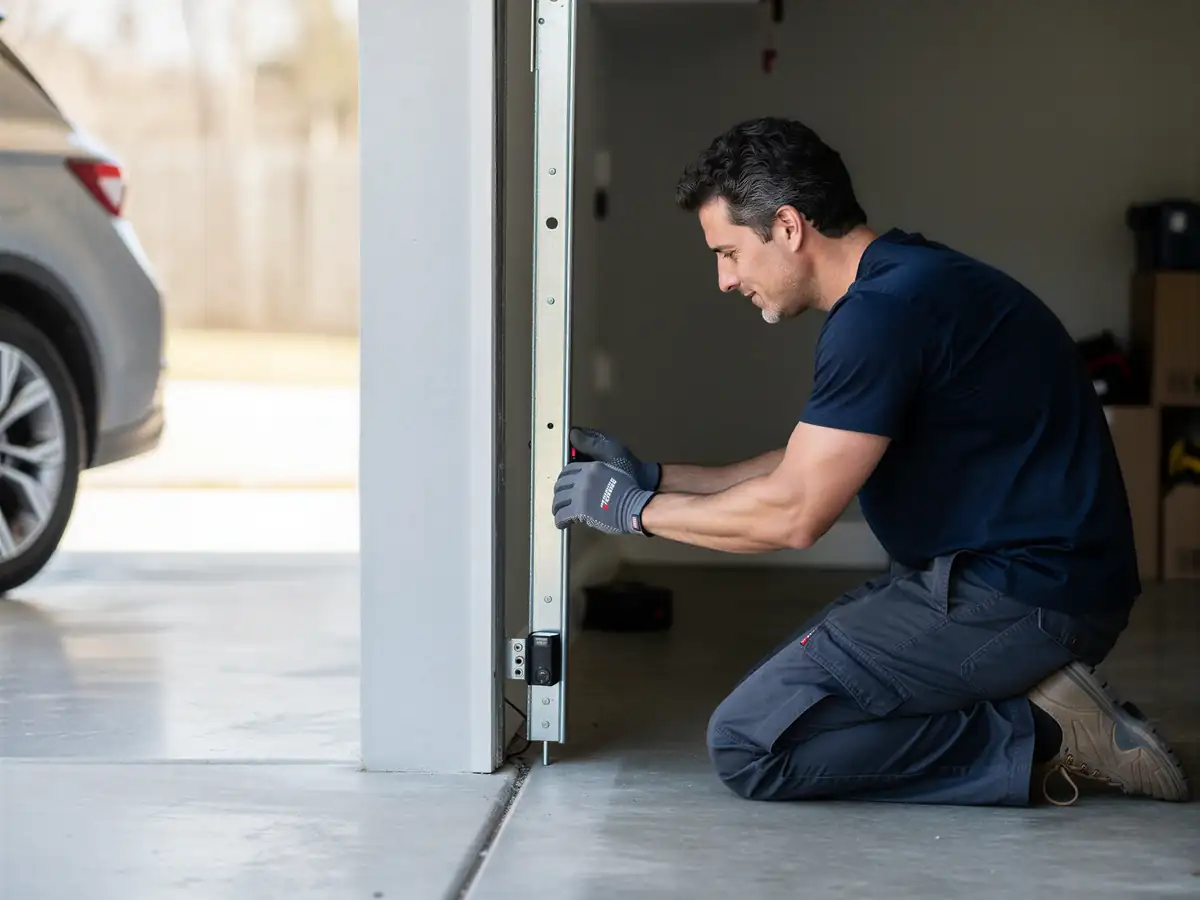
Before assuming the worst, look at the track itself where it bolts to the wall studs or jamb - on older Stockton houses that's often the first place to loosen, since the original mounting hardware wasn't always sized for the door that's on there now if it's been swapped at some point. Check whether the gap between roller and track is even on both sides top to bottom; an uneven gap usually means the track leans, not that the roller's bad. Look at the bottom bracket too - on original 1960s-70s doors this is frequently the weak point, since it takes the full stress of the cable and spring. If the door is dragging on one side only, that's a track or bracket issue, not a spring issue, and it's worth knowing the difference before anyone starts turning bolts. We don't recommend forcing a door back onto a bent track - bent steel rarely returns to true, and reusing it just invites a repeat visit.
What Most People Get Wrong
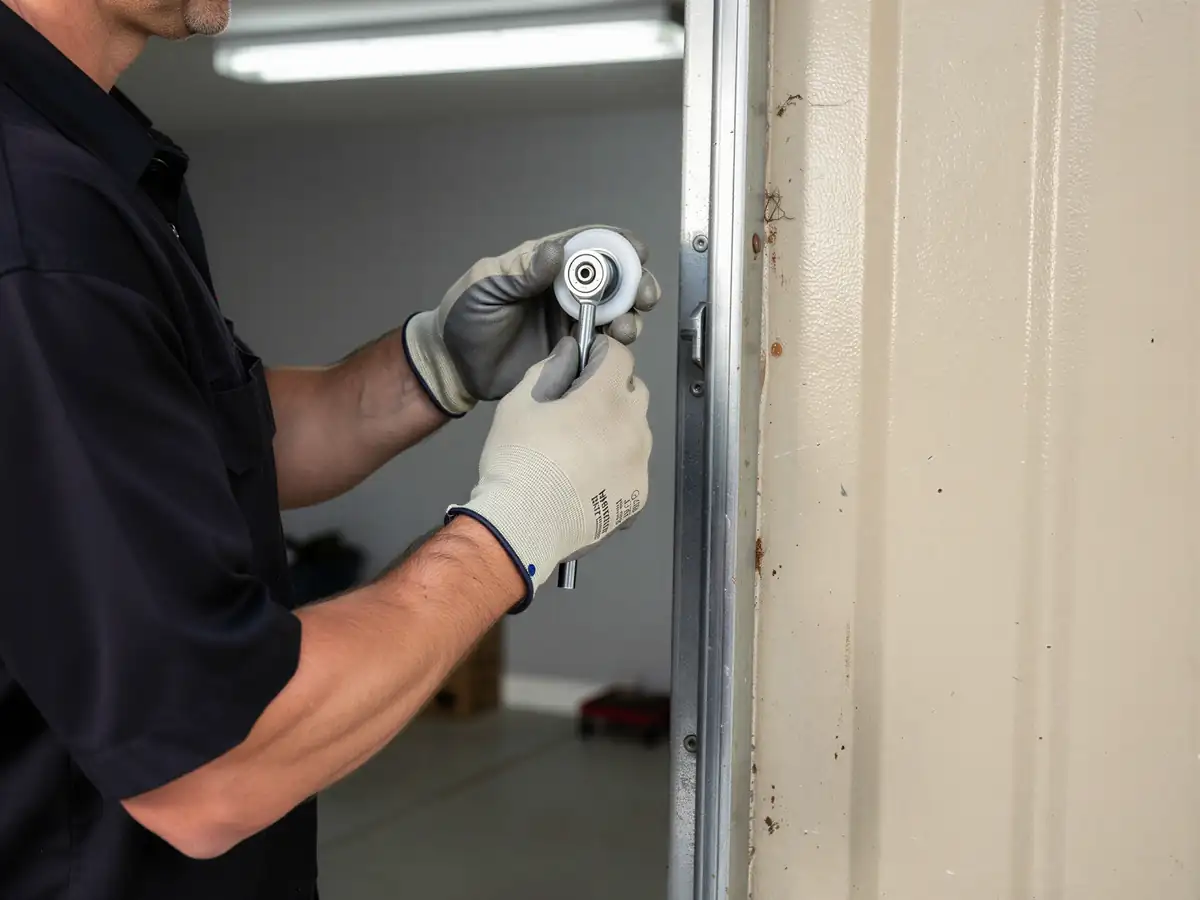
The most common mistake is treating an off-track door as a roller problem when it's actually a mounting problem. People replace rollers, the door runs fine for a week, and then it jumps again because the track itself was never pulled back to plumb. The second mistake is assuming a house built in the 1977 range still has hardware rated for the loads an updated door puts on it - insulated panels and heavier sections put more strain on old brackets than the original lightweight doors ever did. We'll say plainly: if your track is bent rather than just loose, straightening it is a short-term patch, not a repair. A bent track under daily thermal movement in a moderate heat climate tends to walk out of true again within a season or two. At that point replacing the track section costs less over time than repeat service calls to re-align one that keeps drifting.