Serving Stockton, CA & nearby
(209) 435-1820
Stockton, CA

When the Power Goes Out, What Happens to Your Opener

A look at how Stockton's older housing stock and summer heat affect garage door openers during power outages, from Stockton Garage Door Co.

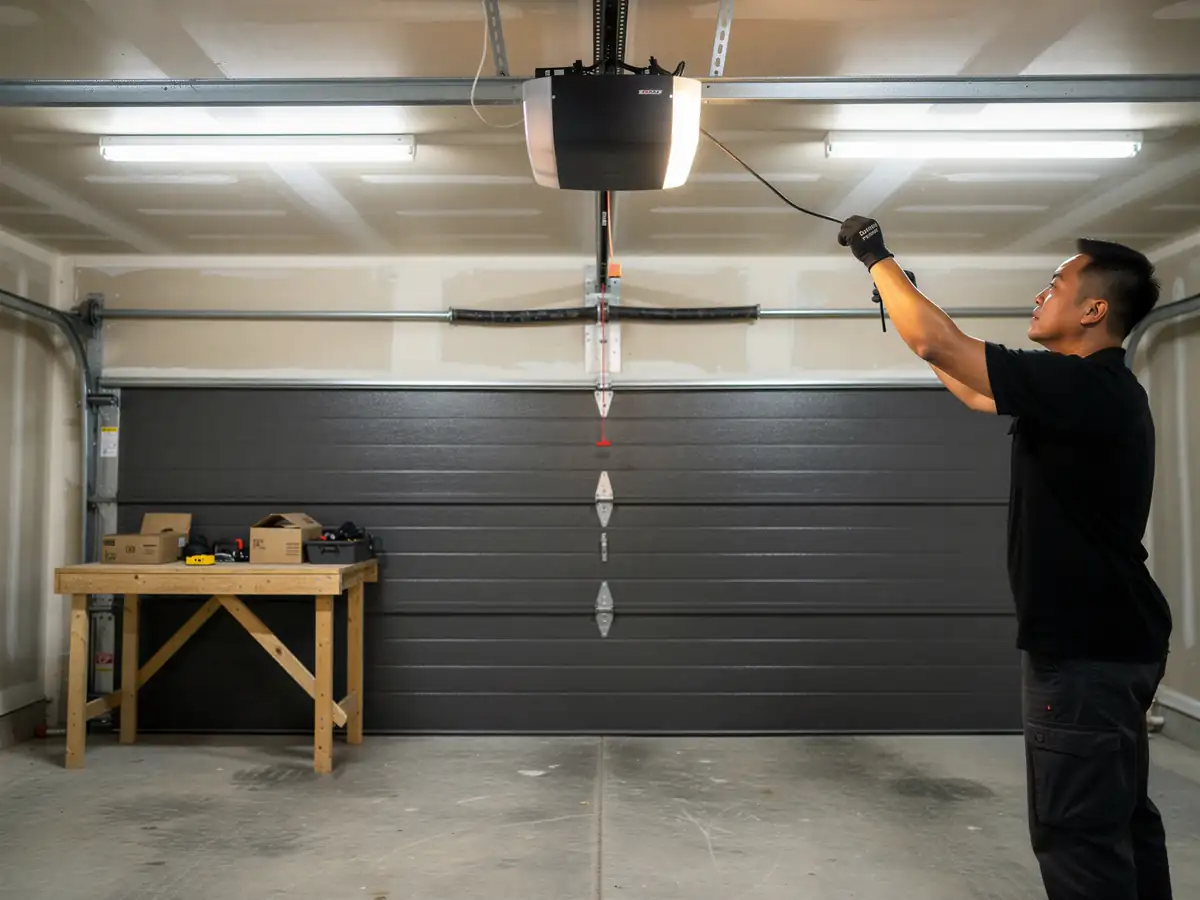
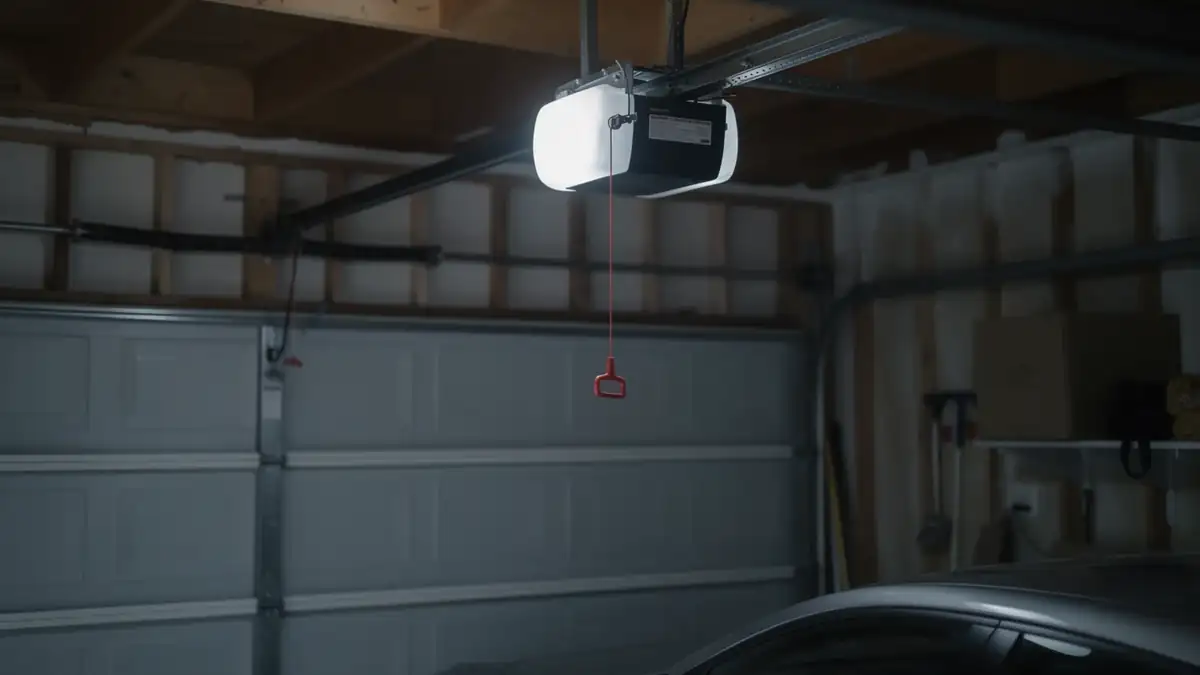
A garage door opener with a red pull cord hangs above a closed white garage door.

The Situation

Stockton's housing runs from 1938 up through 2010, with the median build year landing around 1977. That means a lot of garages still have openers that were installed well before battery backup was standard equipment, or openers on houses in neighborhoods like August, and Garden Acres where the original wiring predates any of today's smart-home add-ons. When the power drops - and in the Central Valley heat it does, especially on the worst afternoons - a door without backup power just sits wherever it was when the outage hit. If that's halfway open, you've got a gap in the house. If it's down, you're stuck until the power or the manual release gets you out. This isn't a defect in the door. It's what happens when a 1970s-era opener meets a modern grid under summer load.

We get calls after outages from people who assumed their opener would just keep working, or who didn't know where the manual release cord was until they needed it in the dark.

What Local Conditions Do

Stockton sits in a moderate heat climate band, which doesn't sound dramatic until you think about what heat does to an opener motor and its circuit board sitting in an attached garage with no insulation to speak of. Repeated heat cycling is hard on capacitors and on the drive gear lubrication in older chain and screw-drive units - the kind that's common in houses built in the 1960s and 70s stretch that makes up most of this area's stock. A motor that's already running warm from a 95-degree afternoon has less margin left when the grid gets stressed and the power actually cuts. That's often the moment the opener dies instead of just stalling.

What to Look At First

Before you worry about battery backup, check the basics. Find the manual release cord - the red handle hanging from the track - and make sure it isn't painted over, zip-tied out of the way, or forgotten behind storage boxes. On houses dating to the 1970s median build year, we often find the release cord has never been pulled since the house was sold. Next, listen to the motor during a normal open-close cycle. Grinding, a delayed start, or a chain that slaps before it catches are signs of a drive system already working harder than it should in this heat. If your opener is original to a house built decades ago, age alone is reason enough to have it looked at before a summer outage forces the question.

What Most People Get Wrong

The most common mistake is assuming a battery backup unit is a universal bolt-on fix. It isn't always - some older rail and motor setups in homes from the 1938-2010 build range don't accept a modern backup module without other work, and we won't sell you a backup kit that doesn't actually fit your drive unit. We'd rather tell you it's not a clean fit than bill you for one that half-works. The second mistake is treating the manual release as a last resort instead of something you test once a year - across the 31,360 owner-occupied houses in this area, a lot of those releases have never been exercised, and a stiff or rusted cord is its own problem during an actual outage.
How it works

From “it’s stuck” to “it’s fixed”

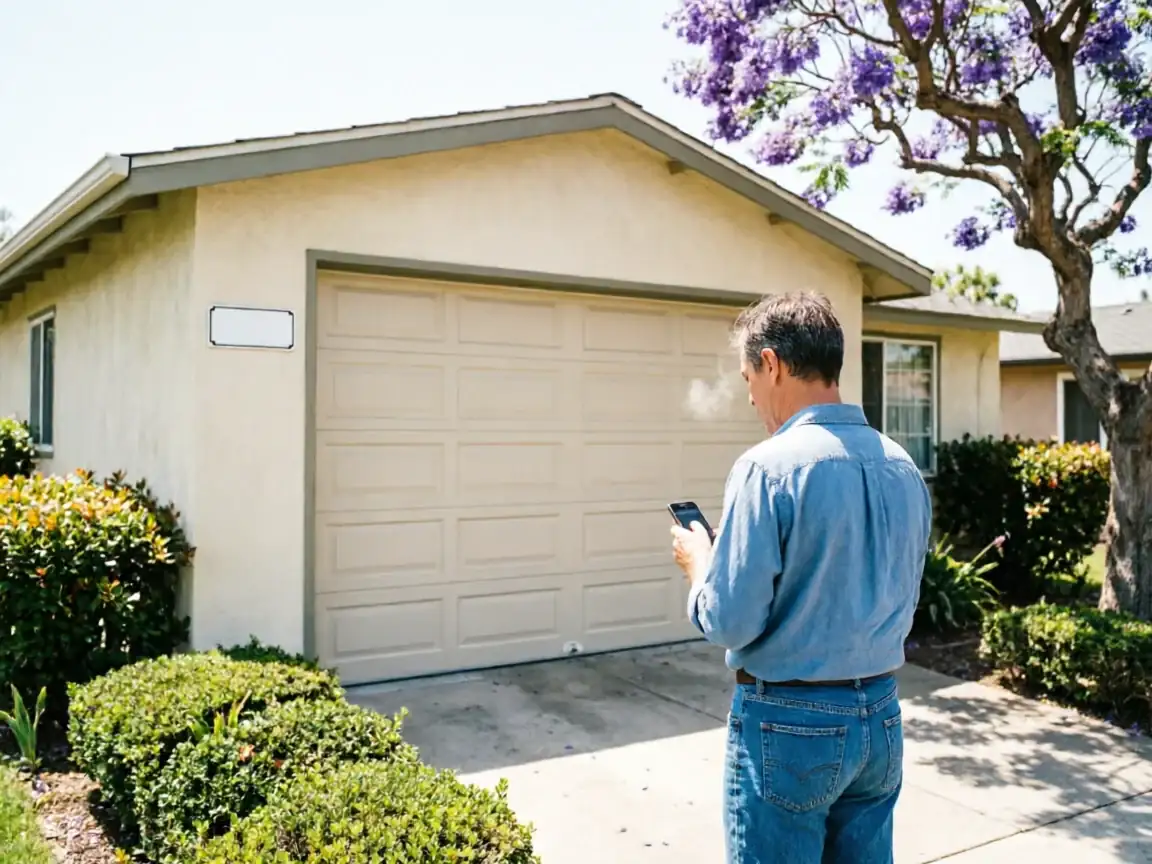
A man stands in a driveway, looking at his phone in front of a closed garage door.

Tell us what’s wrong

Describe the symptom - won’t open, loud bang, opener runs but the door won’t move.

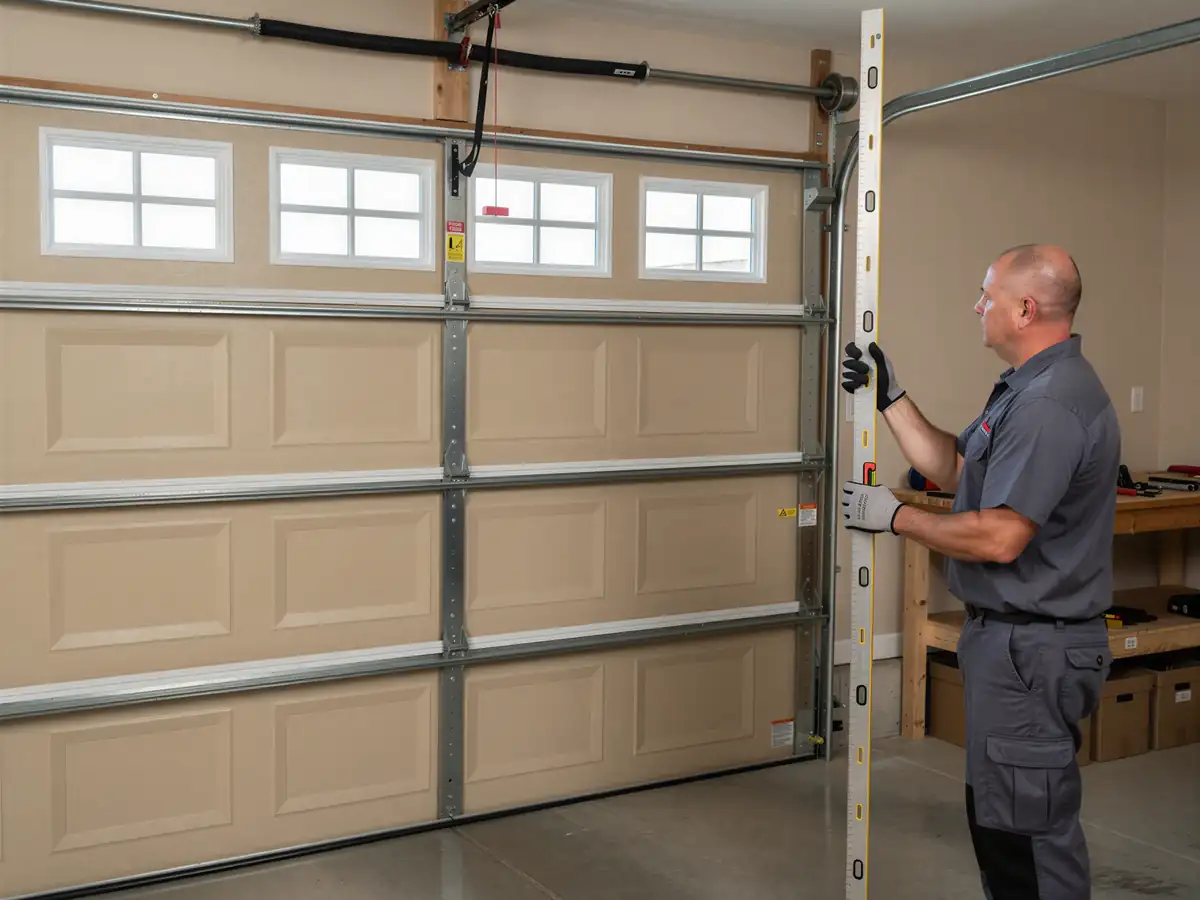
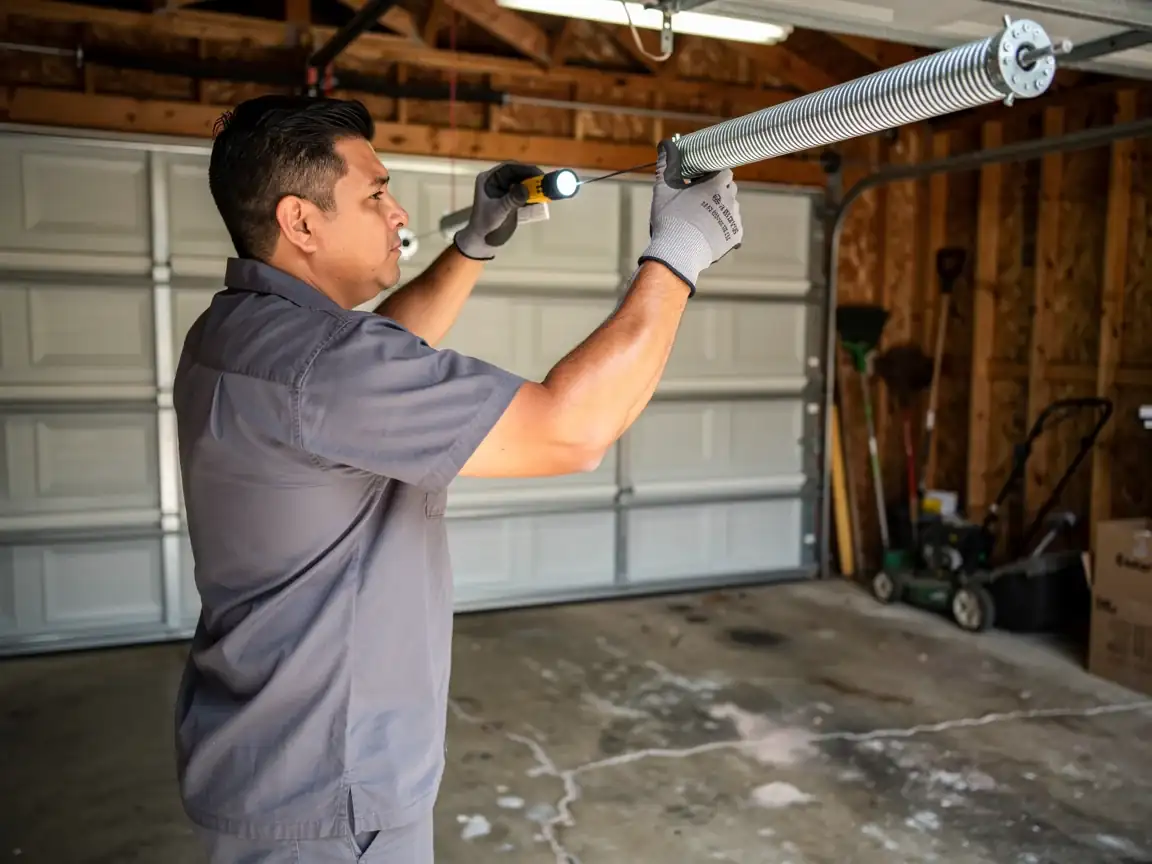
A technician in a gray uniform inspecting a garage door torsion spring with a flashlight.

On-site diagnosis

A technician tests the door under power and by hand and finds what actually failed.

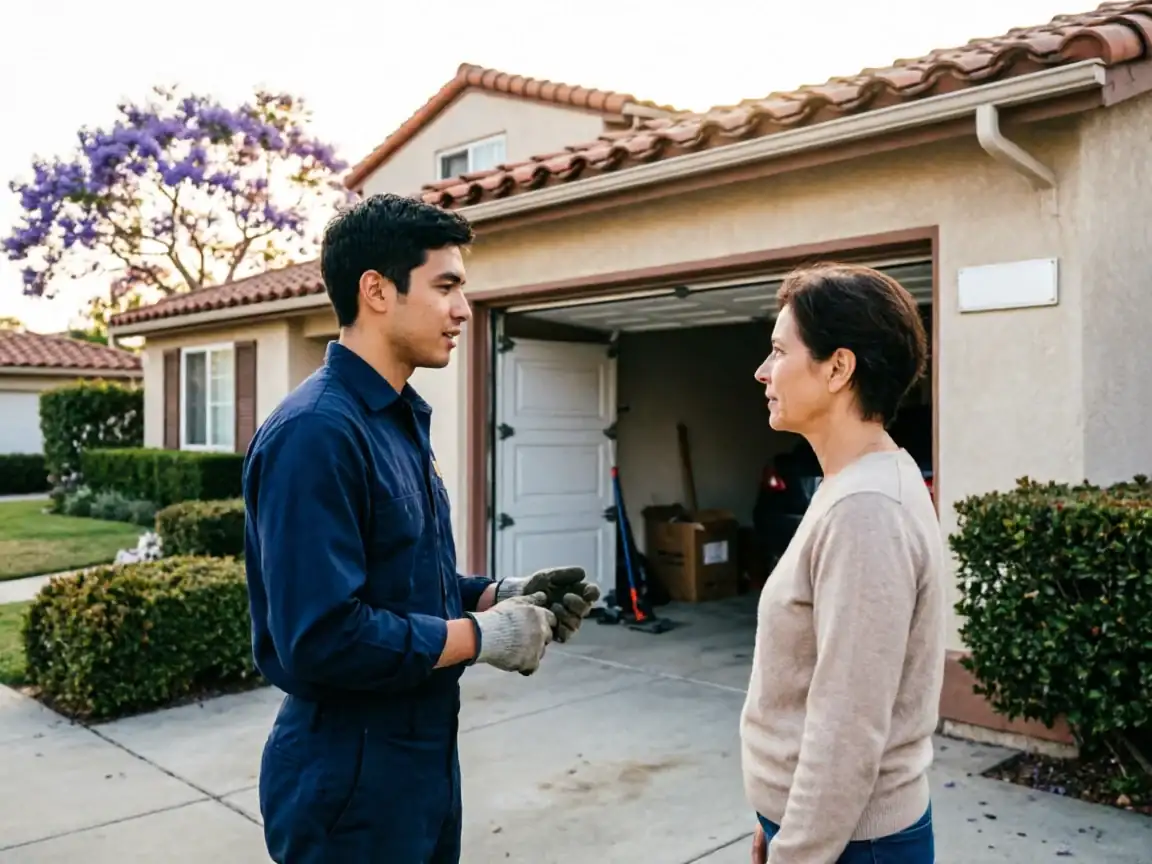
A technician in a blue uniform talks to a woman in front of a house.

Clear, up-front plan

You get the fix that’s needed and what drives the cost - before any work starts.

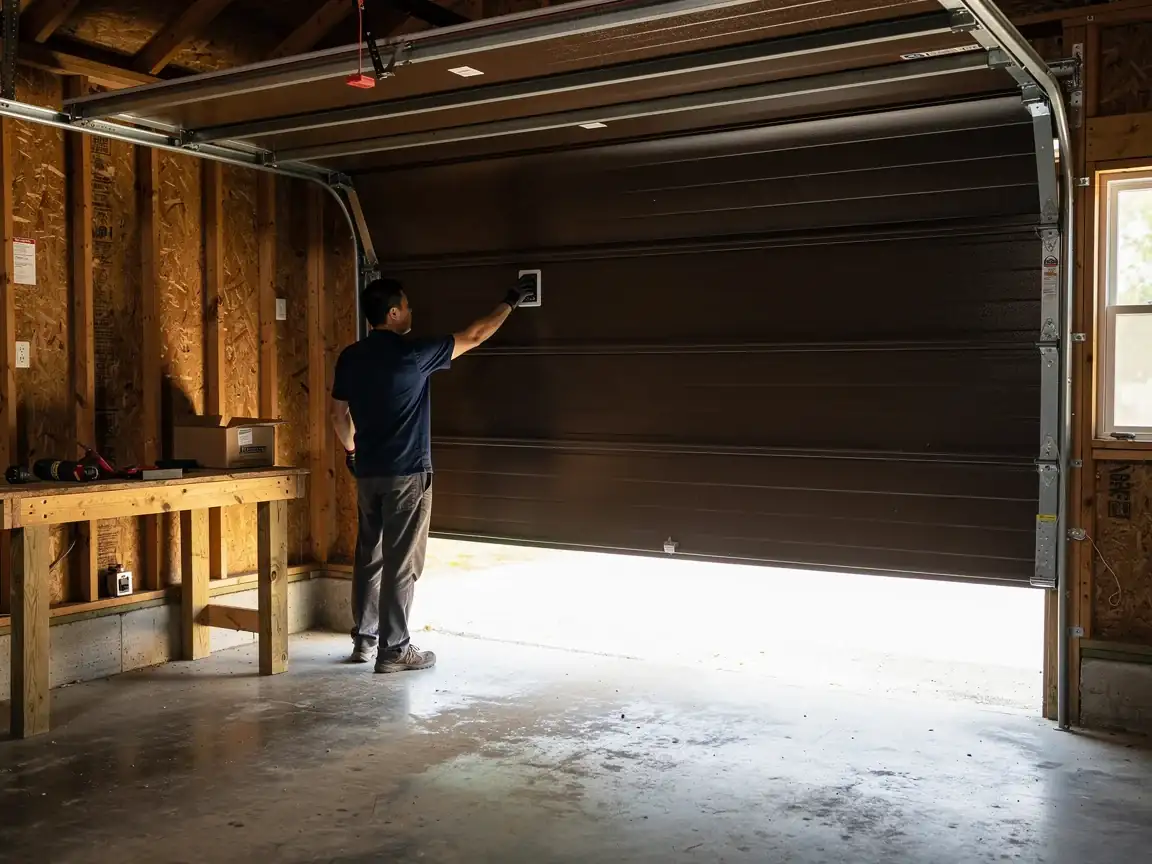
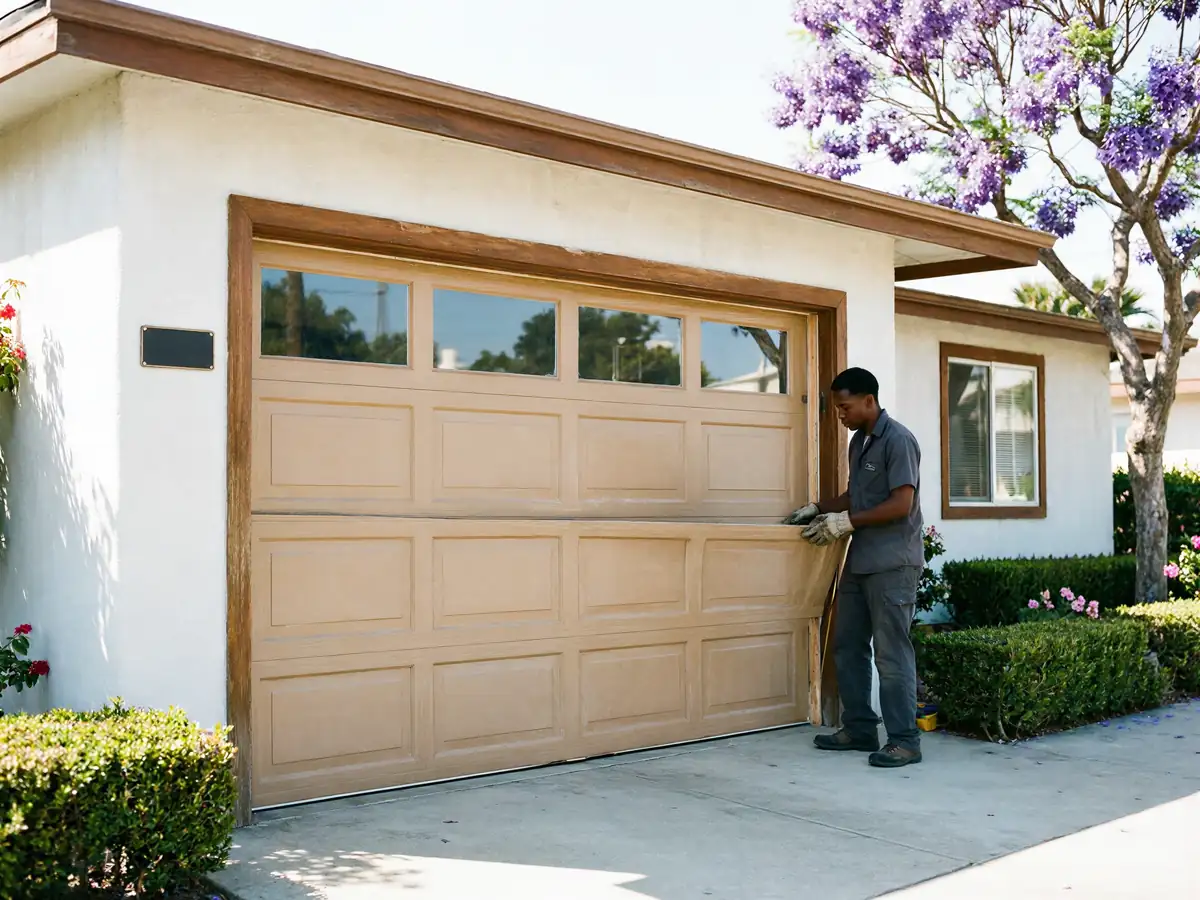
A technician in a blue shirt is adjusting a brown garage door.

Repaired & tested

The repair is done, the door is set true and tested, and the work area left clean.

Not sure which repair your door needs in Stockton, CA? Describe what it’s doing - every job starts with a diagnosis.

How we work

What to expect

Diagnosis firstEvery visit starts by finding what actually failed - not a pre-written parts list.
The right part for the doorSprings and openers matched to the door’s weight and age, so the fix holds up.
Straight answersWhen a repair makes more sense than a replacement - or the reverse - you hear it plainly.
Clean, careful workTension released safely, hardware set true, the door tested under power before we leave.
What we do

Garage Door Services

Repair and installation work for Stockton homes and businesses.

Questions

Frequently asked

Straight answers about garage door repair in Stockton. Still unsure? Ask us directly.

Will a battery backup work with my existing opener?

It depends on the drive unit. Some older chain and screw-drive openers common in houses built before the 1980s don't accept a standard backup module without additional work. We check the motor and rail setup before recommending one rather than selling a kit that won't actually fit.

Why does my opener act up more in the summer?

Heat cycling is hard on motor capacitors and drive gear lubrication, especially in older units. In Stockton's moderate heat band, an opener that's already running warm during a hot afternoon has less reserve left if the power grid gets stressed and cuts out.

Where's the manual release and how do I use it?

It's the cord with a red handle hanging from the track near the motor. Pull it straight down and the door disengages from the opener so you can lift it by hand. Test it once a year - a lot of these cords haven't been pulled since the house was built.

Ready to get your garage door sorted?

Tell us what it’s doing and where you are in Stockton - we’ll take it from there.

Request a QuoteCall