Serving Stockton, CA & nearby
(209) 435-1820
Stockton, CA

Cold Snaps and Old Springs: A Stockton Problem

In Stockton, older torsion springs meet rare winter cold snaps and snap without warning. Here's what breaks, why it happens, and what to check before calling.

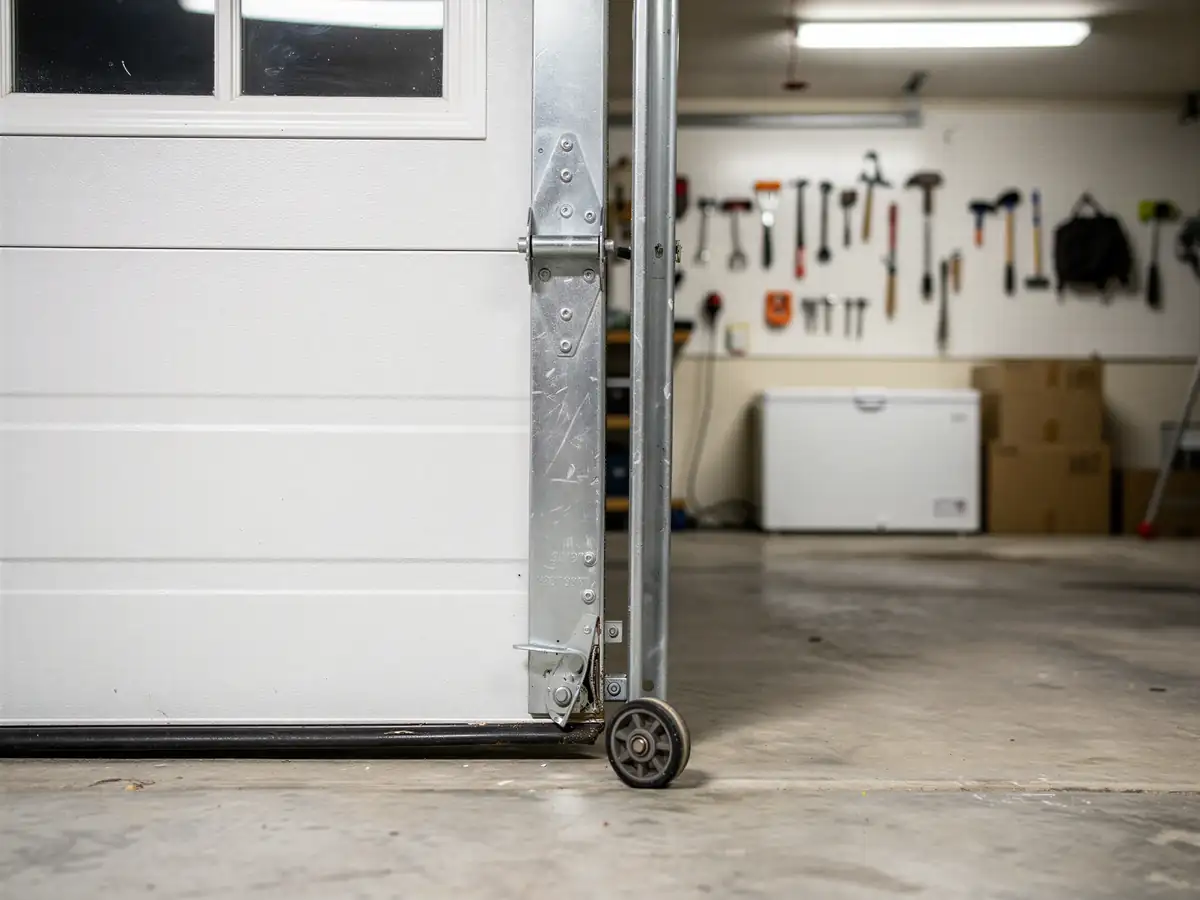
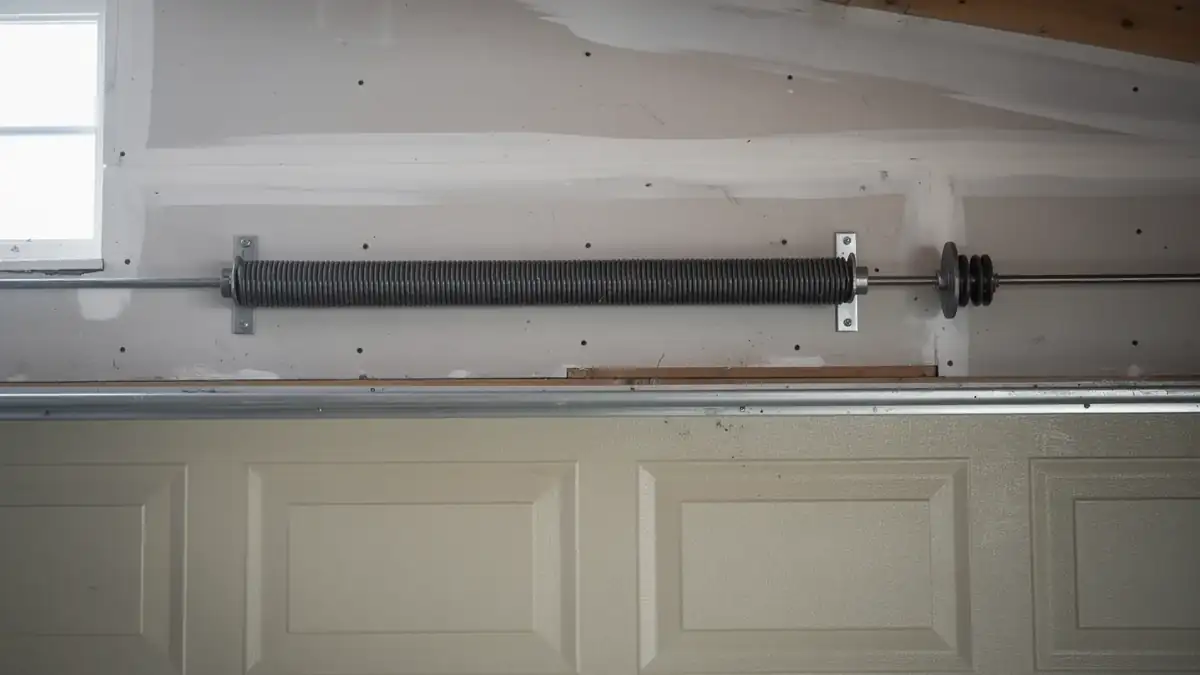
A new torsion spring is installed above a white garage door.

The Situation

Stockton sits in a moderate heat climate band, not a cold one. That matters more than people think. Most houses out toward August, and Garden Acres went up between 1938 and 2010, with the bulk of that stock clustering in the 1960s and 70s. A torsion spring installed on a house built in 1968 has now gone through close to sixty summers of heat cycling, expanding and contracting, losing a little bit of temper every year it sits in a hot garage. That spring is thin by the time a real cold night shows up. Cold doesn't cause the damage on its own - it's the last straw on metal that's already tired. When the temperature drops hard for even one night, a spring that's been quietly losing strength for decades can finally let go, usually with a loud bang and a door that won't lift. This isn't a once-a-winter maintenance item here the way it might be somewhere with a real winter. It's a once-a-decade event that happens to hit hardware nobody's looked at since the Carter administration. That's the situation: old springs, rare cold, and a lot of houses where nobody's ever had a reason to check.

What to Look At First

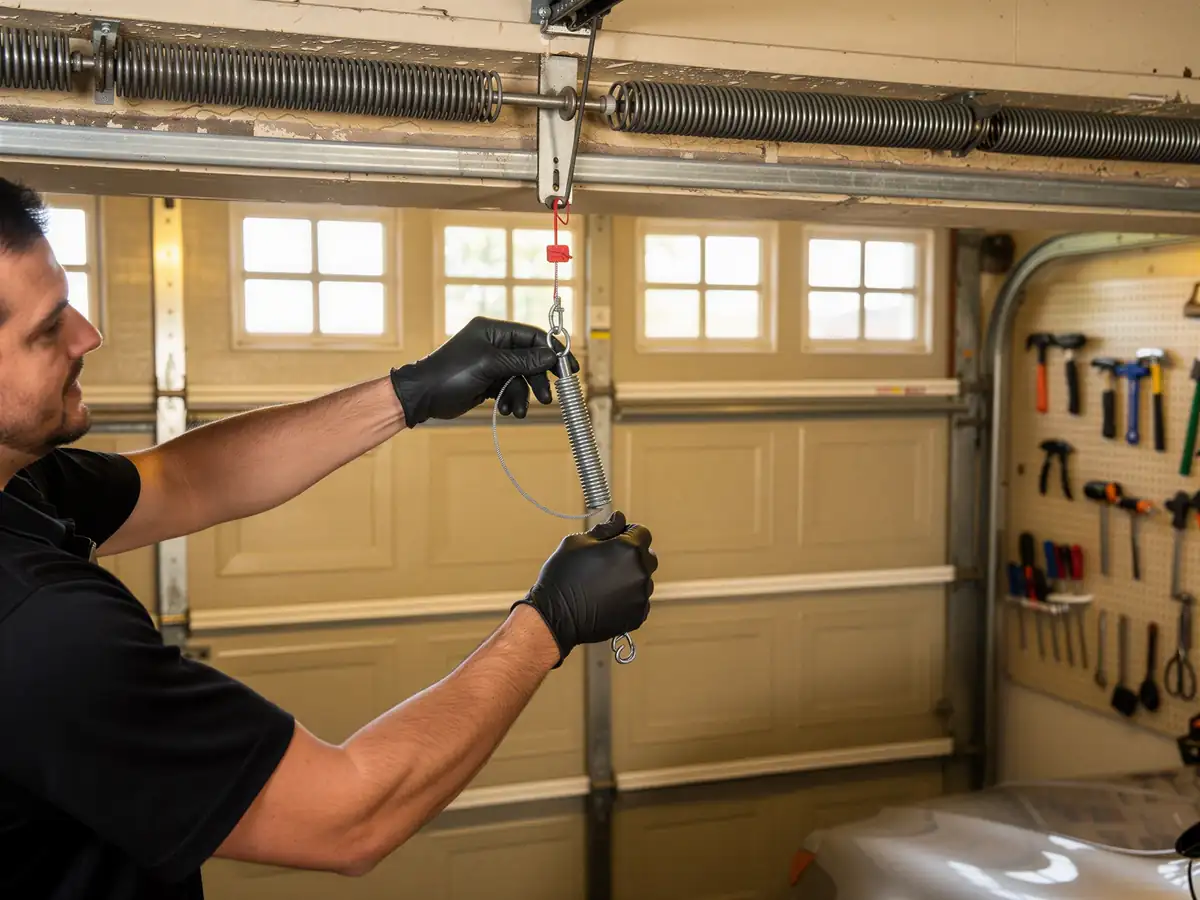
Before you touch anything, look at the spring itself - the coiled bar above the door, usually mounted on a shaft over the opening. On the older end of the 1938-2010 housing stock common here, you're often looking at side-mounted torsion hardware rather than the center-mounted setups builders moved to later. If you see a visible gap in the coil, or one half of the spring sitting lower than the other, that's a break, not a stretch. Next, check the door itself: does it feel unusually heavy when you try to lift it by hand with the opener disconnected? A healthy spring holds most of the door's weight. A broken one leaves all of it to you and the opener motor. Listen for the opener straining or the gears grinding on a door it can no longer lift properly - that's secondary damage starting. Don't yank the emergency release and try to force the door up past where it's resting; a spring that's partway failed can still have tension in it. One honest limitation here: if you can't tell from a visual check whether it's the spring, a cable, or a bent track, don't guess at the fix yourself. The three failures look similar from across the garage and the wrong diagnosis wastes a trip.

What Local Conditions Do

Stockton's climate band is rated moderate on heat, which is the long way of saying summers are the stress event here, not winters. Steel springs lose temper faster the more heat cycles they go through, and a garage that sits in full sun for a Central Valley summer puts more cumulative stress on a spring than most colder climates ever do. So by the time a cold night actually arrives, the spring isn't failing because of the cold - it's failing because the cold is the one new variable on a part that's already near the end of its life from years of heat. Across the 44,752 households in this service area, a large share of the 31,360 owner-occupied houses are still running whatever torsion or extension spring came with a door built sometime in that 1938 to 2010 window. Most of those springs have never been replaced, only occasionally lubricated if that. A cold snap doesn't introduce a new failure mode - it just moves up the date on a failure that heat cycling was already working toward. That's the mechanism worth understanding before you decide whether you're dealing with a one-time fluke or an overdue part.

What Most People Get Wrong

The most common mistake is replacing only the spring that visibly broke and leaving its twin alone. Torsion springs on a double-car door work in a pair, and if one has gone through the same decades of heat cycling as the one that just failed, it's close behind. We'd rather tell you that up front than have you call again in six months for the second one. The second mistake is assuming a cold night caused the problem and that warmer weather means it won't happen again. It wasn't the cold - it was the age, and the cold just happened to be the trigger that week. The third mistake, especially on houses closer to the 1977 median build year common across this area, is assuming the hardware is a simple swap when the mounting brackets or the shaft itself have also corroded or worn past spec. On an older setup, the spring is rarely the only part worth looking at once you're already up there. Fixing just the symptom on a system that's otherwise failing piece by piece usually means a second call sooner than anyone wants.
How it works

From “it’s stuck” to “it’s fixed”

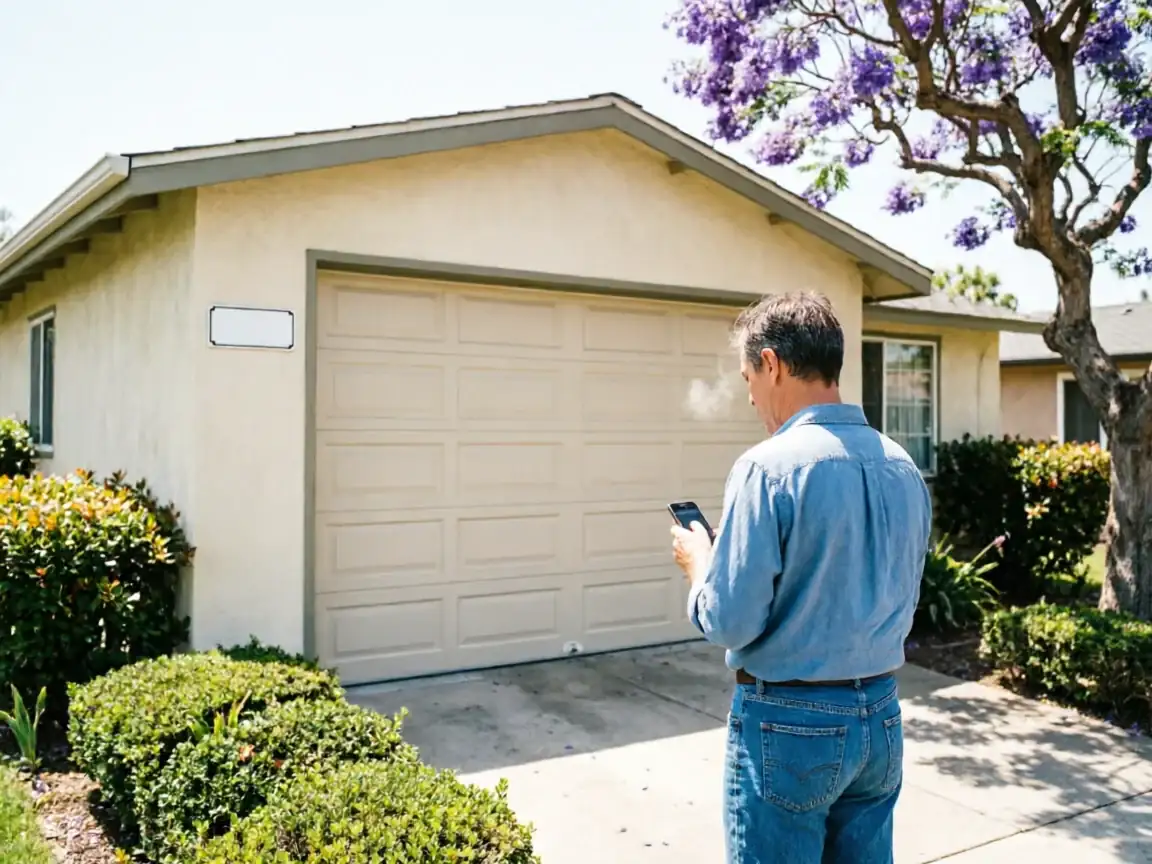
A man stands in a driveway, looking at his phone in front of a closed garage door.

Tell us what’s wrong

Describe the symptom - won’t open, loud bang, opener runs but the door won’t move.

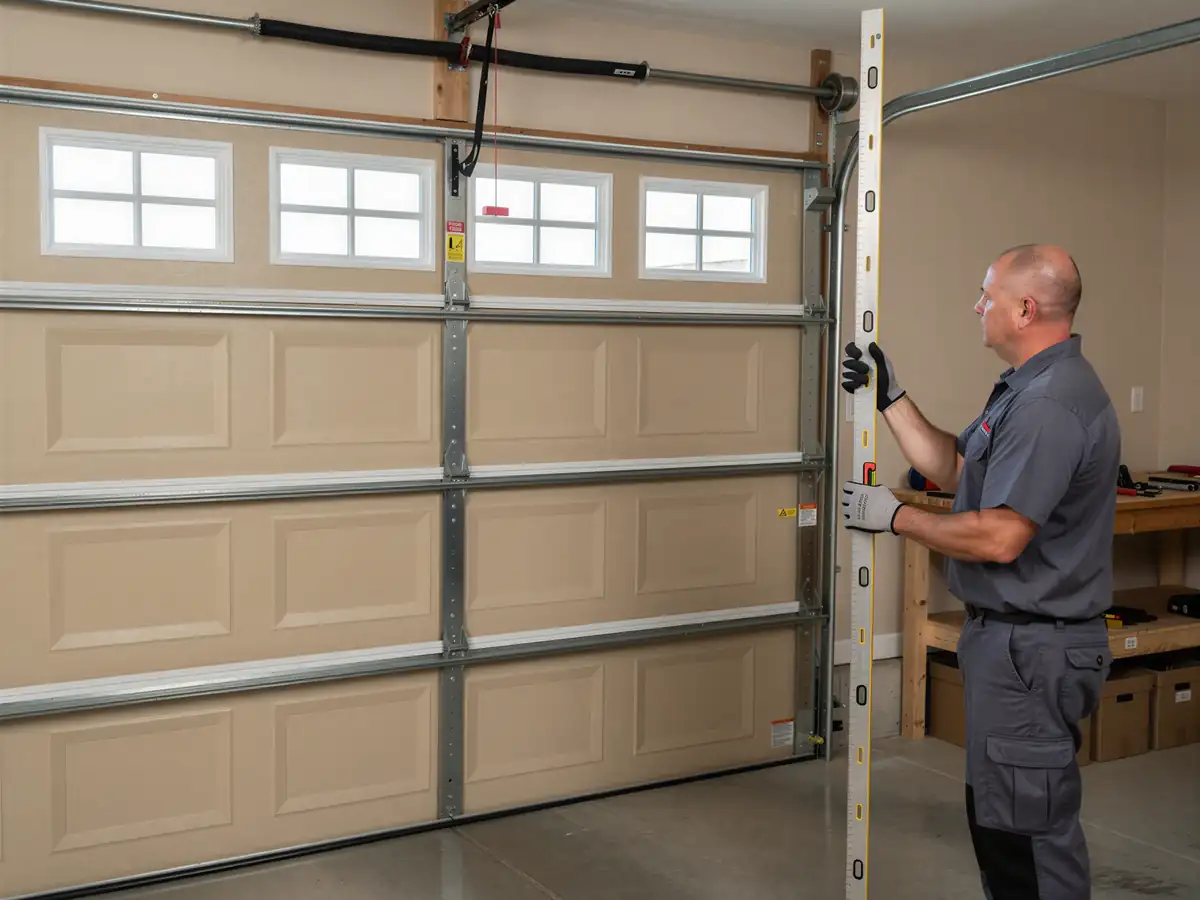
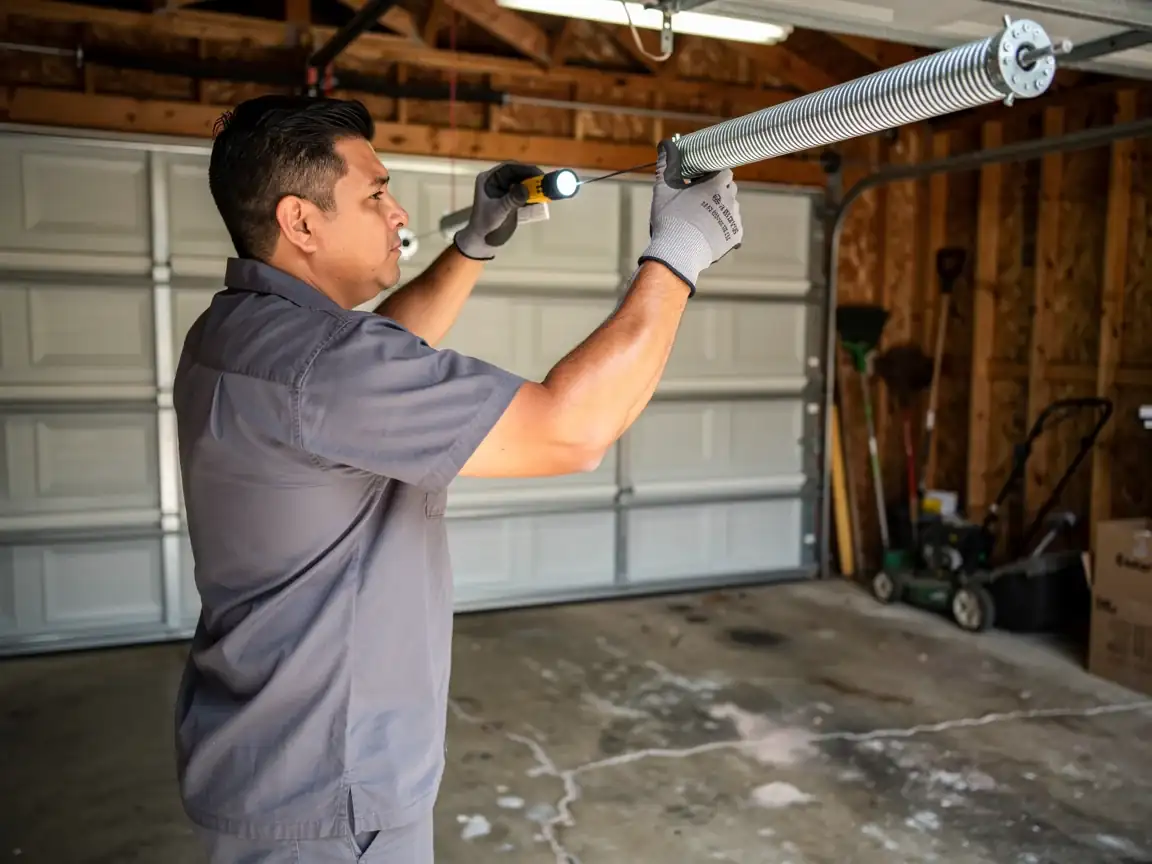
A technician in a gray uniform inspecting a garage door torsion spring with a flashlight.

On-site diagnosis

A technician tests the door under power and by hand and finds what actually failed.

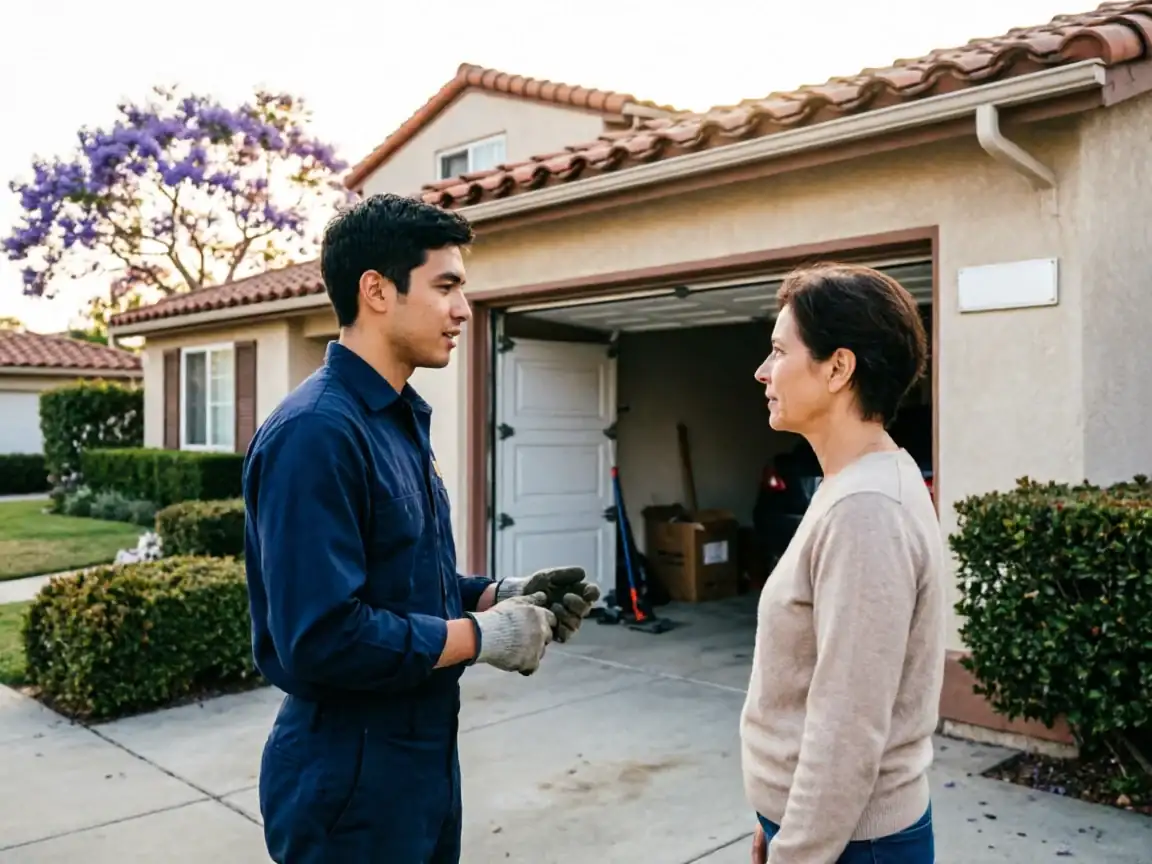
A technician in a blue uniform talks to a woman in front of a house.

Clear, up-front plan

You get the fix that’s needed and what drives the cost - before any work starts.

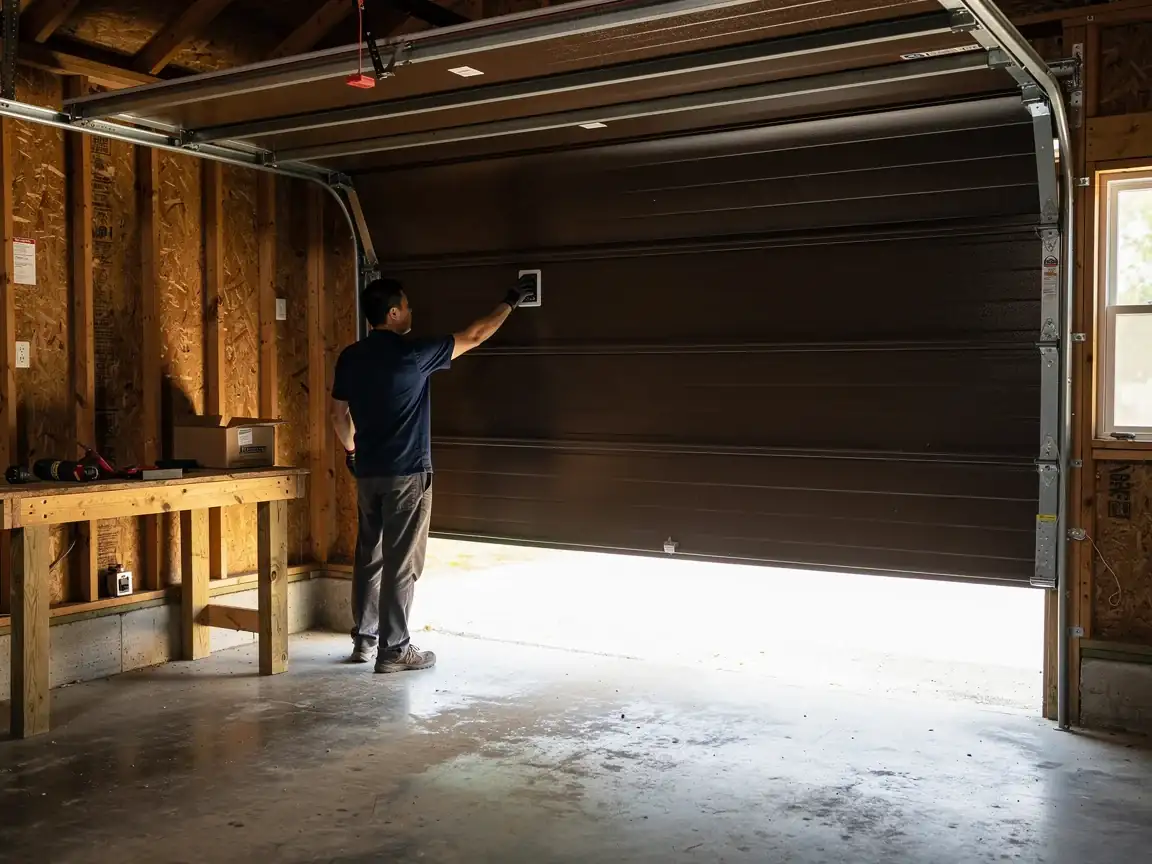
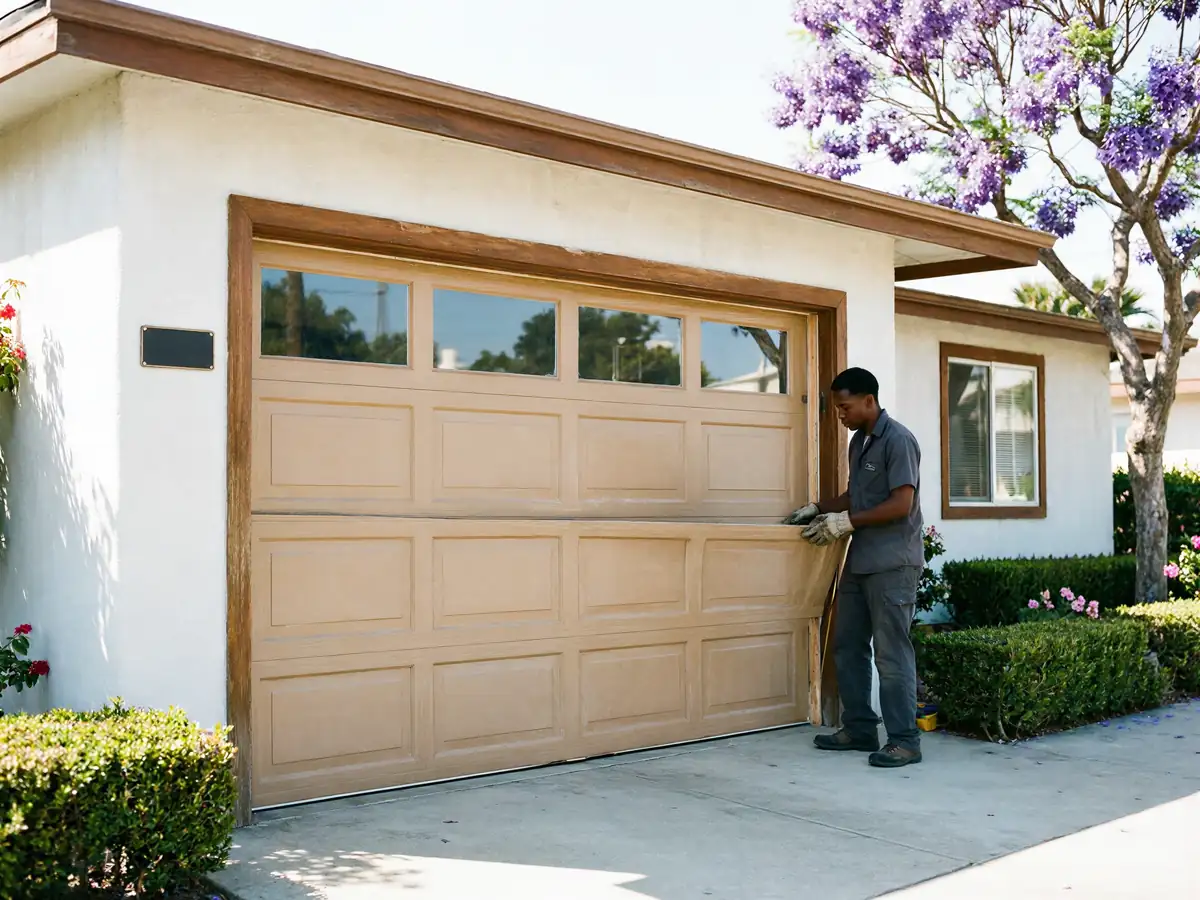
A technician in a blue shirt is adjusting a brown garage door.

Repaired & tested

The repair is done, the door is set true and tested, and the work area left clean.

Not sure which repair your door needs in Stockton, CA? Describe what it’s doing - every job starts with a diagnosis.

How we work

What to expect

Diagnosis firstEvery visit starts by finding what actually failed - not a pre-written parts list.
The right part for the doorSprings and openers matched to the door’s weight and age, so the fix holds up.
Straight answersWhen a repair makes more sense than a replacement - or the reverse - you hear it plainly.
Clean, careful workTension released safely, hardware set true, the door tested under power before we leave.
What we do

Garage Door Services

Repair and installation work for Stockton homes and businesses.

Questions

Frequently asked

Straight answers about garage door repair in Stockton. Still unsure? Ask us directly.

Why did my garage door spring break on one of the few cold nights we get in Stockton?

The cold itself usually isn't the cause - it's the trigger. Stockton's moderate heat climate puts more stress on a spring through summer heat cycling than most places ever see. A spring that's already thin from decades of that heat cycling can finally give out the one night it's cold, simply because cold steel is slightly less flexible than warm steel.

Is it normal for a spring this old to still be original?

Yes. A lot of the housing stock here dates to the 1960s and 70s, with the broader range running 1938 to 2010. Many owner-occupied houses in this area are still running whatever spring came with the door originally, since springs don't get swapped out unless they fail or get noticed during other work.

Should I replace both springs if only one broke?

On a double-car door with a torsion pair, yes, in most cases. Both springs have gone through the same years of heat cycling, so if one failed, the other is usually close behind. Replacing just one often means a second service call within the year.

Can I tell the difference between a broken spring and a broken cable myself?

Sometimes, but not always from across the garage. A broken spring usually shows a visible gap in the coil and makes the door very heavy to lift by hand. A cable failure can look similar from a distance. If you're not sure, it's worth having it looked at before forcing the door.

Ready to get your garage door sorted?

Tell us what it’s doing and where you are in Stockton - we’ll take it from there.

Request a QuoteCall