What the Repair Takes
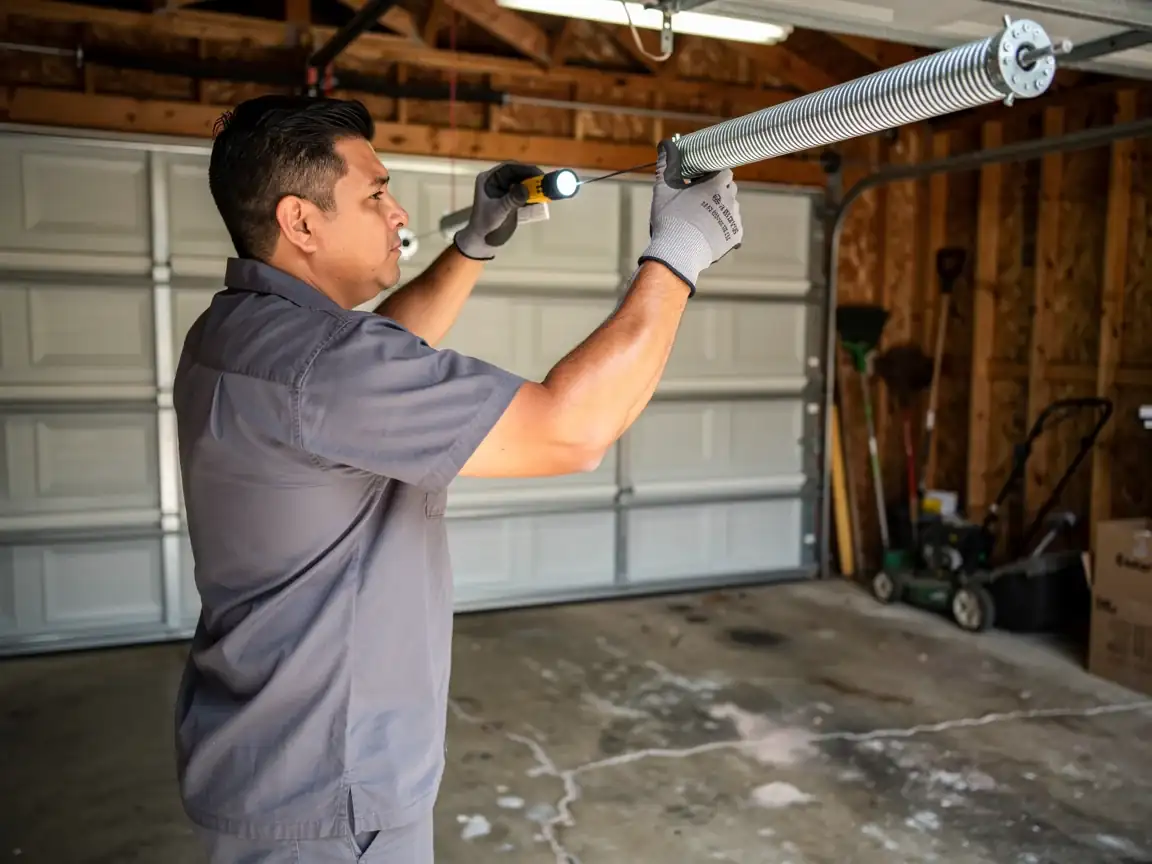
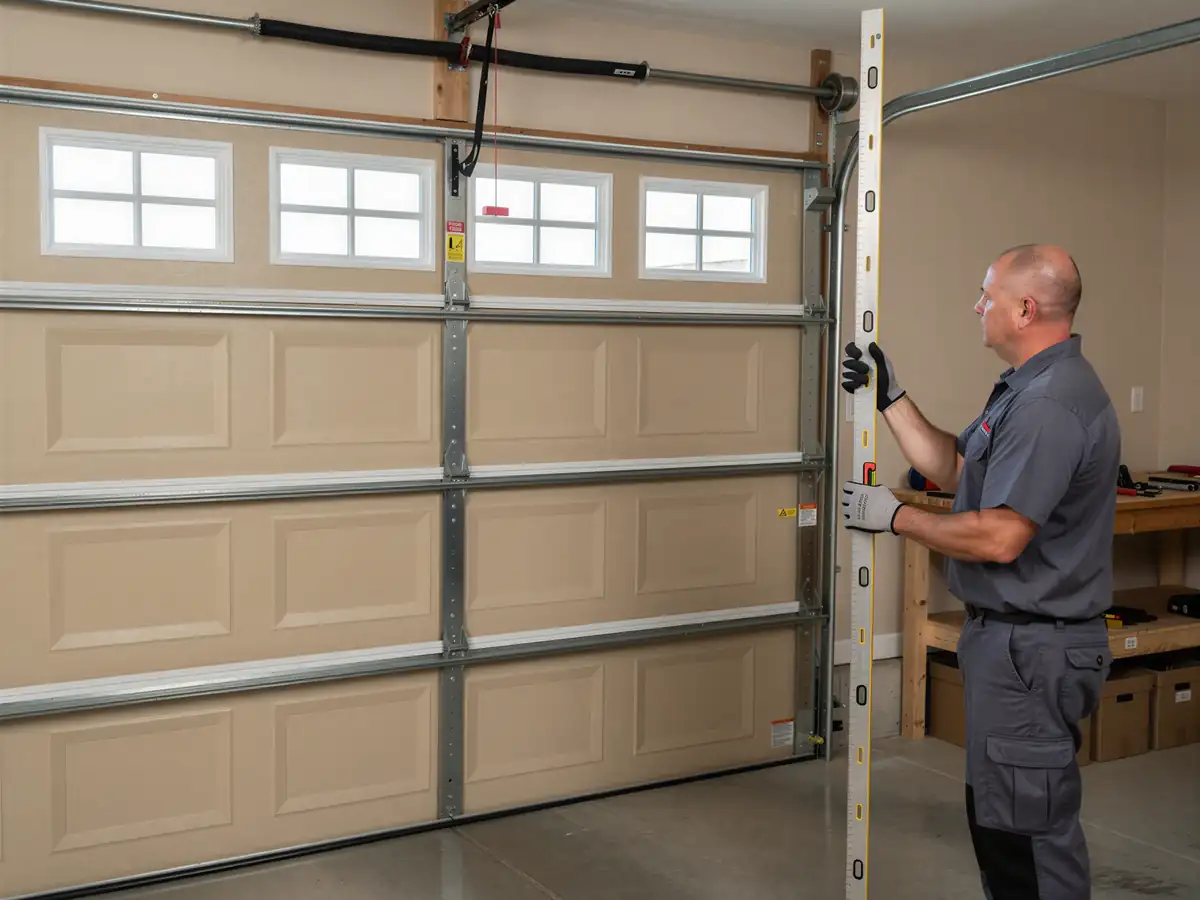
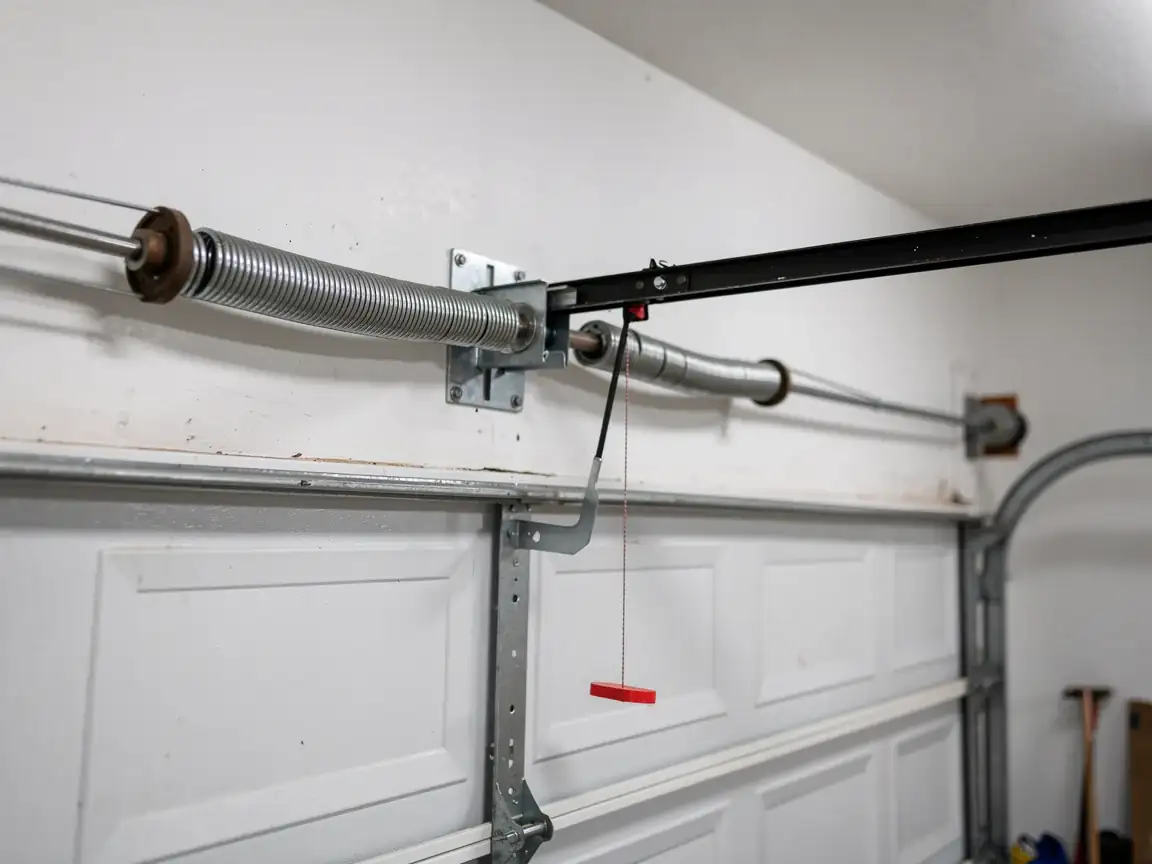
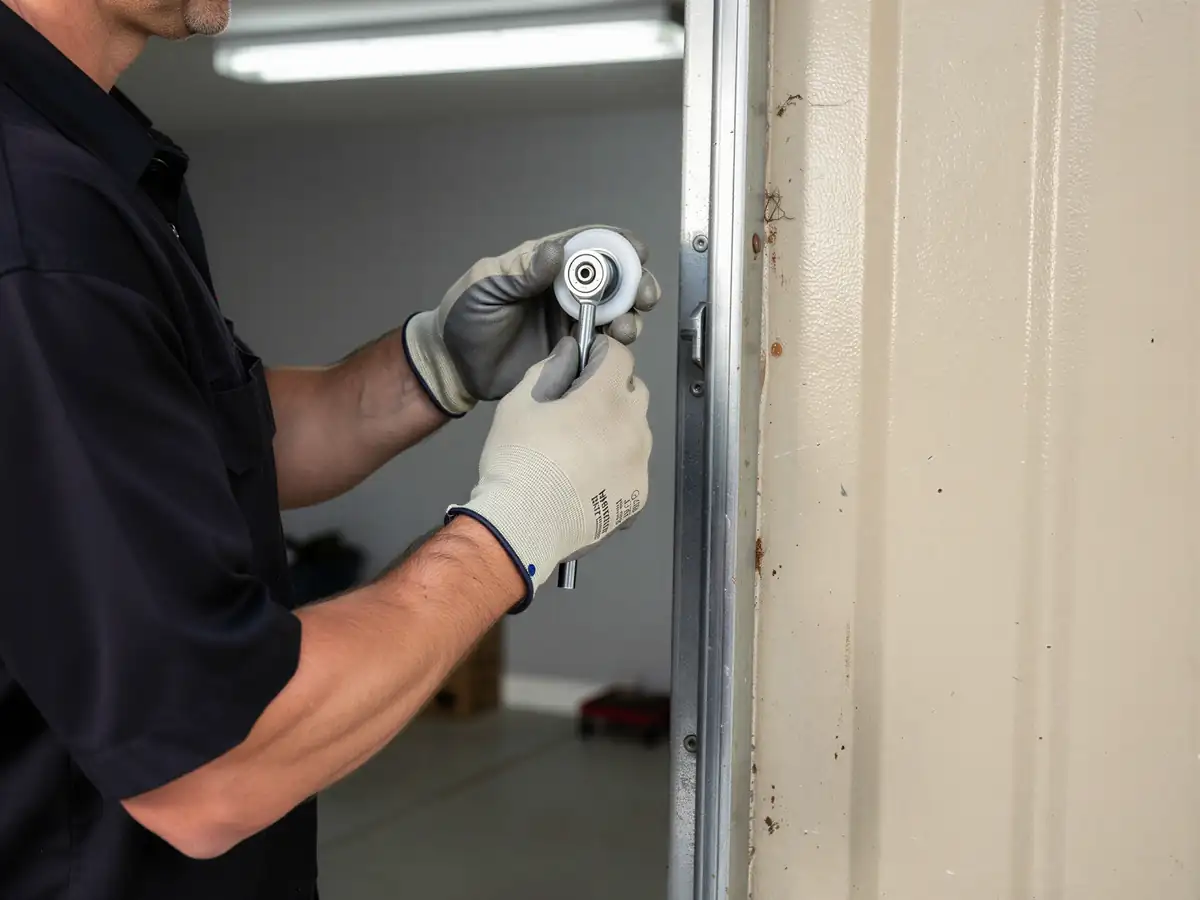
An off-track door is almost never just "push it back in." The first thing we check is whether the track itself got bent - a car bumper, a dropped box, or a cable that slipped off the drum can pull the rail out of alignment in a way that looks fine standing back but binds the rollers the second the door moves. If the track is straight, we're looking at loose roller brackets, a worn hinge that let a panel corner drift sideways, or a cable that unspooled and let one side of the door drop before the other.
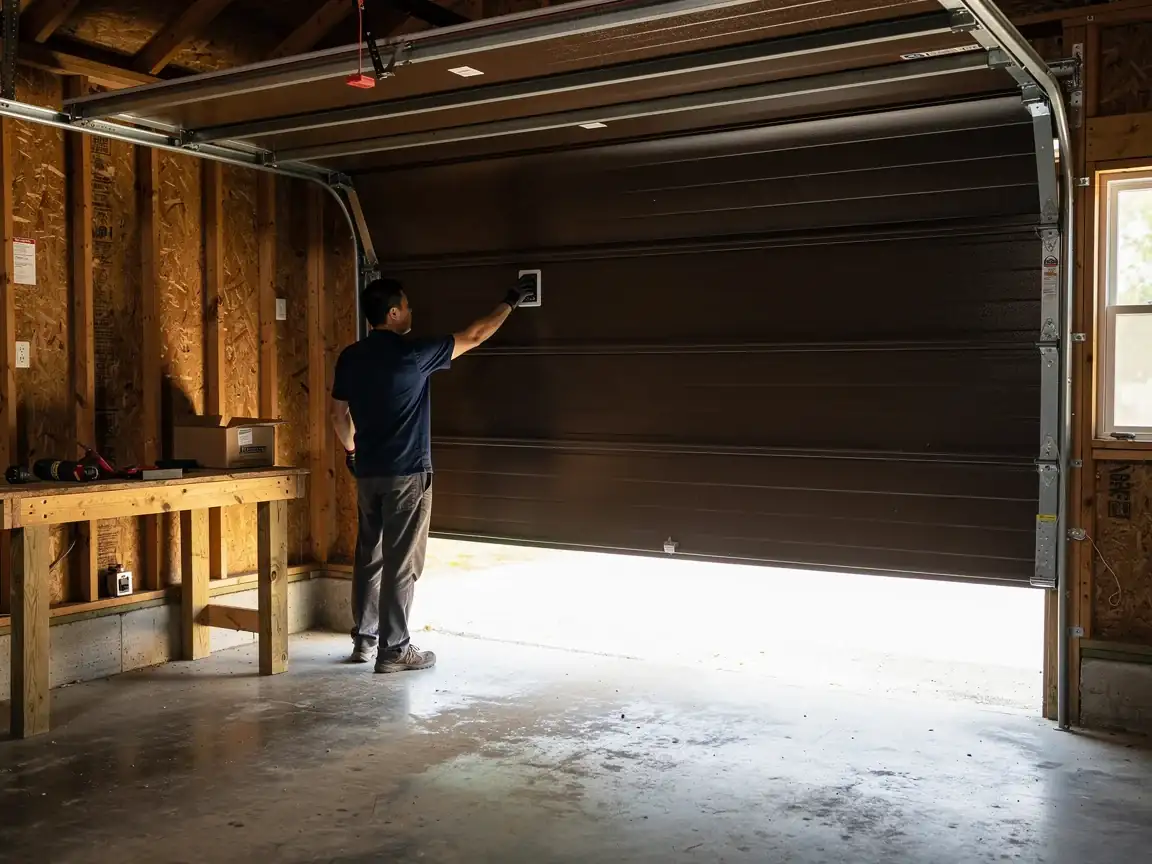
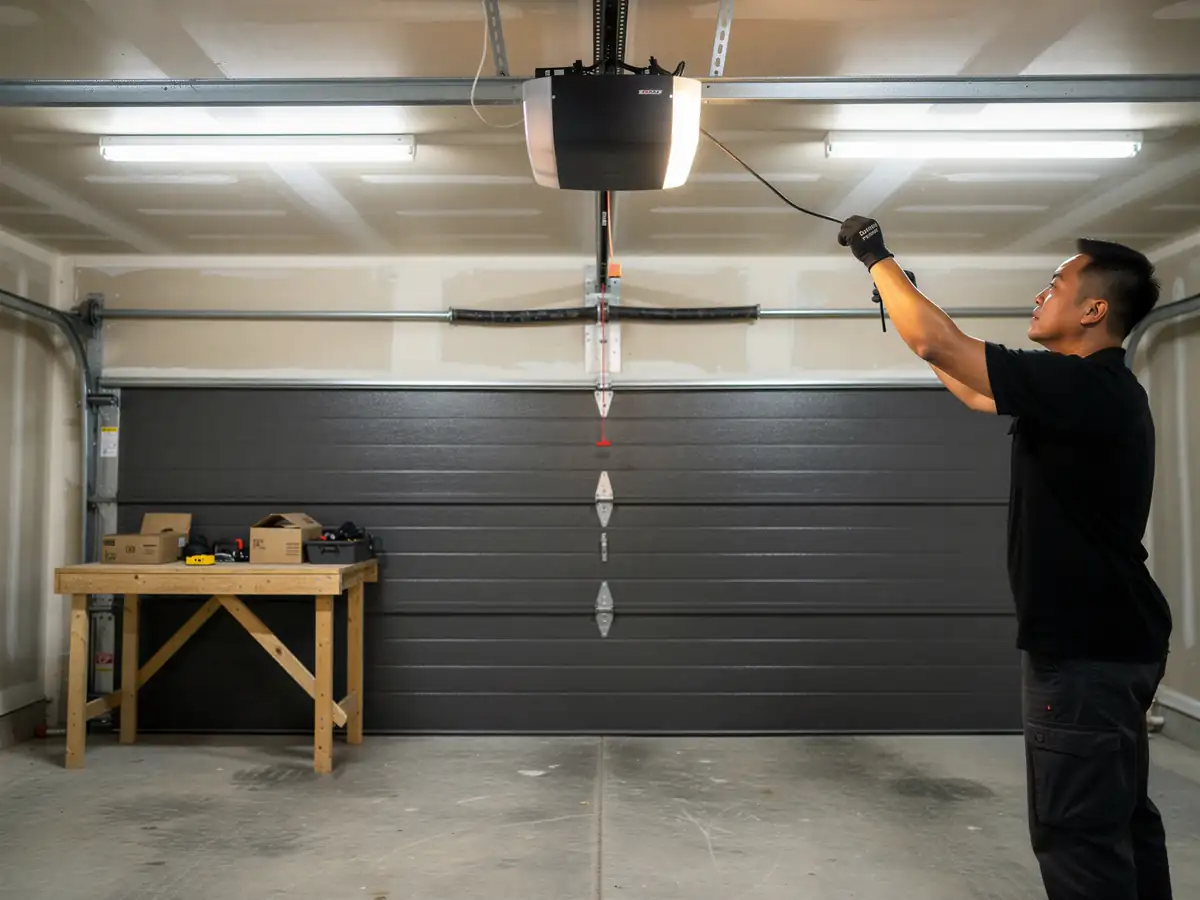
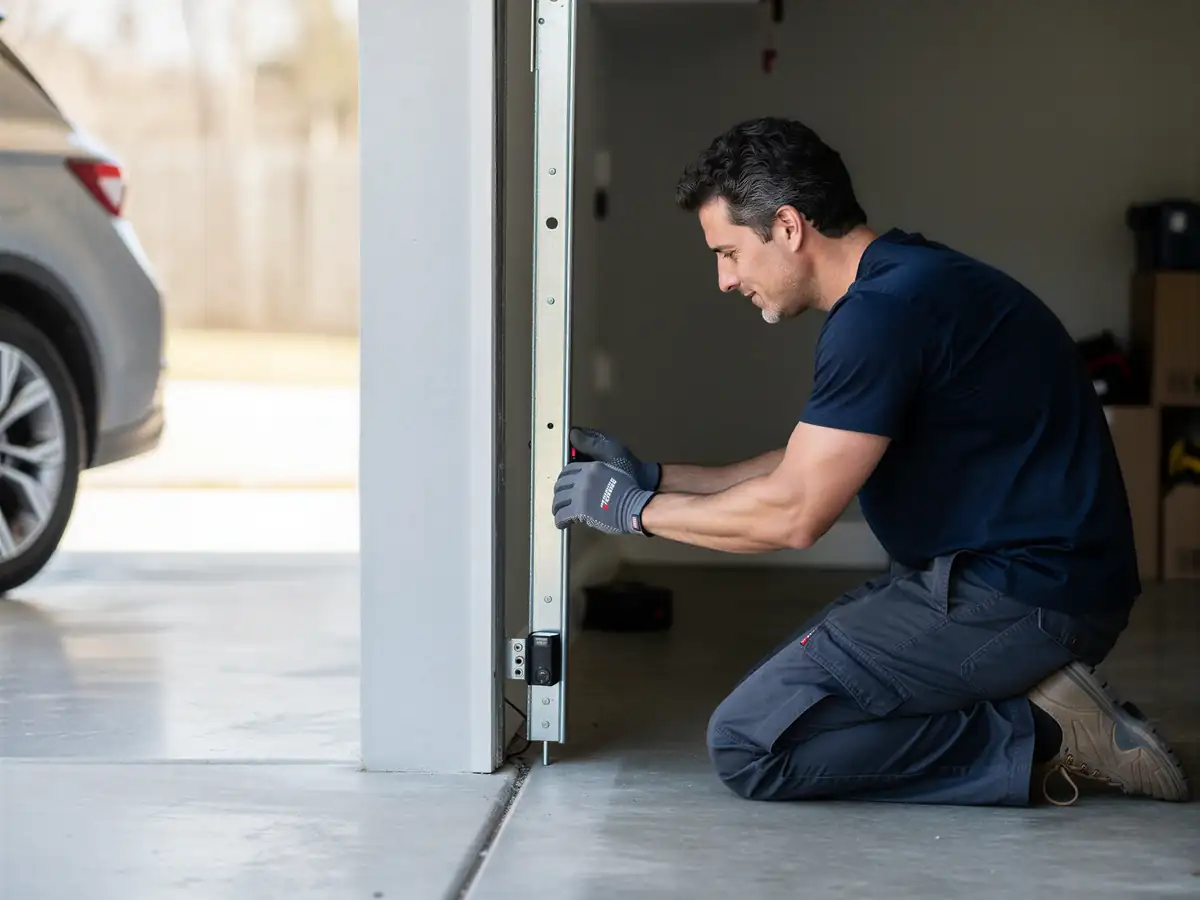
We pull the door off the opener first - running an opener against a jammed door just strips the gear or bends the arm, and that turns a $200 call into a bigger one. Then it's a matter of re-seating the rollers, squaring the track to the jamb, and checking that both sides of the door travel at the same rate before anything gets power again. On a double door, we check both tracks even if only one looks bad, because a door that walked on one side usually has a bracket working loose on the other side too, just a few weeks behind.
One honest note: if the track got crushed rather than just bent, straightening it rarely holds. At that point replacing the section of track costs less in the long run than a repair that comes back in six months.
Stocked Parts
The truck carries steel roll-formed track in the standard widths used on sectional doors
Along with the nylon and steel rollers, hinges, and roller brackets that fail most often on doors that have been in service for decades. We also carry replacement cable and the drums that cable winds on, since a slipped or frayed cable is the other common reason a door comes off its rail.
Where we run into lead time is older one-piece doors
The kind that swing out on a pivot rather than roll up on a track - and some of the original wood-jamb hardware still found on houses from the earlier part of this area's building history. That hardware isn't something any supplier stocks off the shelf anymore, so if your door is one of those, the first visit is usually a diagnosis and parts order rather than a same-day fix. We'll tell you straight if that's your situation instead of jury-rigging something that won't last.
For the vast majority of sectional doors built from the 1960s onward
Though, the common roller, hinge, and track sizes are on the truck, which means most off-track calls get closed out in one visit.
Why It Happens Here
Housing in this service area was built mostly between 1938 and 2010, with the heaviest concentration going up in the 1960s and 70s. That matters for off-track doors specifically: that generation of garage got steel roll-formed track and bracket hardware screwed into jamb framing that's now pushing fifty or sixty years old. Wood framing shrinks and shifts over that span, lag screws back out a thread at a time, and a bracket that was tight the day it was installed ends up with play in the hole.
Stockton sits in a moderate heat band, and the daily swing in track temperature - cold overnight, hot by afternoon - puts steel through a small expansion-and-contraction cycle every single day. On a newer, tighter installation that's not enough to matter. On fifty-year-old hardware with hole wear already started, it's enough to walk a loose bracket a little further out each season until one hard stop sends the roller off the rail entirely.
It's not a defect in how these houses were built - it's just what forty to sixty years of daily cycling does to original hardware that was never meant to be permanent. It's also why this fault shows up so consistently in the older sections of the service area rather than being spread evenly across newer construction.
How It Shows Up
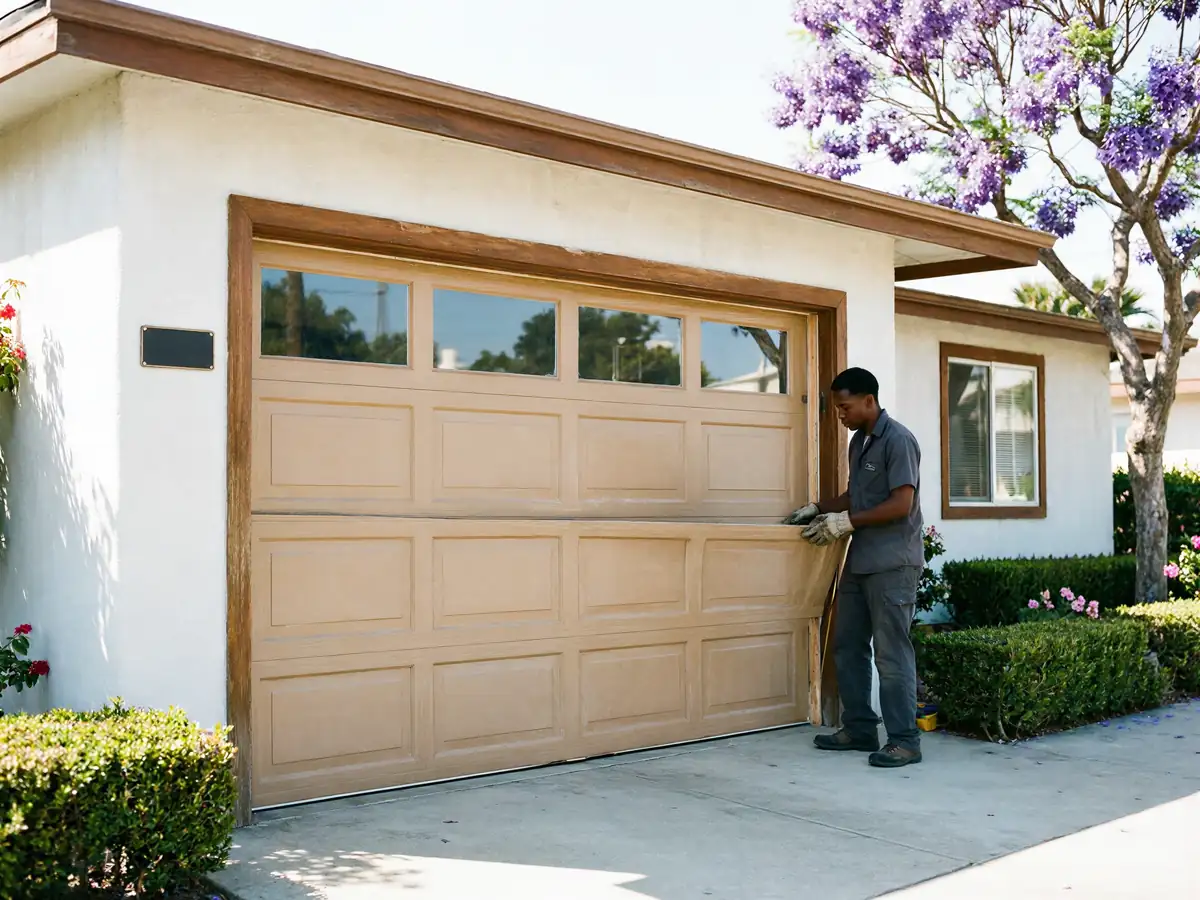
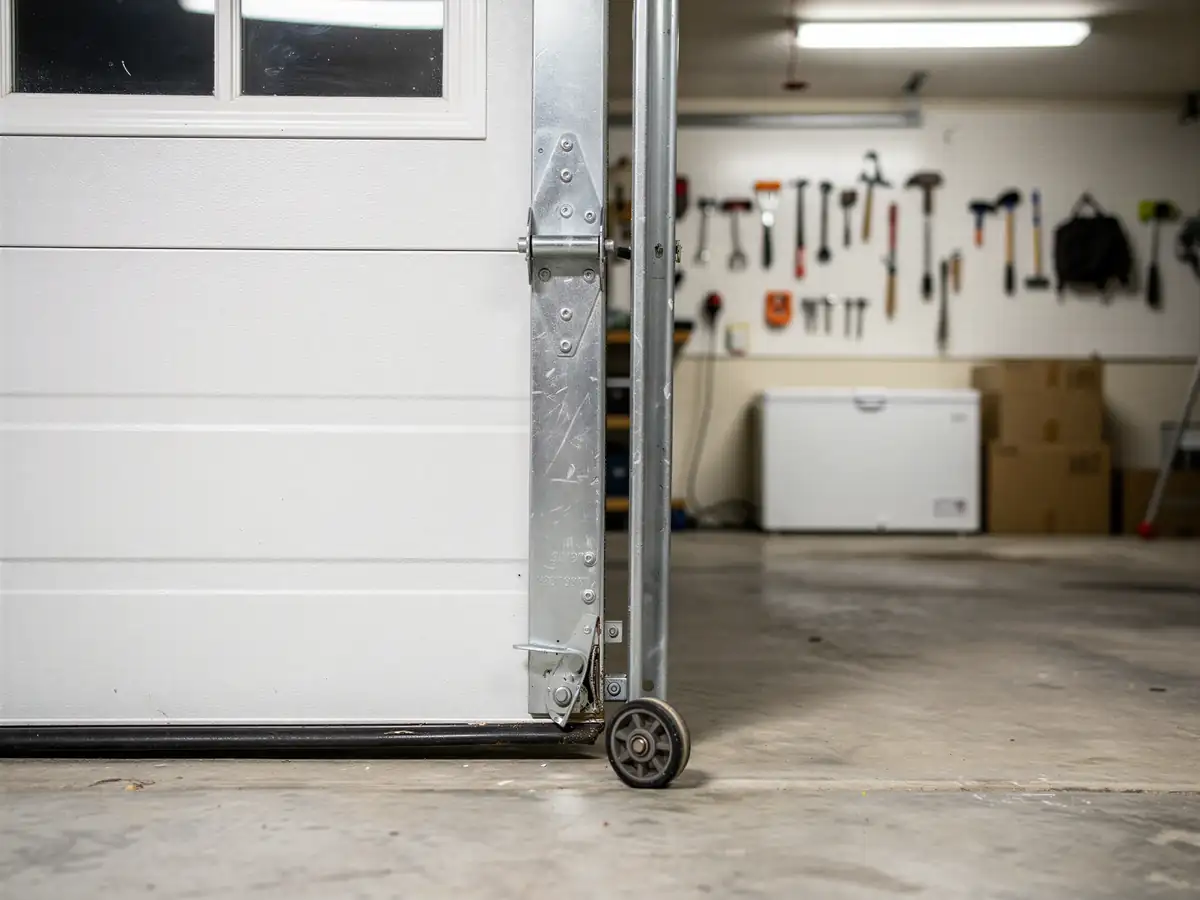
The most common version: the door looks mostly fine, closes mostly flush, but there's a visible gap of an inch or two at one bottom corner where the panel is riding outside the track instead of inside it. You'll usually hear it before you see it - a scraping or grinding sound right at the point where the roller left the rail, instead of the smooth rumble a door normally makes.
A second version shows up as a door that stops partway and won't go further in either direction, because a roller has wedged itself against the outside edge of the track rather than running inside the channel. If you try to force it with the opener at that point, you risk bending the track further or tearing the bracket loose from the jamb entirely, which turns a half-hour fix into a parts order.
On double doors with a center post, an off-track panel sometimes still closes and locks, which hides the problem until the day the cable finally lets go and the whole panel drops. If you've noticed a slight new gap, a new sound, or a door that's been "a little harder to close" for a couple weeks, that's usually the bracket working loose before it fails outright - worth a look before it becomes a stuck door.