Why It Happens Here
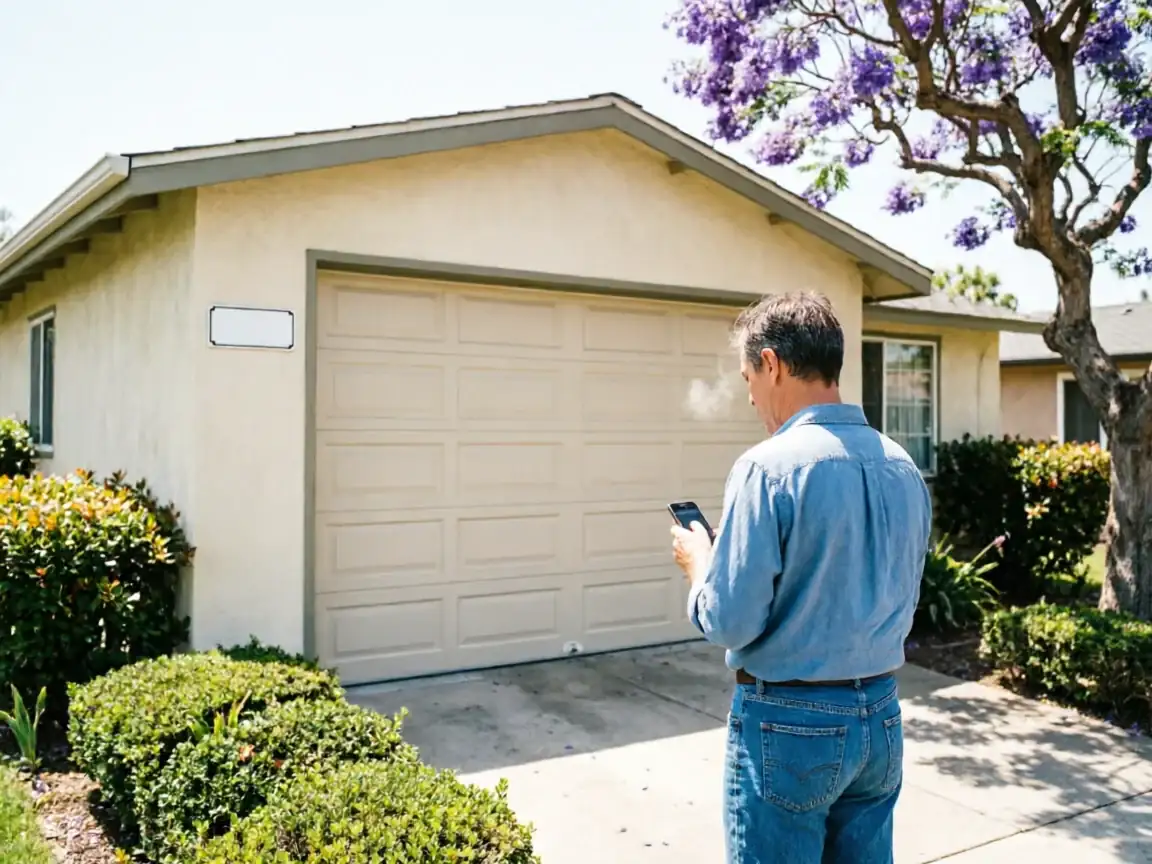
Stockton's housing stock as a whole spans 1938 to 2010, with a median year built around 1977 - a lot of older one-piece doors and early sectional setups mixed in. Linden sits apart from that. Houses out here cluster closer to 1981 on average, which puts a good share of this area's garage doors squarely in the sectional-door era, running on steel rollers set into galvanized track rather than the older hardware you'd find on a pre-1960s door closer to the city center.
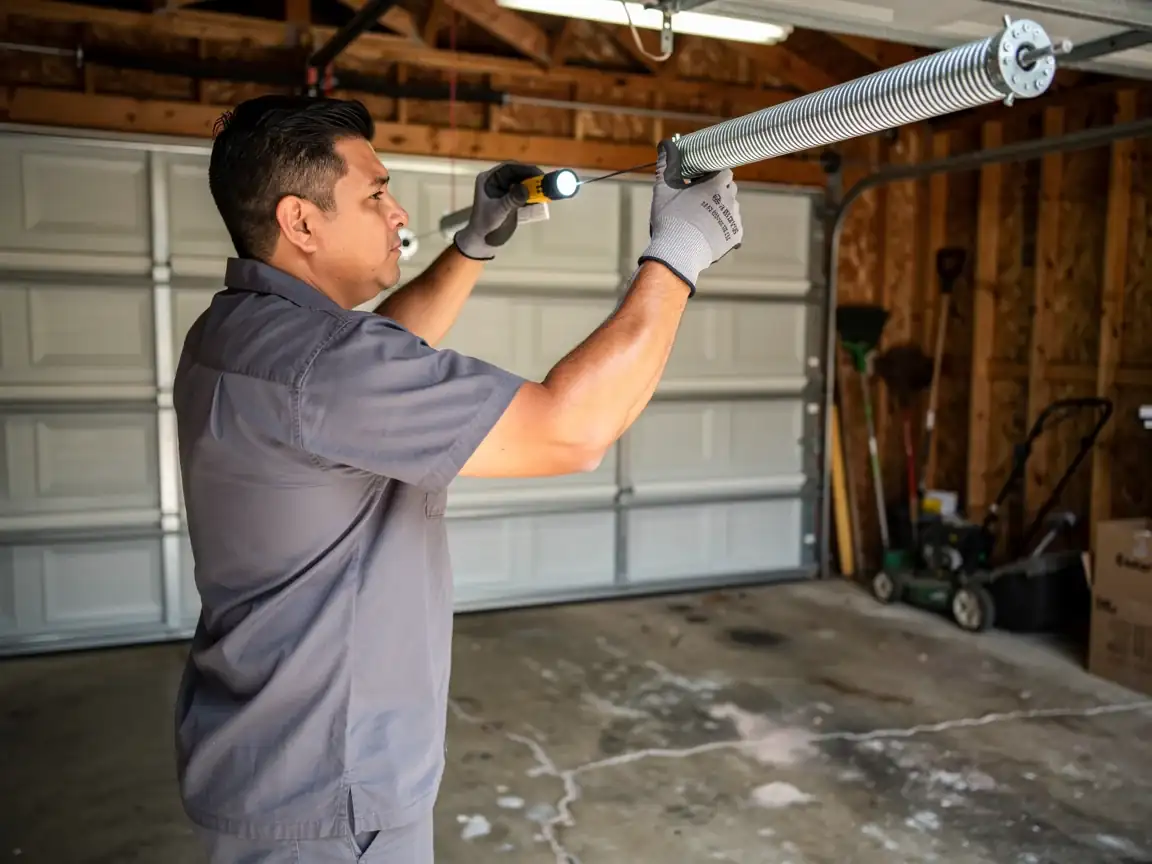
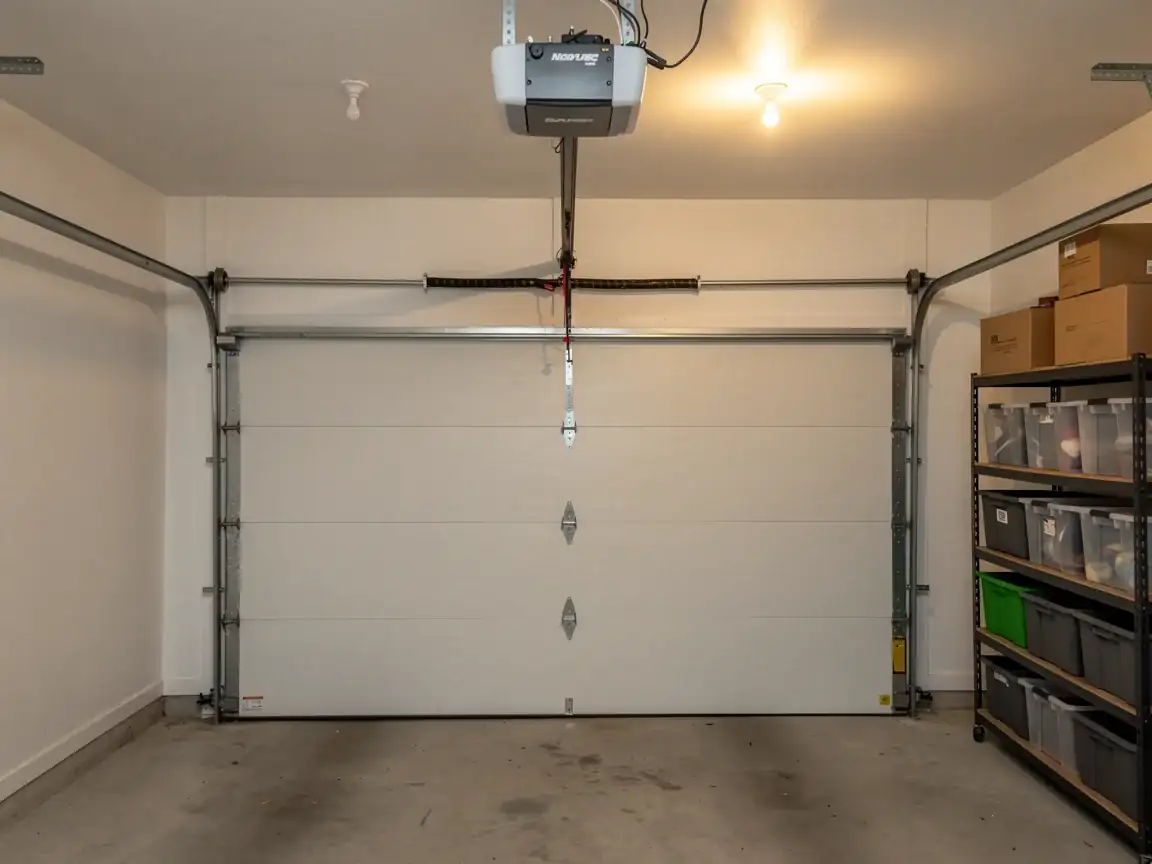
That four-year gap in median build year sounds small, but it matters for rollers specifically. A door from the early 1980s typically has 7-foot track and a torsion spring setup that puts more cycles on the rollers before anything else fails - the rollers wear out while the rest of the hardware is still fine. On older doors, the spring or the cable usually goes first and the rollers are almost an afterthought. Here, the rollers are often the first real sign of wear, especially on the roller that takes the most load going around the curve of the track.
The area's moderate heat band plays into it too. Nylon rollers with worn bearings get noisy and stiff faster when they're running hot and dry for months at a stretch, and that's the complaint we hear most from this side of the service area - grinding on the way up, not usually a door that won't move at all.
Can You Do This Yourself
Swapping rollers on a door that still opens and closes is one of the more doable DIY jobs in a garage
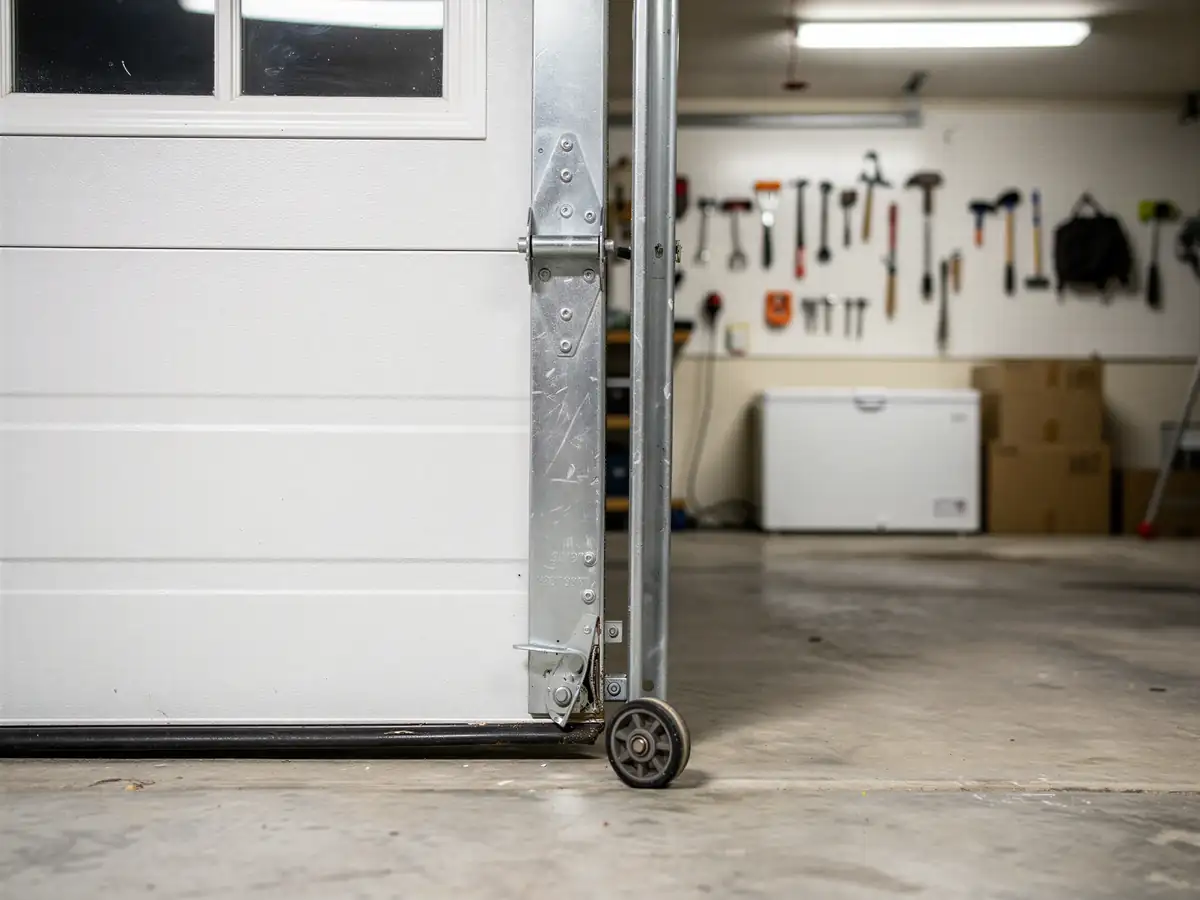
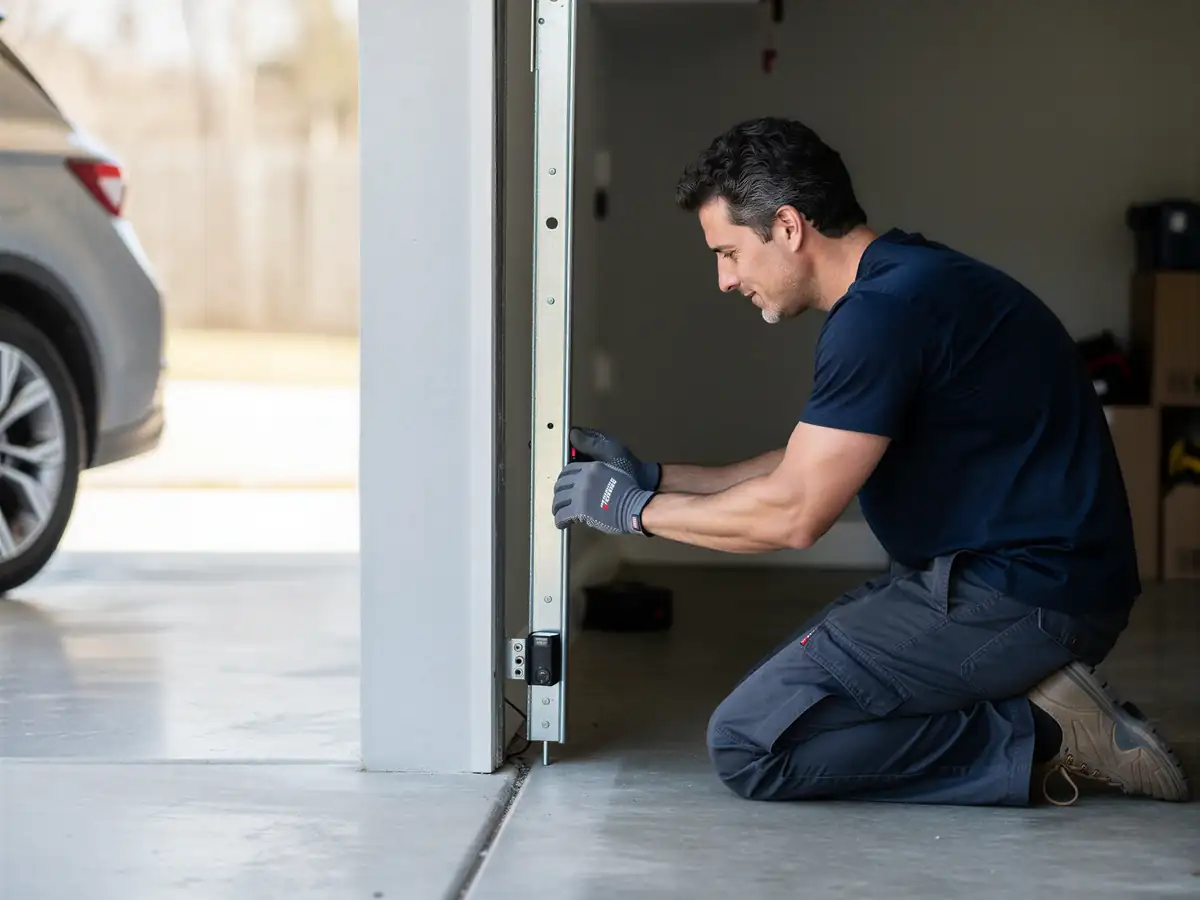
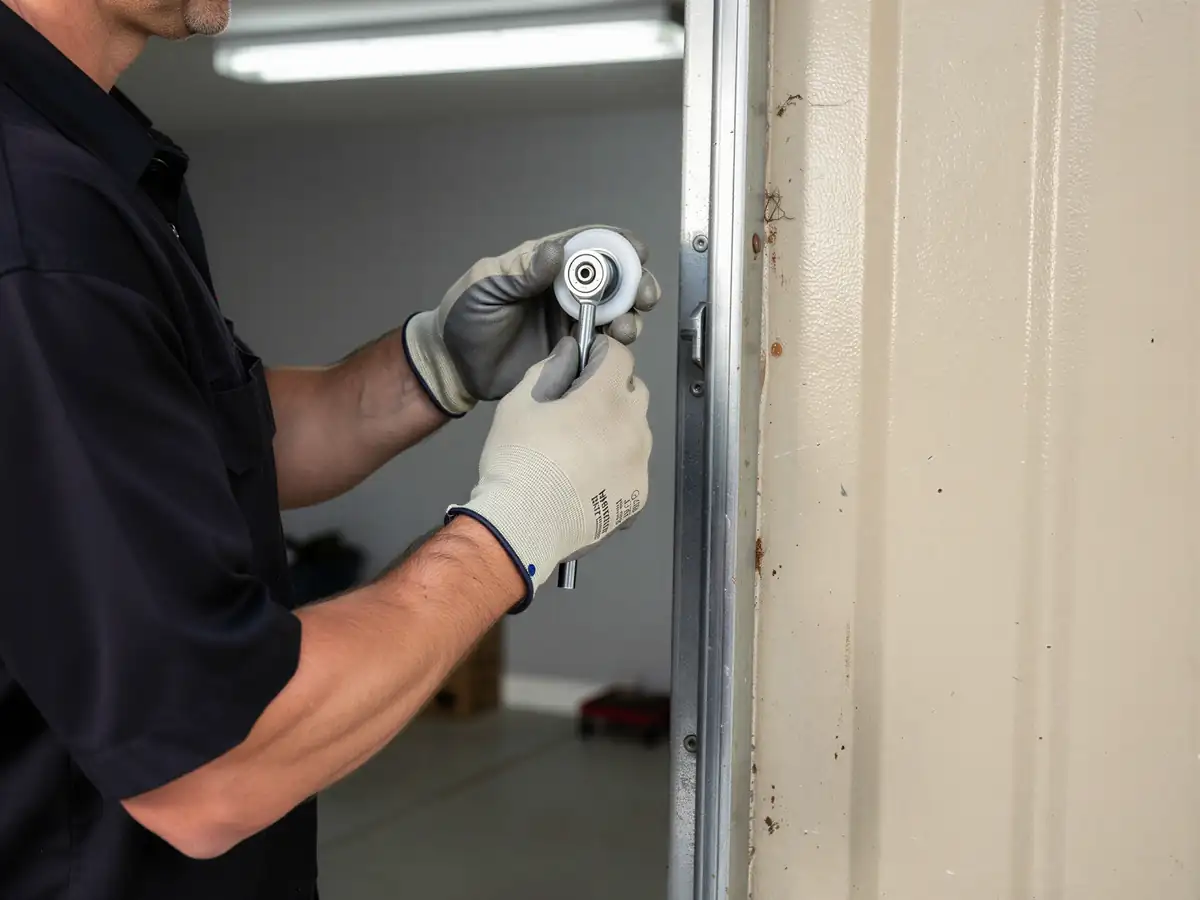
If the door is down, the opener is unplugged, and you're only working the rollers on the sides, not touching the bottom bracket near the cables. New nylon rollers with sealed bearings are a straightforward swap, one at a time, leaving the others in place to keep the panel aligned in the track.
Where it stops being a weekend job
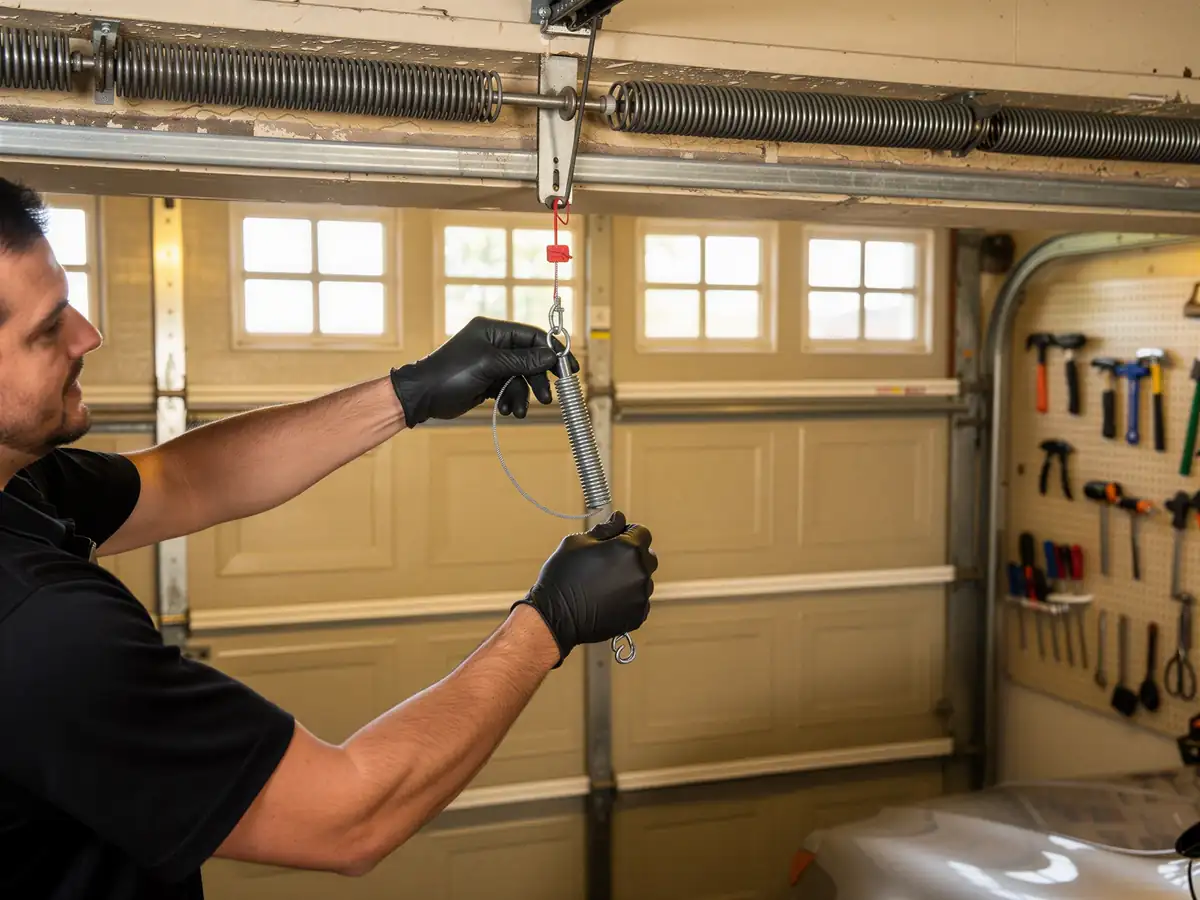
The top roller on each side, and anything near the bottom fixture where the lift cable attaches. Those brackets are under spring tension and the bottom ones are under cable tension - pull the wrong bracket and the door can drop or the cable can come off the drum. If a roller's stem has snapped off flush with the bracket, or the bracket itself is bent, that's not a $12 part job anymore, that's a bracket replacement with the door held open on a locked bar.
We'll be straight about this
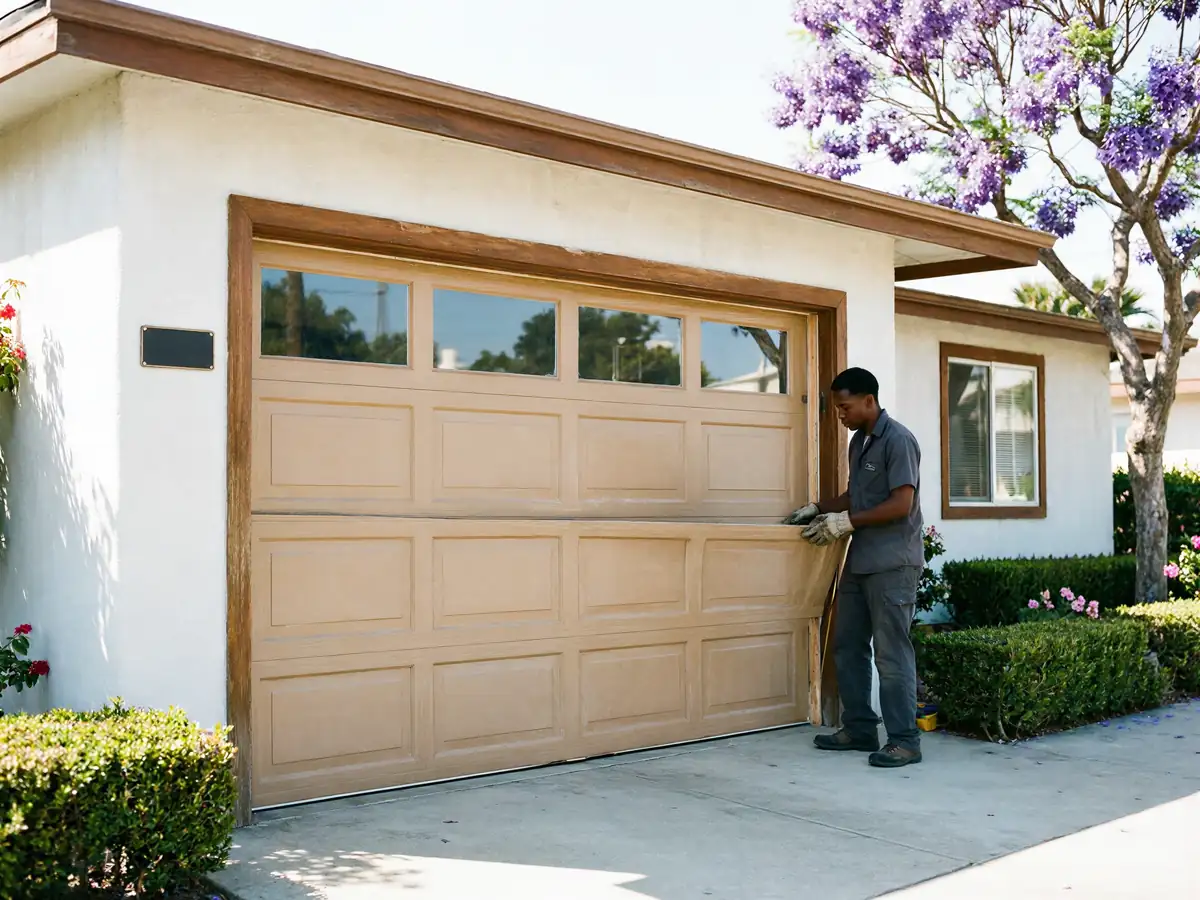
If you're comfortable with hand tools and the door still tracks straight, side rollers on a mid-cycle door are a fair DIY candidate. If the door is binding, dropping, or making a grinding sound you can feel through the floor, stop and get it looked at before a bracket gives.
Getting It Booked In
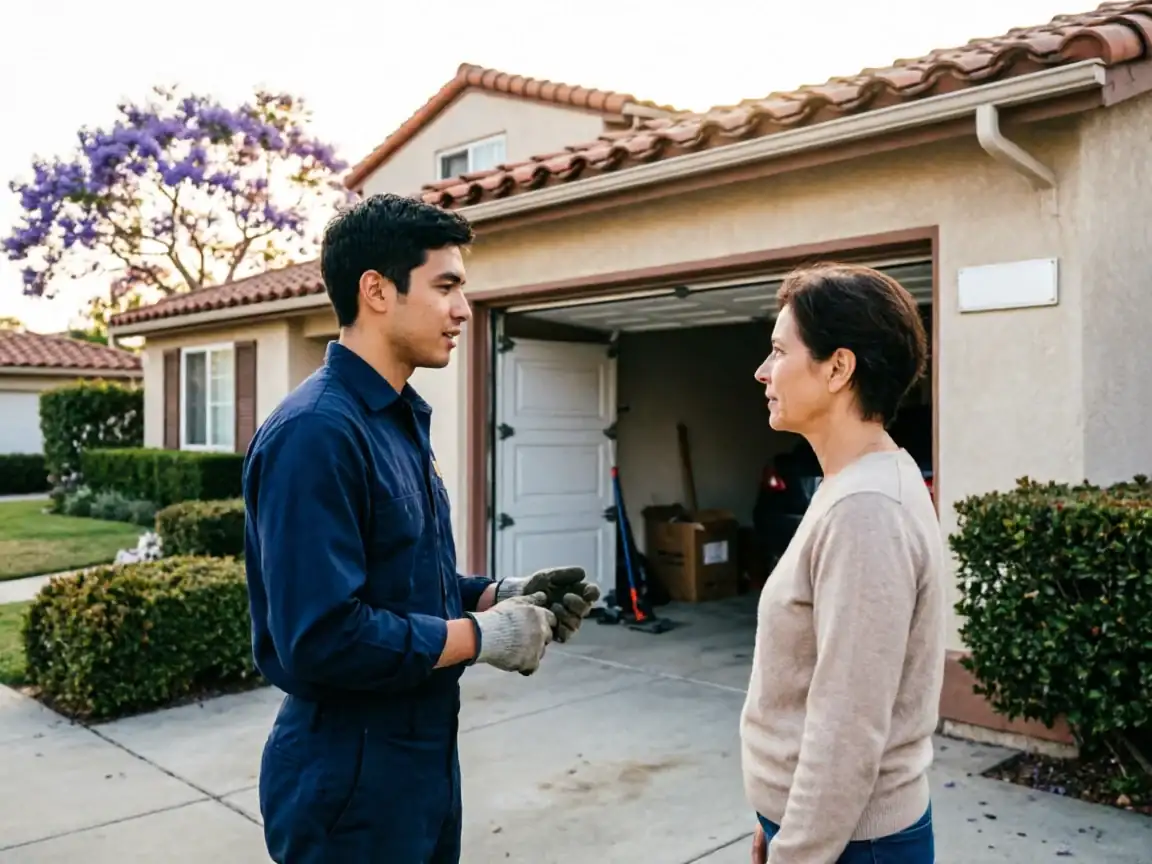
We run out of Stockton and cover Linden as part of the regular service area, about 12 miles out. There's no local branch here - the truck comes from Stockton for every call, so when you book, you're booking a trip out, not a drop-in from someone already on your street.
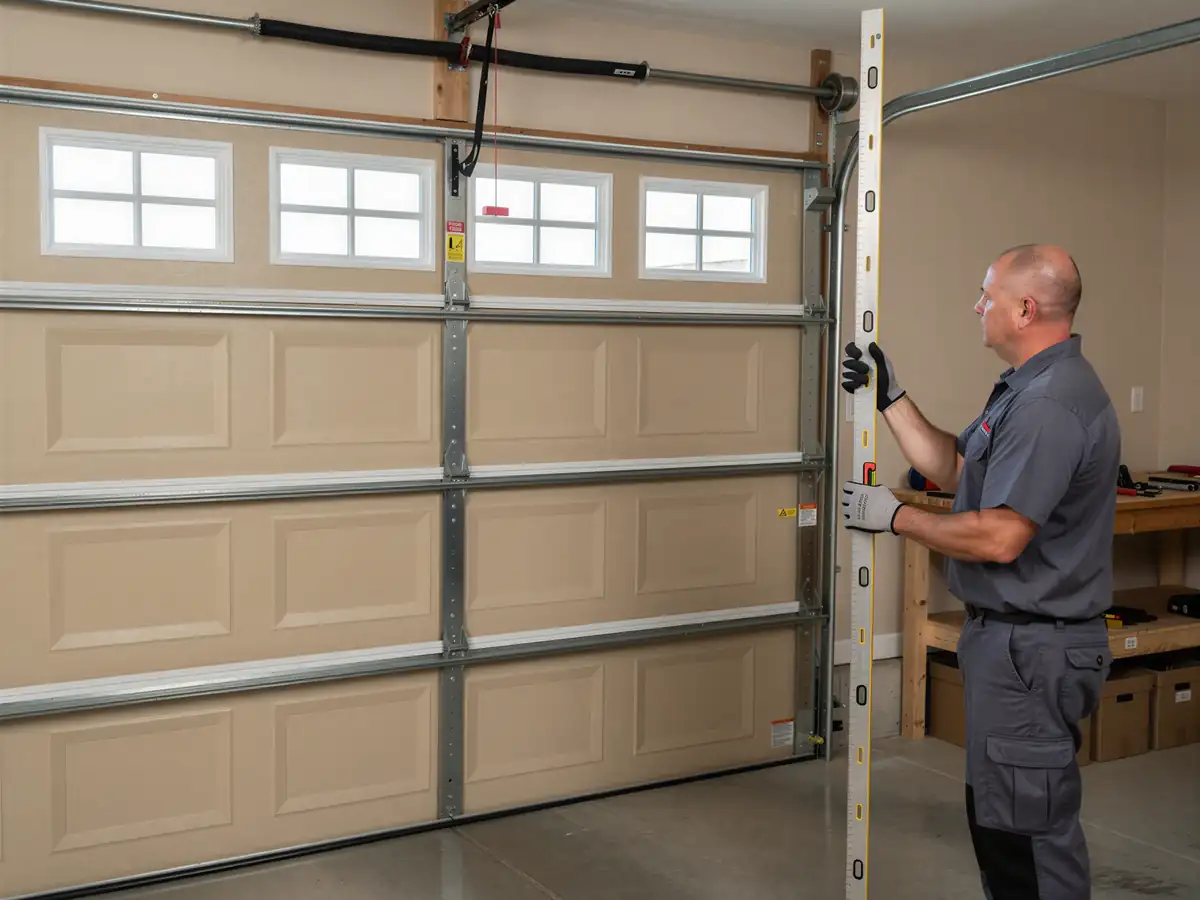
When you call, tell us roughly how old the house is and what the door sounds like - a grinding roller on the way up is a different job than a door that's jumped track entirely. If you know the door's age or the opener brand, that helps us bring the right roller stock instead of guessing between the narrower track common on 7-foot doors and the wider track you'll sometimes find on later builds.
We don't keep every roller size on the truck for every job type, so an unusual track width can mean a short wait on the part rather than a same-visit fix. That's the one honest limit worth knowing going in: most roller jobs on this side of the area are done in one visit, but if your track is non-standard, we may need to order before we finish the job.
What the Repair Takes
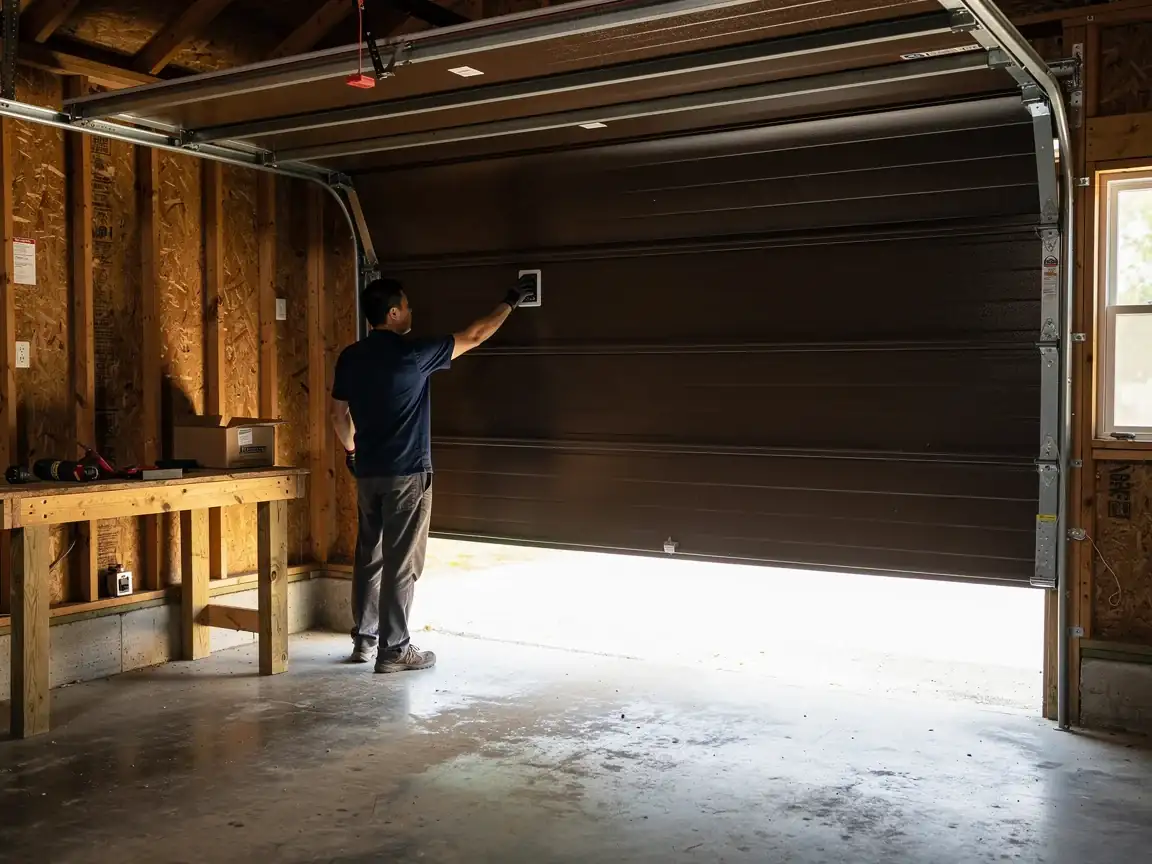
A standard roller replacement on a double door runs ten rollers, sometimes twelve if the door has an extra panel. We pull each old roller, check the bracket it sits in for wear or bending, and set a new sealed-bearing nylon roller in its place, working one at a time so the door never loses its alignment in the track.
On a house built closer to 1981, we're usually dealing with a torsion spring system and track that's held up well structurally - the job is almost always the rollers and nothing more. We still check the cables and the bottom brackets while we're in there, because a cable that's starting to fray will outlast the rollers by maybe a season, and it's worth catching on the same visit rather than a second trip out.
We don't replace rollers one or two at a time as a long-term fix. Mixing new sealed rollers with old worn ones just shifts the load to whichever roller is weakest next, and you're back to the same noise within a year. A full set, done once, is the job that actually holds.