Where This Job Goes Sideways
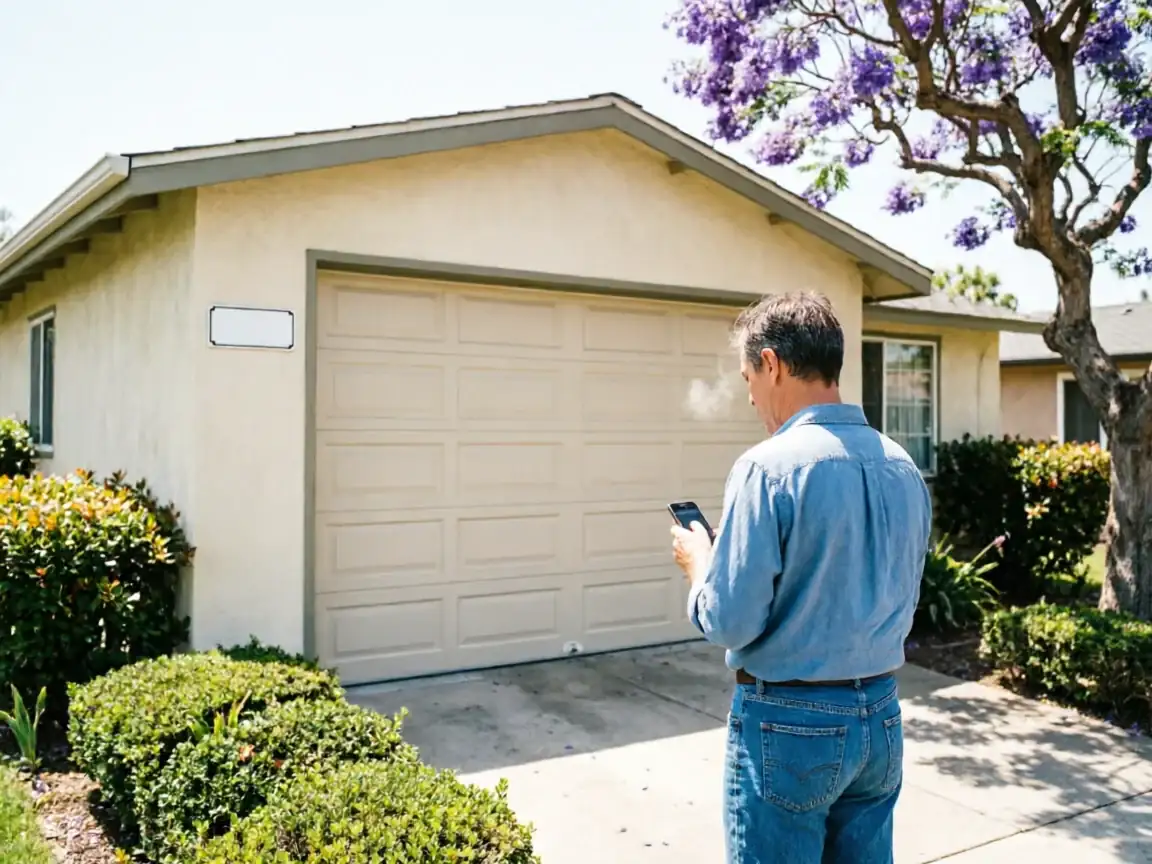
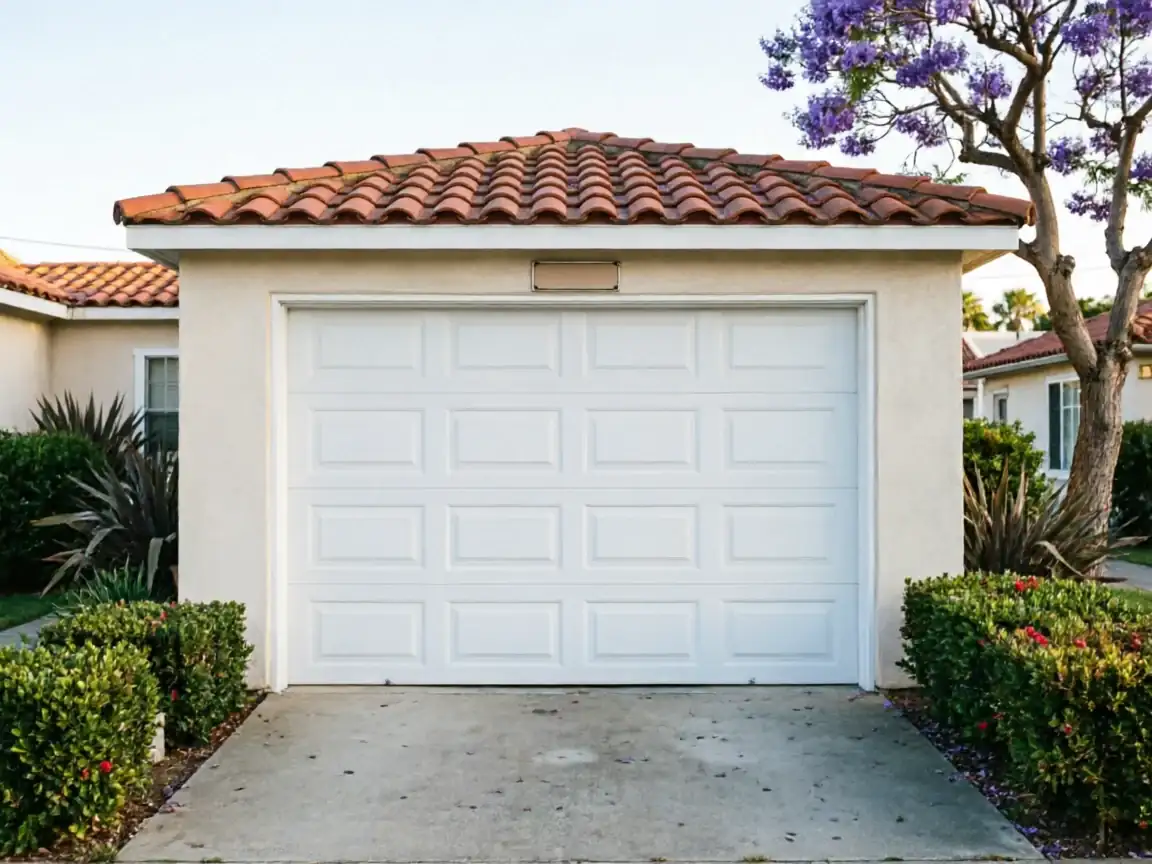
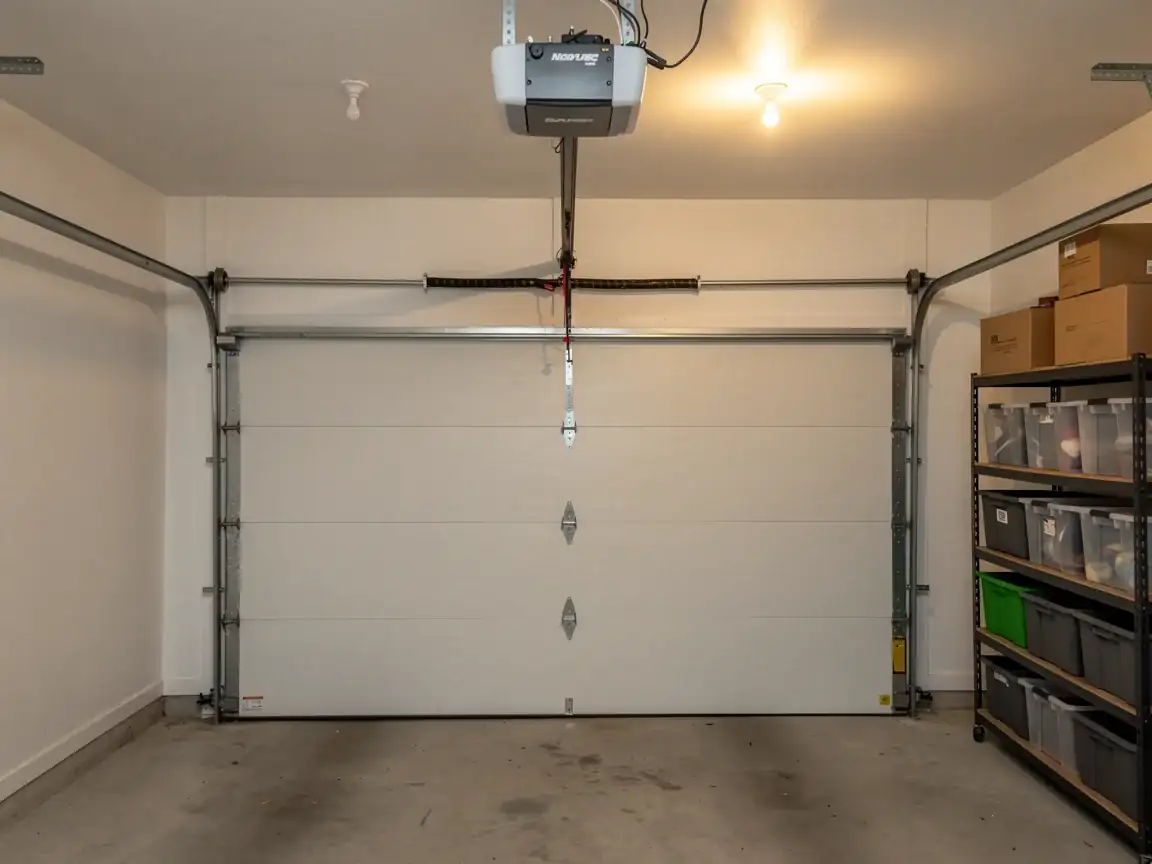
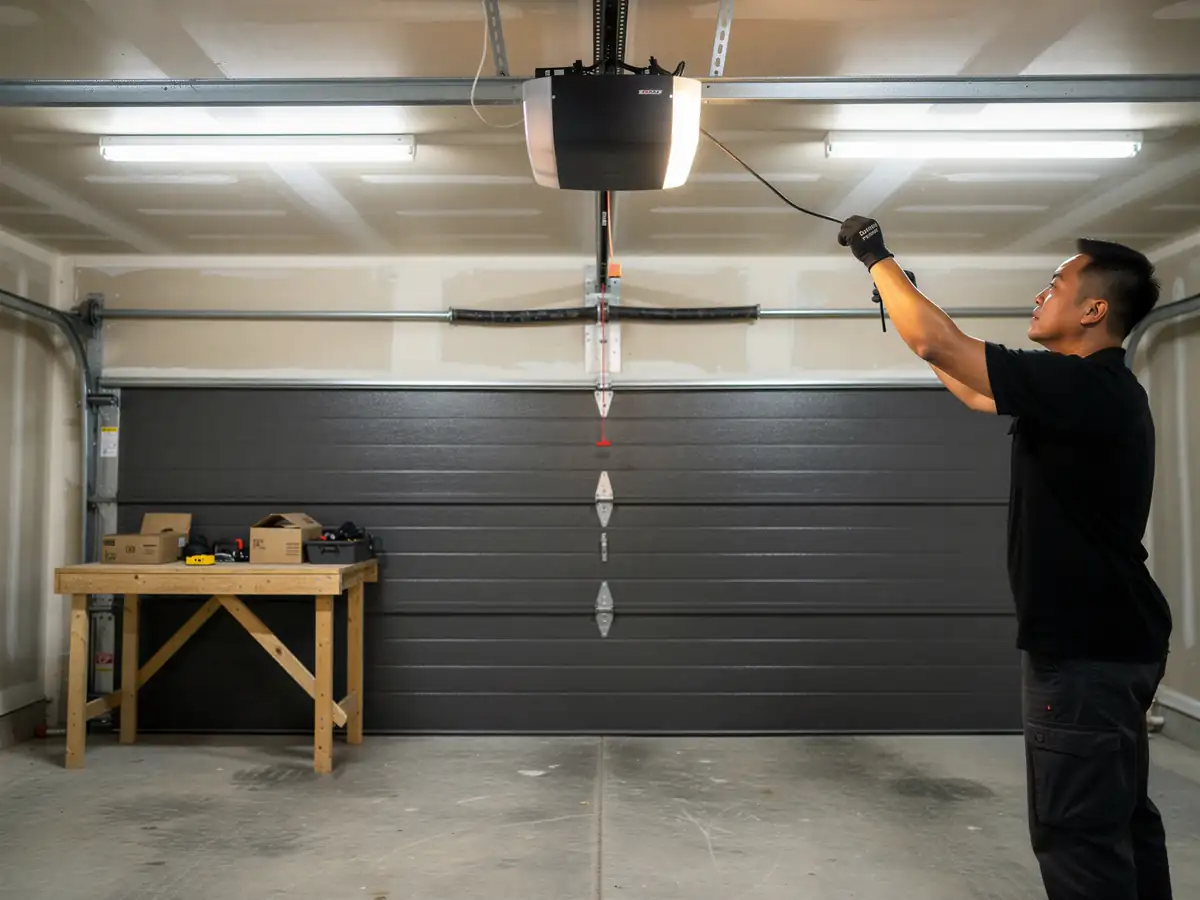
August is two miles out from our shop in Stockton, which matters more than it sounds like it should. A short drive means a call here doesn't eat the day the way a trip out to Linden or Lockeford does, and it means we can usually look at a job and come back with parts the same afternoon instead of scheduling around a long haul. That short distance doesn't change what's wrong with the door, though. Most of August went up around 1957, squarely in the middle of the 1938-2010 build range across our service area, and a lot of that 1960s-70s housing stock still runs original hardware. A door that old has usually been serviced piecemeal for decades - a new opener bolted onto an old rail, a replacement panel that doesn't quite match the rest. Where this goes sideways is when someone tries to fix the symptom (a noisy door, a opener that strains) without looking at the track and spring setup underneath, which on a house this age is rarely the same spec as what's sold off the shelf today. We check the whole system before we touch anything, because swapping one worn part on 1950s hardware without checking the rest just moves the failure down the line.
Stocked Parts
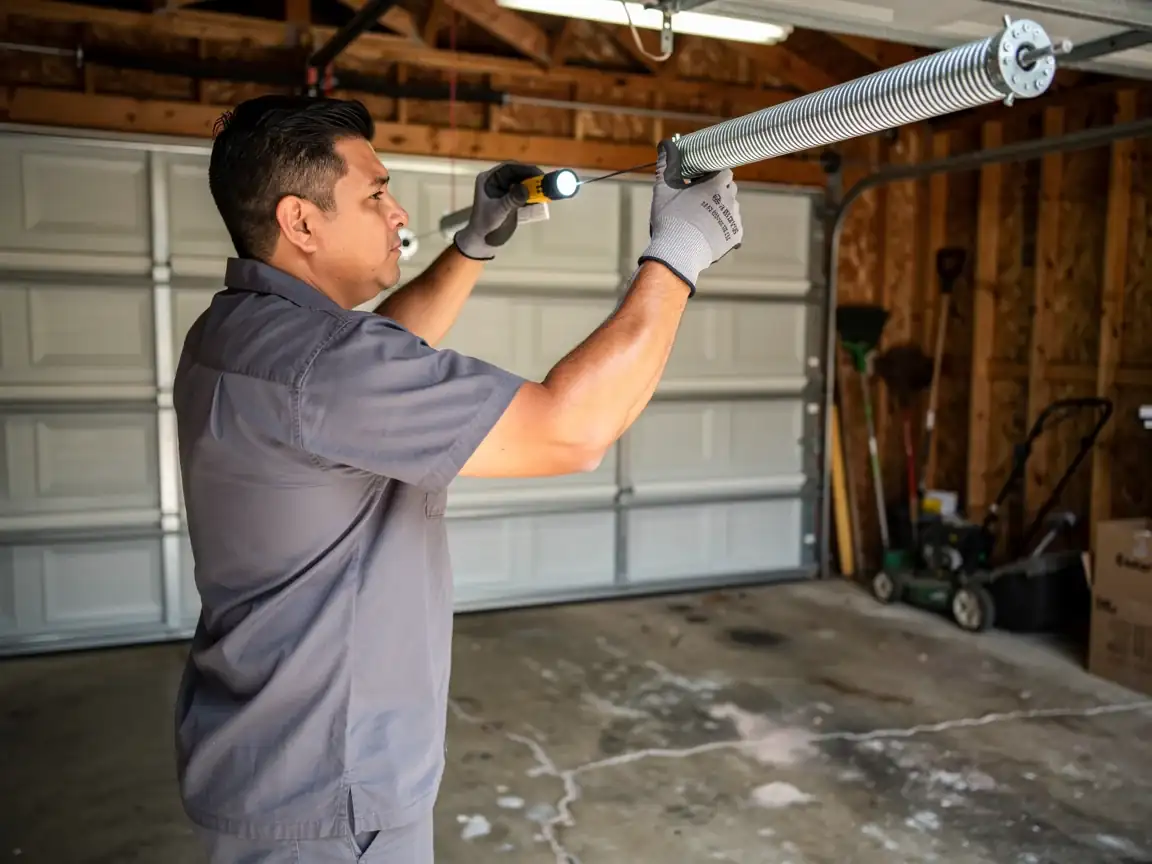
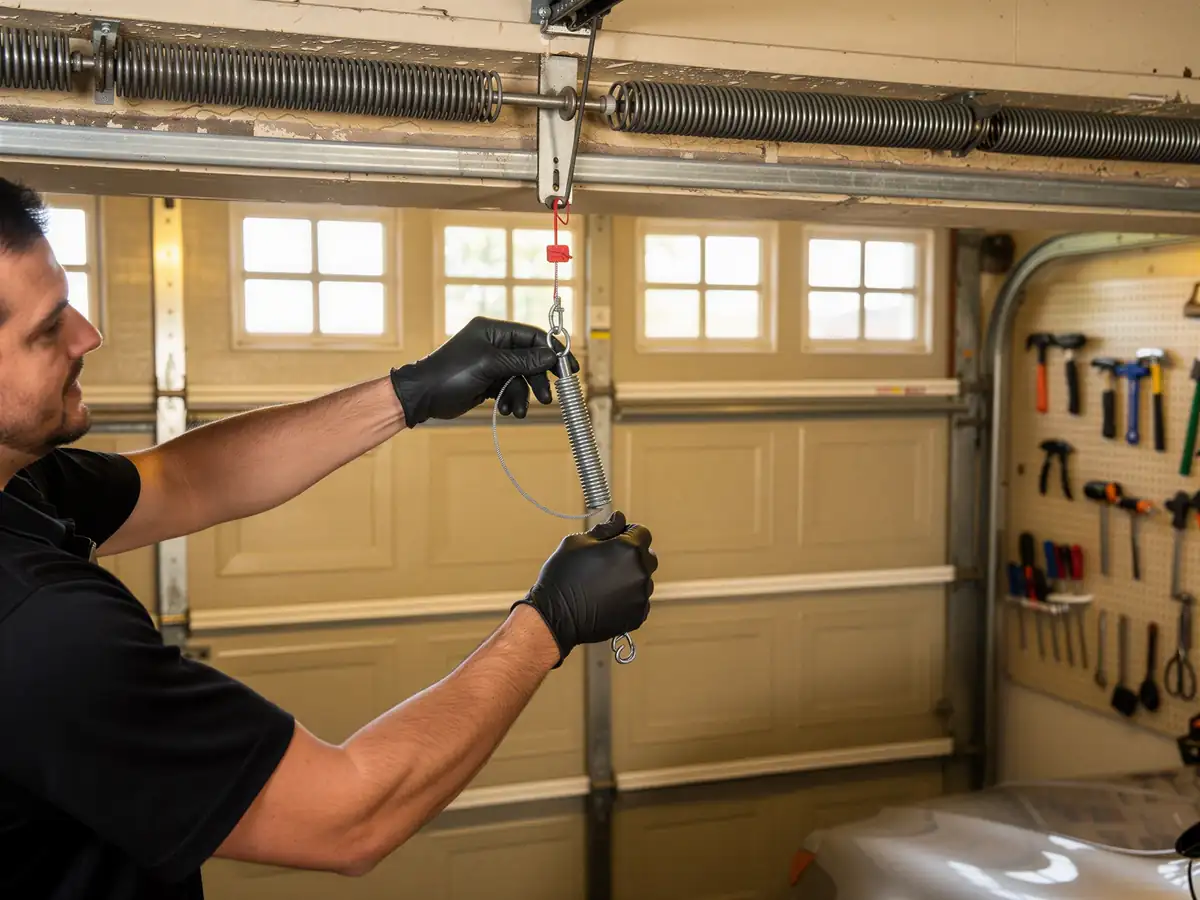
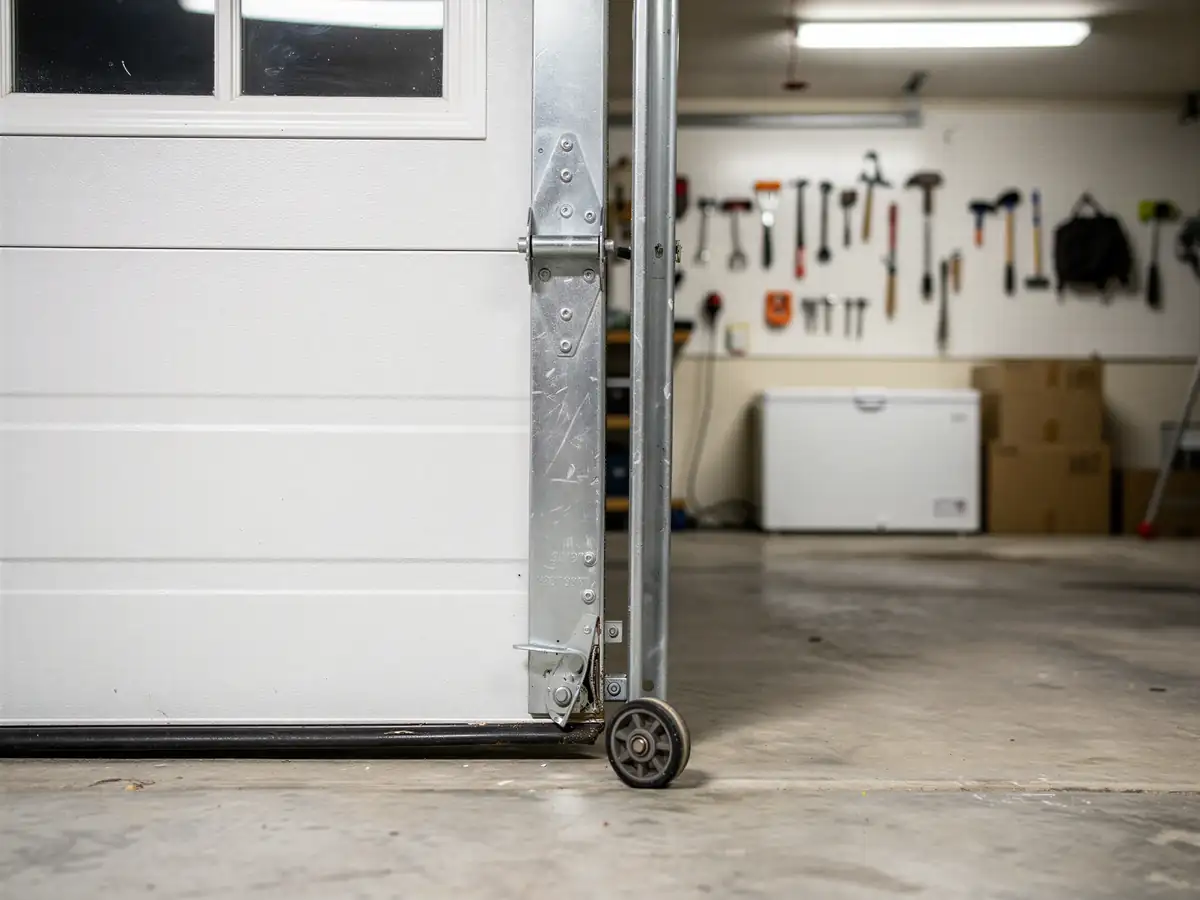
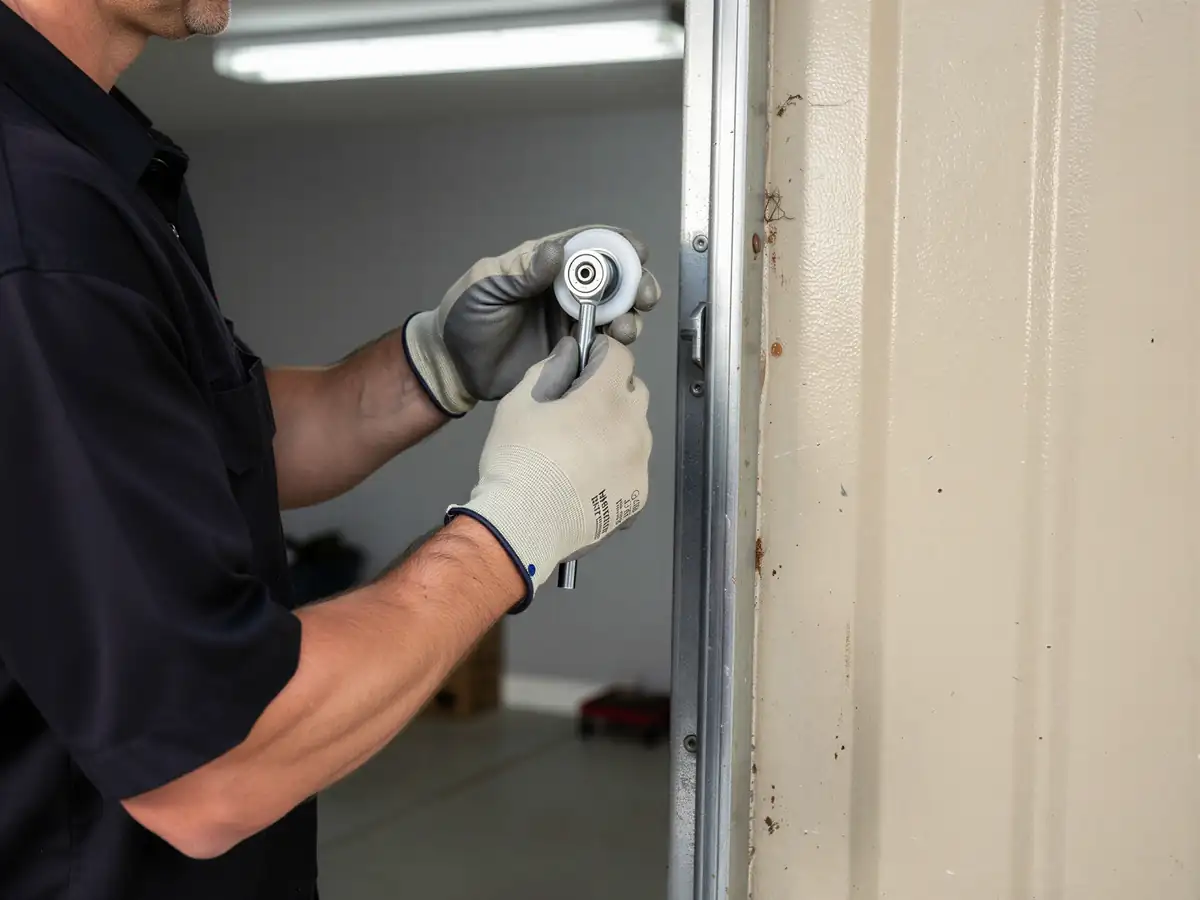
We carry common torsion springs, extension springs, rollers, cables, and standard track sections on the truck, which covers most of what breaks on a door built in the 1957-to-70s range. Hinges and end bearings for older one-piece and early sectional doors are usually in stock too. What we don't always have on hand is a discontinued panel or an odd-width track for a non-standard opening - on a house this old, that sometimes means ordering a part rather than finishing in one visit. We'd rather tell you that before we start than promise a same-day fix we can't back up. When it's a stocked part, the job moves fast because the drive from Stockton is short and we're not waiting on a part to catch up with us from across the valley.
What the Repair Takes
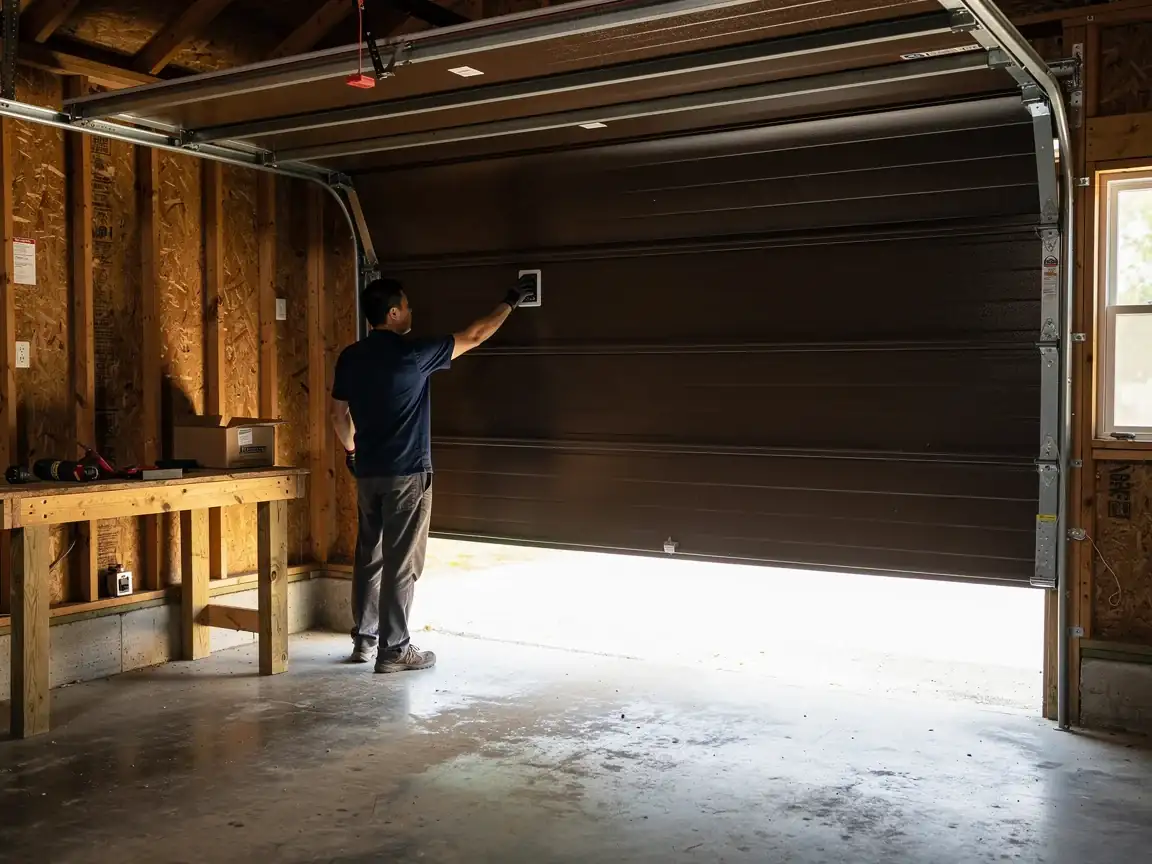
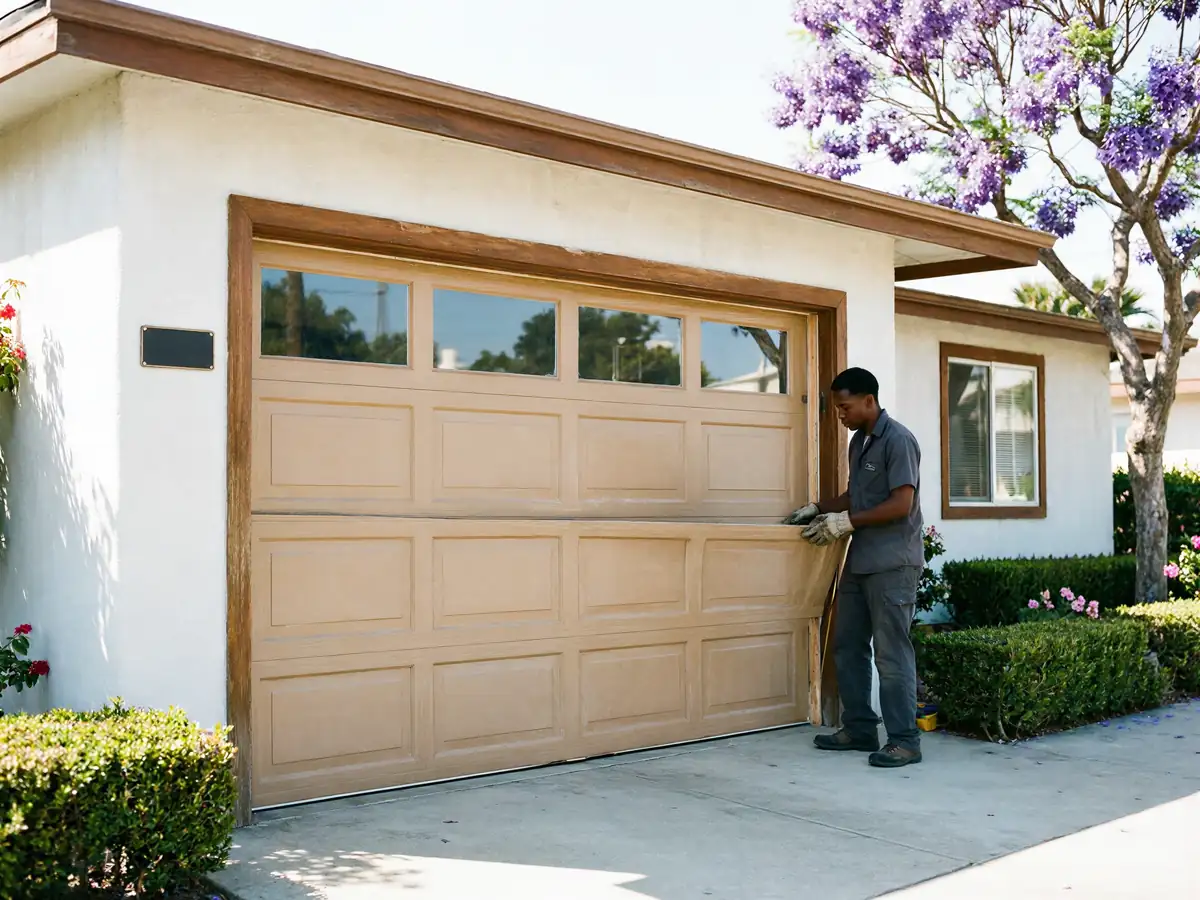
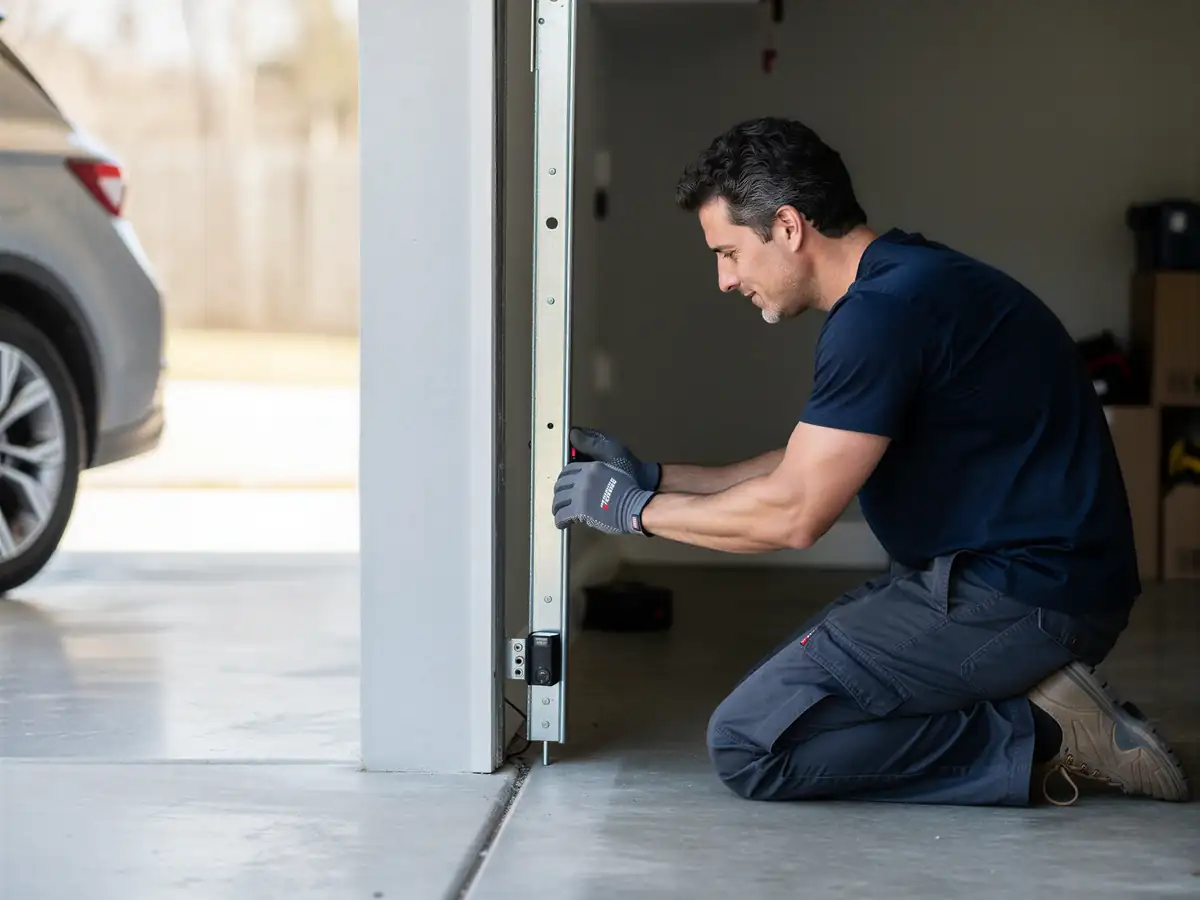
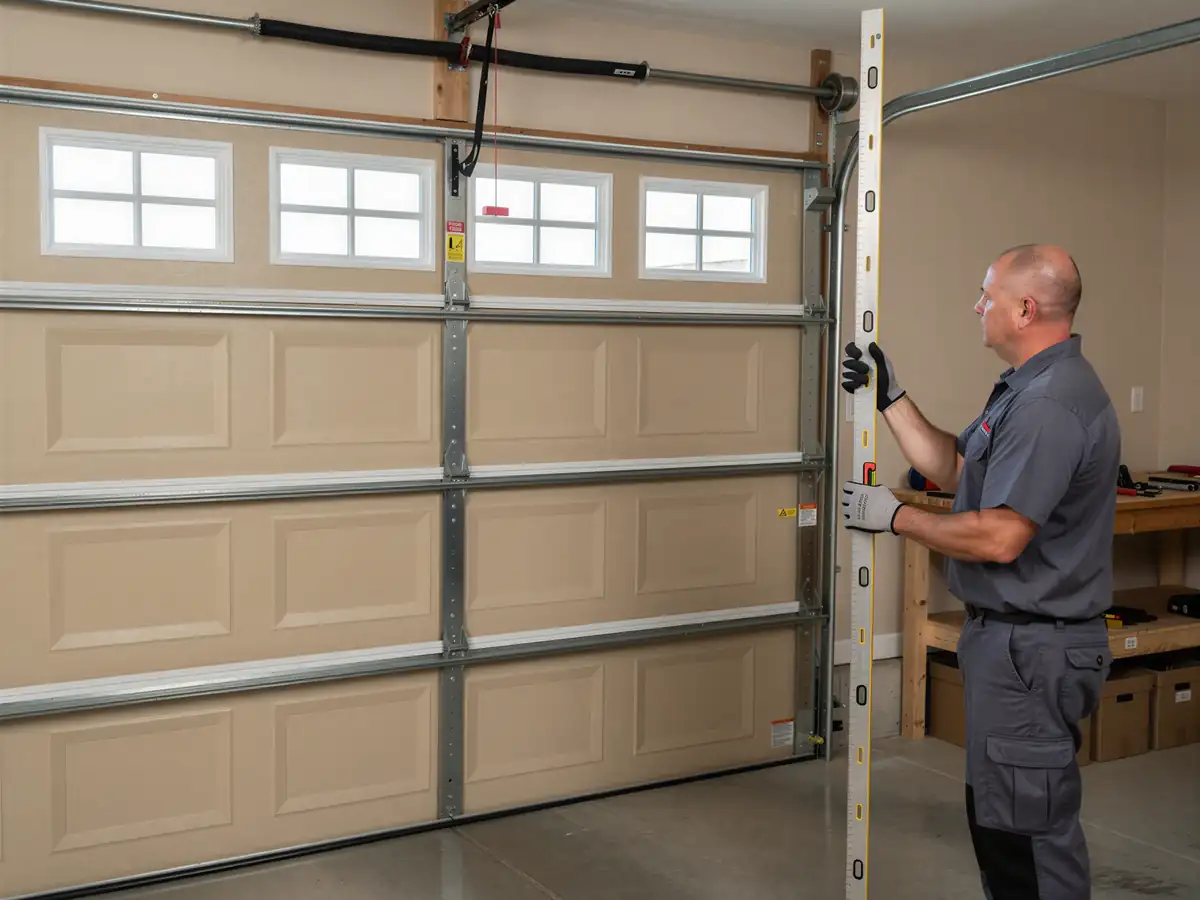
A straightforward spring or roller replacement on an August door is a shop-standard job once we've confirmed the hardware matches what's on the truck. Where it takes longer is diagnosing a door that's been patched before - checking whether the opener's force settings were ever adjusted to compensate for a bad spring, whether the track was reset square or just bent back by hand. On houses built around 1957, we also check header clearance and mounting points before reinstalling anything, since framing doesn't always sit the way newer code expects. If the door needs more than a part swap - say the section is cracked or the track is bent beyond pulling straight - we'll say so rather than force a repair that won't hold. Sometimes replacement is the honest answer, and that's not a call we make lightly.